#nicola-erni
#nicola-erni
[ follow ]
#contemporary-art #sculpture #art-history #exhibition #venice-biennale #art #identity #architecture #art-exhibition
Design
fromdesignboom | architecture & design magazine
5 days agoreversible cultural pavilion activates public space in frankfurt 2026
Spain's pavilion for World Design Capital 2026 emphasizes reversible cultural infrastructure and sustainable design through innovative materials and construction methods.
fromdesignboom | architecture & design magazine
5 days agoROOM FOR DREAMS: immersive installations, cinema and talks at milan design week 2026
ROOM FOR DREAMS becomes a living manifesto for utopian optimism, creative courage, and the power of imagination through a multilayered approach where large scale installations, cinematic storytelling, live conversations, and ritual-driven encounters converge.
Berlin
fromItsnicethat
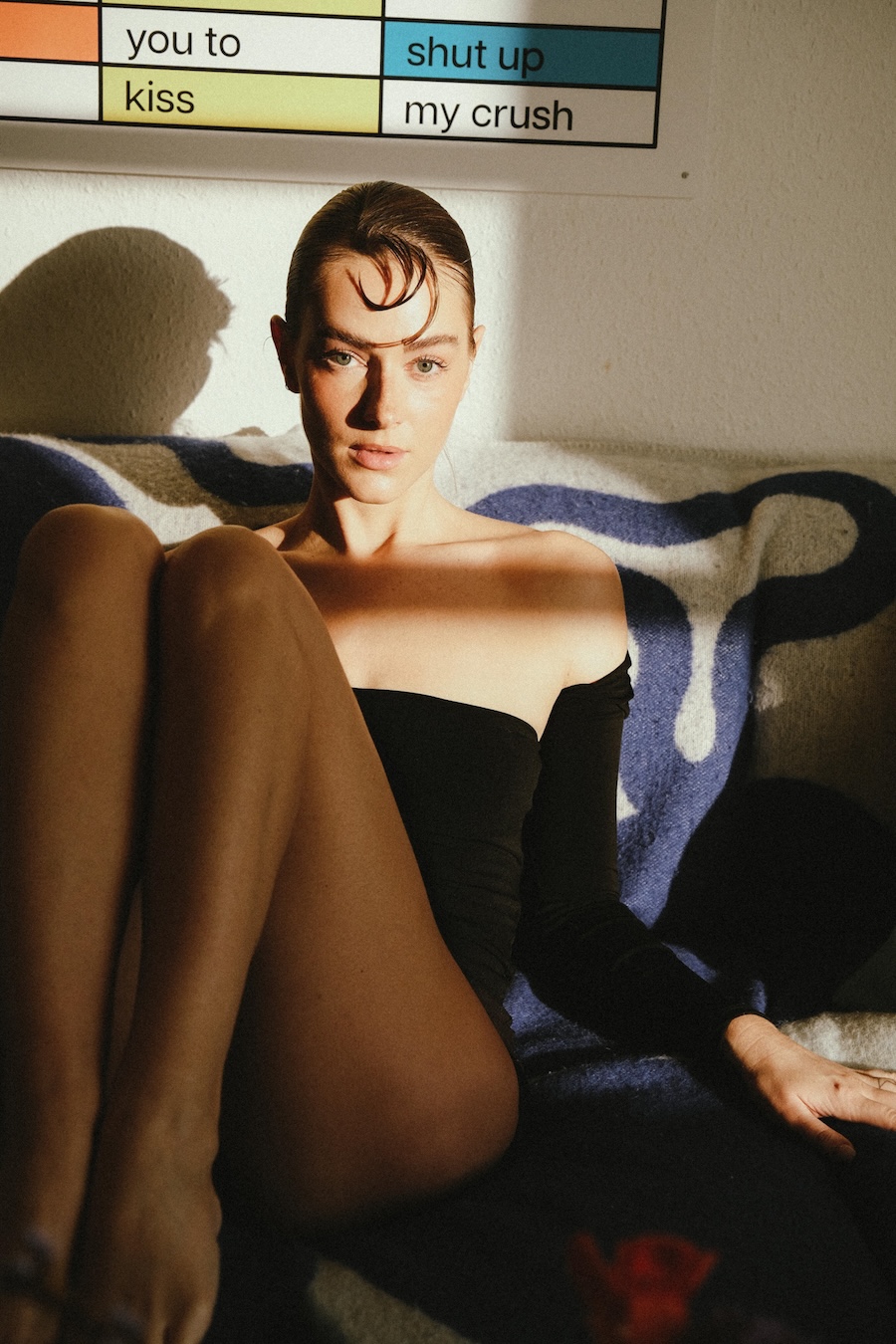
5 days ago"What if everyone started making out?" Andrea Marti's horny photo series tackles Gen Z's lack of intimacy head on
"My mum used to tell me how, back in her day, people would go to clubs and fall in love, and at the end of the night, the DJ would play slow music. I don't think that happens anymore."
Photography
Arts
fromThe Art Newspaper - International art news and events
4 hours agoMilan's contemporary art credentials further bolstered by arrival of Paris Internationale
Milan's art scene is thriving, attracting international galleries and collectors, highlighted by the inaugural Paris Internationale art fair.
fromThe Art Newspaper - International art news and events
2 weeks agoZurich's Museum Rietberg transfers 11 Benin Bronzes to Nigerian government
A commemorative bronze head, from around 1850, is a representation of the ancestor of a chief and would have been placed in the king's ancestral shrine.
Berlin
Photography
fromKALTBLUT Magazine
3 weeks agoThey Return To Their Earth! A photographic project by Federico Masini - KALTBLUT Magazine
Federico Masini's photographic project explores human fragility by absorbing figures into landscapes, reversing traditional hierarchies to create silent narratives about presence and disappearance.
Design
fromArchDaily
3 weeks agoSmiljan Radic: Material Explorations Between Ephemerality and Permanence
Chilean architect Smiljan Radić creates buildings that blend ancient monumentality with provisional fragility, combining diverse materials in experimental ways that challenge conventional architectural categorization.
fromColossal
3 weeks agoHistoric Architecture Emerges from Stone in Matthew Simmonds Ethereal Sculptures
From unassuming hunks of Carrara marble and limestone, Matthew Simmonds carves realistic, miniature gothic cathedral arches, stairwells, and colonnades. Often based on architectural details of real places, such as cities around Tuscany and Germany's Bamberg Cathedral, the sculptures portray intimate details of corners, vaulted ceilings, arcades, and stairwells that can sometimes be peeked through additional apertures.
Berlin music
fromArtnet News
6 days agoThe Sistine Chapel Is Coming to a Mall in Suburban New Jersey
"We are thrilled to bring this immersive experience to New Jersey. Whether you're an art-lover, history enthusiast, or someone encountering this masterpiece for the first time, this exhibition allows you to experience Michelangelo's genius in an intimate and unforgettable way."
Arts
fromThe Art Newspaper - International art news and events
1 month agoParis to host first museum devoted to Alberto Giacometti with more than 10,000 artworks and objects
The foundation's collection is exceptionally large, encompassing more than 10,000 items-including thousands of drawings, over 400 sculptures, 100 paintings, a whole collection of decorative objets d'art, prints, everything that was in the studio, all the archives. Most of the collection has never been exhibited.
Paris food
fromThe Art Newspaper - International art news and events
2 weeks agoBritish artist Simon Fujiwara tackles Guernica, syphilis and the death of a Japanese pornstar in Luxembourg survey exhibition
This depicts Guernica after the battle. The figures are no longer fighting. They're in a giant pile. They're exhausted and there's a sunrise on a new day behind them. The title of the work is A Whole New World (for Who?). It's asking what's going to happen after the conflicts that we have. Who's going to be taken into that new world?
Arts
Berlin music
fromKALTBLUT Magazine
1 month agoUnveil the Pulse of Memory: Filipp Jenikae's Visual Symphony at Galerie Sara Lily Perez - %
Filipp Jenikäe's exhibition explores how urban spectacle, collective memory, and personal experience merge through dynamic paintings of cities, crowds, and athletic figures.
fromThe Art Newspaper - International art news and events
1 month agoA Brush With... Veronica Ryan-podcast
Her installations and individual sculptures combine a wealth of things and techniques, often all at once, from found objects to time-honoured sculptural materials like bronze and marble; and from carving to casting and crocheting. Colour plays a vital role in her work, in the varied hues of textiles or plaster.
Miscellaneous
Arts
fromHyperallergic
2 weeks agoZarina Brought the World to New York
Zarina's artistic practice, rooted in South Asian history and shaped by migration and displacement, established her as a foundational figure for South Asian American artists while maintaining independence from nationalist frameworks.
Design
fromdesignboom | architecture & design magazine
1 month agoreclaimed corrugated fiberglass panels reform as luminous sculpture by heilig objects
Salvaged corrugated fiberglass panels from an abandoned hut are transformed into a limited-edition light sculpture, preserving fifty years of environmental patina within custom wooden frames.
#contemporary-art
Arts
fromKALTBLUT Magazine
2 weeks agoExploring the Depths: Julian Charriere's "Midnight Zone" at Kunstmuseum Wolfsburg - KALTBLUT Magazine
Julian Charrière's 'Midnight Zone' exhibition explores water's ecological and political significance through multimedia art addressing climate change, pollution, and deep-sea mining threats.


Arts
fromKALTBLUT Magazine
2 weeks agoExploring the Depths: Julian Charriere's "Midnight Zone" at Kunstmuseum Wolfsburg - KALTBLUT Magazine
Julian Charrière's 'Midnight Zone' exhibition explores water's ecological and political significance through multimedia art addressing climate change, pollution, and deep-sea mining threats.
#contemporary-painting

Arts
fromJuxtapoz
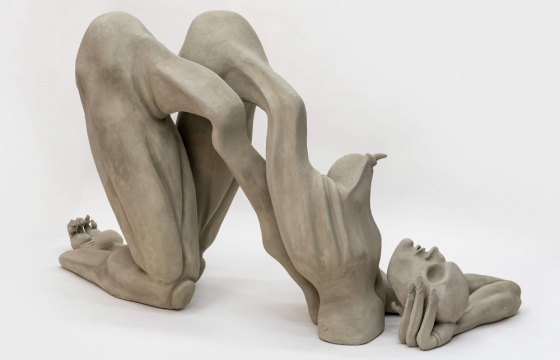
3 weeks agoJuxtapoz Magazine - Cathrin Hoffmann "Sill" @ Public Gallery, London
Cathrin Hoffmann's exhibition explores psychological fatigue and information overload through monochromatic paintings and sculptures depicting figures in sustained tension, resistance, and existential weariness.
Arts
fromwww.amny.com
3 weeks agoInheritance of the figure: Manuel Neri and Ruby Neri across generations | amNewYork
Manuel Neri's figurative sculpture practice persisted against postwar abstraction's dominance, while his daughter Ruby Neri now presents their artistic dialogue across two galleries, exploring how artistic vision transmits through generations.
fromdesignboom | architecture & design magazine
2 months agoglazed color bands rise as sculptural tower in gerhard richter's alpine installation
Presented by the Luma Foundation in Engadin, Switzerland, as part of Elevation 1049, STRIP TOWER (962) brings Gerhard Richter's long-running investigations into the Alpine landscape, extending his practice beyond the canvas and into three-dimensional space. On view until the spring of 2029, the work draws from the methodology of his Strip Paintings, where a single painted gesture is subjected to successive acts of photographing, scanning, digital slicing, and stretching.
Photography


Arts
fromdesignboom | architecture & design magazine
1 month agochiharu shiota's woven webs meet yin xiuzhen's clothing installations at hayward gallery
Hayward Gallery presents two major concurrent textile installations by Chiharu Shiota and Yin Xiuzhen that transform ordinary materials into immersive spatial explorations of memory, identity, and shared human experience through large-scale installations.
fromBerlin Art Link
2 months agoStudio Visit with Myriam Jacob-Allard | Berlin Art Link
Myriam Jacob-Allard appears through a heavy door and greets us with an easy warmth, scooping us up and welcoming us into her world. We are immediately absorbed by an unexpected color-drenched stairwell. Every surface is saturated in a dense, glowing yellow that reads unmistakably as egg yolk, insulating us from the outside in as we make our ascent. We turn into a long hallway whose fragrant freshly waxed floor catches the light, reflecting it back upward so that the corridor seems to glow beneath our feet.
Photography
fromHyperallergic
1 month agoMagdalena Abakanowicz Sculpted the Collective Body
The organicity of the human body we're born inside of is encoded in us. This concept of our organic nature as the source of elemental knowledge, at once direct and mysterious, permeates the textural abstractions exhibited in her survey Magdalena Abakanowicz: The Thread of Existence at Musée Bourdelle.
Arts
fromKALTBLUT Magazine
2 months agoGulu's Berlin Solo Debut: NIHILISTIC SUPERSTAR at Migrant Bird Space - KALTBLUT Magazine
As we traverse an era dominated by algorithms and driven by the impulse for efficiency, we increasingly sacrifice our ability to feel. In this "age of emotional poverty," highlighted by philosopher Byung-Chul Han, our emotional landscapes grow flatter, our pains diluted, and genuine intimacy replaced with a sterile digital façade. However, in Gulu's evocative imagery, the body emerges as a resilient space of resistance, pushing back against a world that demands we conform to neat, predictable narratives.
Photography
fromdesignboom | architecture & design magazine
1 month agomilla novo renders her desert textile installation within a snowy alpine context
The project, titled 'From Desert Sand to Alpine Snow,' centers on twenty hand-knotted fiber panels first commissioned for the Tanweer Festival in 2025. Installed in a 10 by 10 meter steel frame rising six meters high, the work stood directly on desert ground, its saturated colors vibrating against the pale sand and rocky escarpments of Mleiha.
Arts

fromBerlin Art Link
1 month agoAn Interview with Monia Ben Hamouda | Berlin Art Link
Monia Ben Hamouda's work weaves calligraphy, material transformation and ancestral memory into sculptures and installations that oscillate between language and form. In conversation, we traced the conceptual and sensory threads of her practice, unfolding through key works that reflect on heritage, embodiment and translation. Using materials such as iron, stone and pigment, her installations become sites where history is not only referenced but physically felt.
Arts
Arts
fromdesignboom | architecture & design magazine
1 month agoaldo rossi's furnishings for unifor meet francesco somaini's 1970s sculptures in milan
An installation at Spazio UniFor pairs Aldo Rossi's UniFor furnishings with Francesco Somaini's 1970s sculptures to evoke the city as object and memory.
Arts
fromThe Art Newspaper - International art news and events
2 months agoTen essential works of art to see in Graubunden-the region that hosts the World Economic Forum
Graubünden’s dramatic alpine landscapes and trilingual culture fostered key Modernist artists and distributed important art, architecture, and design across its valleys.


Arts
fromwww.theguardian.com
2 months agoSeductive stitches, Warhol in Nottingham and an Italian giant's igloo sculpture the week in art
A range of upcoming exhibitions, an award-winning portrait, and key art-world news and obituaries are presented, spanning contemporary, historical, and design-focused topics.
Arts
fromThe Art Newspaper - International art news and events
2 months agoHawai'i at the British Museum, a Venice palazzo for sale, Joseph Beuys's 'Bathtub'-podcast
British Museum presents Hawaiʻi: a kingdom crossing oceans with renewed stewardship of Hawaiian objects; Venice's Ca' Dario is for sale; Beuys' Bathtub in London show.
Arts
fromwww.theguardian.com
2 months agoArtist Sarah Sze: A work of art is finished when everything teeters'
Sarah Sze’s Gagosian Beverly Hills exhibition uses 13 works—large, intricate paintings and video installations—to create immersive, disorienting landscapes reflecting an image‑saturated, unstable contemporary world.
Arts
fromdesignboom | architecture & design magazine
2 months agoconcrete canvas wraps 18 scaffolding monoliths for monumental installation in florence
Marc Leschelier created a walkable field of 18 concrete-canvas monoliths in Florence that embody pre-architecture, openness, and experiential architectural language.
fromColossal
2 months agoRegina Silveira Pieces Together an Evolving Narrative of Latin America
Regina Silveira has spent the better part of three decades considering the relationship between media and meaning, particularly as it relates to Latin America. First presented in 1997, "To Be Continued..." features 100 black-and-white reproductions of photos, newspaper clippings, propaganda, advertisements, and more. Silveira nests each image into an oversized puzzle piece, which cuts off faces and scenes to leave fragments of pop culture icons, flora and fauna, and even the occasional mugshot spliced next to one another.
Arts
Arts
fromwww.theguardian.com
2 months agoIt's about hurling yourself into the unknown': Charmaine Watkiss on turning a UK museum upside down
Charmaine Watkiss connects Caribbean, African and UK botanical knowledge and diaspora histories through portraits and sculpture emphasizing medicinal plants and ancestral herbal traditions.
fromdesignboom | architecture & design magazine
1 month agoan inflatable rhinoceros occupies the medieval gallery of kunstmuseum magdeburg
The Rhinoceros in the Room, an inflatable installation by Itamar Gov, occupies the central volume of Kunstmuseum Magdeburg in Magdeburg, Germany with a single, overwhelming gesture. Installed inside the former monastery church that houses the museum, the project places a larger than life rhinoceros directly in the nave, its bulk stretching from aisle to aisle and rising toward the Romanesque vaults, so that the animal becomes the primary spatial condition of the building rather than an object within it.
Arts
[ Load more ]