#nmda-receptor
#nmda-receptor
[ follow ]
#alzheimers-disease #neuroscience #dementia #neurology #neuroplasticity #brain-health #neurodegeneration


fromNature
2 weeks agoAdaptive evolution of gene regulatory networks in mammalian neocortex - Nature
To characterize CREs and TFs for neocortical ExNs, we used Arpp21-Gfp or Fezf2-Gfp transgenic mice and enriched GFP-expressing neocortical upper layer (L2-4) intratelencephalic (IT) neurons or deep layer (L5-6) predominantly extratelencephalic (ET) neurons, respectively, from neonatal mice (postnatal day (PD) 0), an age at which neocortical ExN identity and connectivity are established.
Roam Research


Medicine
fromNews Center
2 weeks agoSchizophrenia Study Finds New Biomarker, Drug Candidate to Treat Cognitive Symptoms - News Center
Northwestern researchers identified a novel schizophrenia biomarker in cerebrospinal fluid that could enable new treatments for cognitive symptoms through a synthetic protein therapeutic approach.
Medicine
fromenglish.elpais.com
2 weeks agoWhy some people get hooked and others don't: genetics, childhood and brain circuits explain addiction
Addiction is a mental disorder requiring professional treatment, not a matter of willpower or personal choice, yet society continues to stigmatize it as a moral failing.
fromNews Center
3 weeks agoCalcium Signaling Channels Regulate Neuroinflammation and Motivation - News Center
This could open up some interesting possibilities for therapeutic interventions for depression-like behaviors or maladaptive changes in motivational behaviors down the road where microglia are known to play a really important role.
Science
Miscellaneous
fromNature
1 month agoVectorized instructive signals in cortical dendrites - Nature
Learning involves synaptic strength changes, but how the brain solves credit assignment—determining which synapses to modify for improved performance—remains unknown, unlike artificial neural networks using backpropagation.
fromNature
2 weeks agoDopamine takes a hit: how neuroscience is rethinking the 'feel-good' chemical
Dopamine is one of the most extensively studied neurotransmitters, chemicals that convey signals from cell to cell. It's the one with the highest profile outside neuroscience: often known as the 'pleasure chemical', it's depicted as the hit of reward that people get from recreational drugs or scrolling through social media. That's a gross simplification of what dopamine does; on that, researchers agree.
Medicine
Science
fromNature
3 weeks agoScientists revive activity in frozen mouse brains for the first time
German researchers successfully cryopreserved and thawed mouse brains while preserving some neuronal functionality using vitrification, advancing toward potential future applications in brain protection and organ banking.
fromwww.scientificamerican.com
3 weeks agoThe gut microbiome may influence brain aging, mouse study suggests
Young, two-month-old lab mice housed with older, 18-month-old mice showed really impaired cognition. Researchers exposed young mice raised in a sterile, microbe-free environment to gut bacteria from old mice, causing the younger animals to perform worse on cognitive tests, as if they had prematurely aged, just like the cohoused mice.
Medicine
fromPsychology Today
1 month agoCould Glial Cells Be the Key to New Schizophrenia Treatments?
Anyone living with schizophrenia understands the true limitations of current treatment options. Antipsychotics remain the single leading treatment for the disorder, and they are riddled with undesirable side effects. Weight gain, tardive dyskinesia, and excessive drowsiness are a few. Much research is devoted to expanding the range of medication options, and few academics have pursued other avenues. However, there is a possibility that treatment for schizophrenia can be approached through cellular methods if long-term research validates early signs of hope.
Mental health
fromFast Company
1 month agoOur brains are wired to ignore information. Here are neuroscience-backed tips for communicating memorably
The human brain is engineered to ignore most of what it sees and hears, according to the neuroscientists I interviewed for the audio original Viral Voices. If that's the case, how are you supposed to make a memorable impression? The empowering news is that if you understand how the brain works, what it discards, and what it pays attention to, you'll be far more persuasive than you've ever imagined. Persuasive people have influence in their personal and professional lives.
Philosophy
fromSilicon Canals
1 month agoWhat neuroscience reveals about people who replay conversations in their head for hours after they happen - Silicon Canals
Neuroscientists have a name for the brain network that fires up when you're not focused on an external task: the default mode network, or DMN. It's the constellation of regions - the medial prefrontal cortex, posterior cingulate cortex, and angular gyrus among them - that hums to life when you daydream, reflect on yourself, or think about other people's mental states.
Psychology
fromNews Center
3 weeks agoFirst Gene Regulation Clinical Trials for Epilepsy Show Promising Results - News Center
Our results are highly promising, especially since currently there are no approved treatments that address the underlying cause of Dravet syndrome. Since this gene regulation product targets the actual root cause of Dravet syndrome, we observed improvements in other developmental and cognitive symptoms, in addition to seizure control. This is unprecedented.
Medicine
fromFast Company
17 years agoTalking About Nerve!
I received an email recently that claims Wal-Mart senior management has been calling mandatory meetings for the company's employees in which the employees are told they "cannot" vote for the Obama-Biden ticket "or any other employee-friendly, union-friendly candidates for political office". It's not an urban legend, according to the sources I checked. This makes me so angry I just boil. When it comes to the Constitution, I am a rabid supporter.
Medicine
fromwww.theguardian.com
4 weeks agoRecreational drugs can more than double risk of stroke, study suggests
Amphetamine and cocaine use more than double stroke risk, with cannabis increasing risk by 37%, while opioids show no increased stroke risk according to analysis of over 100 million people.
fromSilicon Canals
1 month agoNeurologists reveal the everyday habit that doubles your dementia risk - Silicon Canals
A groundbreaking study found that adults who sit for 10 or more hours daily face a significantly higher risk of dementia compared to those who sit less. The research, which tracked over 50,000 adults using wearable devices, revealed that the risk increases dramatically after crossing that 10-hour threshold.
Health
fromNews Center
1 month agoAs Superagers Age, They Make at Least Twice as Many New Neurons as Their Peers - News Center
We've always said that SuperAgers show that the aging brain can be biologically active, adaptable, flexible, but we didn't know why. This is biological proof that their brains are more plastic, and a real discovery that shows that neurogenesis of young neurons in the hippocampus may be a contributing factor.
Science



fromPsychology Today
2 months agoThe Inflamed Brain in Psychiatric Disorders
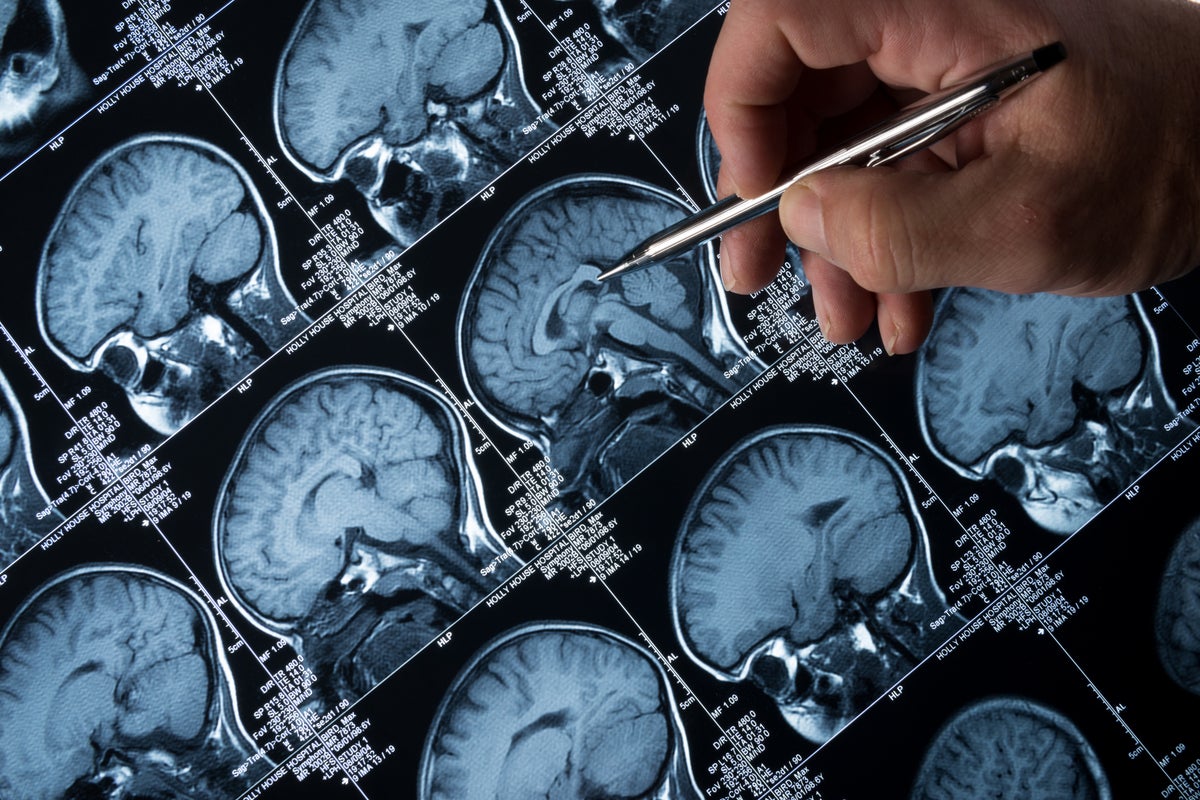
A recent study published in Biological Psychiatry identified a distinct subtype of psychiatric illness marked by brain inflammation, one that cuts across traditional diagnoses and may explain why standard treatments fail for some people (Tang et al., 2025).This new brain imaging study offers an interesting clue. It turns out that across different psychiatric disorders, some people show clear signs of brain inflammation, visible on scans and confirmed through immune system tests.
Mental health


fromwww.nature.com
1 month agoConformational diversity and fully opening mechanism of native NMDA receptor
N-methyl-d-aspartate receptors (NMDARs) are glutamate-gated ion channels that mediate excitatory neurotransmission throughout the brain1. As obligate heterotetramers, their activation requires the binding of both glycine and glutamate2. Although recent structural studies have provided insights into endogenous receptors from select brain regions3, most previous work has relied on recombinant receptors and engineered constructs, which limits our understanding of native NMDARs across the whole brain.
Science
fromwww.scientificamerican.com
1 month agoAlzheimer's blood tests may predict when a person will develop symptoms
But questions remain about the accuracy and uncertainty of these tests, and experts caution that the assays aren't ready for prime time. While the results here are encouraging, they are not yet at the level of having significant clinical benefit for individual patients, says Corey Bolton, a clinical neuropsychologist and an assistant professor of medicine at Vanderbilt University Medical Center, who was not involved in the new study.
Medicine
Science
fromwww.nature.com
2 months agoEditorial Expression of Concern: En passant neurotrophic action of an intermediate axonal target in the developing mammalian CNS
Figures 5a and 5b exhibit unexpected background similarities; illustrative panels show the same explant at 24h and 52h; original data are unavailable, so interpret results cautiously.
Science
fromwww.nature.com
2 months agoPyramidal neurons proportionately alter cortical interneuron subtypes
Pyramidal neurons regulate survival and differentiation of specific cortical interneuron subtypes, aligning interneuron abundance with pyramidal partner prevalence via activity-dependent and ligand-mediated mechanisms.
fromNature
1 month agoDaily briefing: Tumours use neurons as hotline to the brain
Tumours lure and then hijack nearby sensory neurons to boost their own growth. The cancer cells use these neurons to send a signal to the brain that subdues the activity of immune cells around the tumour, which allows it to grow unchecked. When researchers deactivated these neurons in mice with lung cancer, they saw "a huge, dramatic reduction" in tumour growth - more than 50% - says cancer immunologist and study co-author Chengcheng Jin.
Science
Science
fromHarvard Gazette
2 months agoWant to speed brain research? It's all in how you look at it. - Harvard Gazette
SmartEM uses machine learning to guide common single-beam scanning electron microscopes in real time, increasing scanning speed sevenfold and democratizing high-resolution connectomics.
fromNature
2 months agoUntangling the connection between dopamine and ADHD
Haavik was surprised to hear this because the scientific data do not suggest an unequivocal link between low levels of the neurotransmitter dopamine and ADHD. But the idea that low dopamine is a direct cause of ADHD is a common misconception, one that's amplified on social media and even in popular books about the condition. The reality, Haavik and other researchers say, is that the causes of ADHD are more diverse and nuanced than a simple deficit in one chemical cue in the brain.
Science
fromBustle
1 month agoHere's What's Actually Happening To Your Brain During A Migraine
If you get migraines, you already know they don't just stay in your head. The pounding pain might be the headline symptom, but the real story is how an attack can throw your entire body out of whack - making light feel blinding, everyday sounds unbearable, and even simple texts impossible to answer. That's because a migraine isn't just about sore neck muscles or scalp tension. It's a full-body neurological event, driven by a cascade of changes in the brain.
Medicine

Science
fromNews Center
2 months agoTargeting Key Proteins in Fight Against ALS - News Center
RAD23 controls both degradation and stabilization of misfolded proteins; reducing RAD23 enhances clearance of disease-linked aggregates, offering a therapeutic target for neurodegenerative proteostasis dysfunction.
fromSilicon Canals
1 month agoWhen to worry about forgetfulness versus when it's just normal aging: a neurologist finally explains clearly - Silicon Canals
You know that moment when you walk into a room and completely forget why you went there? Or when someone you've known for years walks up to you at the grocery store and their name just... vanishes from your brain? Last week, I spent ten minutes searching for my reading glasses while they were sitting on top of my head. My first thought wasn't "oh, silly me." It was "Is this how it starts?"
Medicine
fromwww.theguardian.com
2 months agoAlzheimer's therapies should target a particular gene, researchers say
New therapies for Alzheimer's disease should target a particular gene linked to the condition, according to researchers who said most cases would never arise if its harmful effects were neutralised. The call to action follows the arrival of the first wave of drugs that aim to treat Alzheimer's patients by removing toxic proteins from the brain. While the drugs slow the disease down, the benefits are minor,
Medicine
fromNature
1 month agoDaily briefing: Caffeine might reduce dementia risk and slow cognitive decline
Researchers used data from two health studies to track the caffeine-drinking habits of more than 130,000 people over four decades. They found that drinking 2-3 cups of coffee or 1-2 cups of tea a day was associated with the greatest reductions in rate of cognitive decline, a result that held true even in people with a genetic variant called APOE4, which is associated with Alzheimer's disease.
Medicine
[ Load more ]