Right-wing politics
fromTruthout
13 hours agoNo Kings Must Mean No War: Foreign Policy Is Least Democratic Space in Politics
The majority of Iranian Americans oppose the war on Iran, despite media portrayal of pro-monarchy sentiments.
Almost a quarter of the world experienced democratic backsliding, or a shift towards autocratization, in 2025, and six of the 10 newly regressive countries identified in the research are located in Europe and North America, including G-7 powers such as Italy, the United Kingdom, and the United States.
Burke's was a broadside that not only excoriated the social upheavals effected by the French revolutionaries and (by extension) commended by Marx, but the continual economic and social instability prized by modern liberal economic philosophy and practice. Against a new class of elites-mainly, an alliance between ideological progressive theorists and a rising financial oligarchy-Burke urged protection of the stability, tradition, and social continuities vital for the flourishing of ordinary people.
The real Führer is always a judge. Out of Führerdom flows judgeship. One who wants to separate the two from each other or puts them in opposition to each other would have the judge be either the leader of the opposition or the tool of the opposition and is trying to unhinge the state with the help of the judiciary.
In her latest book, Indignity, Ypi blends archival material with a fictionalized account of her grandmother's childhood in Thessaloniki and her arrival in Albania, exploring themes of memory and dignity.
The Theory of Communicative Action, his 1980s magnum opus, was not (to put it mildly) as accessible as some of his newspaper opinion pieces. But its central idea—that our nature as linguistic beings puts reason and the search for consensus at the core of who we are—remains an antidote both to intellectual relativism and Trumpian realism, which elevates national or individual self-interest above all other sources of human motivation.
The same deep forces that afflict many Western nations have wrenched us apart: the transition to a postindustrial economy and the attendant erosion of working-class security, the demographic shift toward a "majority minority" nation, the cultural upheaval that has dethroned men, and especially white men, from their age-old dominance - and the rise of entrepreneurs of outrage eager to exploit all that free-floating anger.
Like us, you may feel paralyzed in the face of the relentless images of violence we see every day. Suffering children, military occupations, the devastated neighborhoods, the cries of parents mourning their dead-these scenes haunt us. Whether it is happening in Palestine or Minneapolis, we are witnesses to suffering, and that witnessing takes a heavy toll. Clearly, the devastating situations in the West Bank and Gaza and in Minneapolis differ
Any lingering doubts about the true motives behind the 2003 invasion of Iraq were dispelled when looters were ransacking Baghdad, carrying off millennia-old artifacts from the Iraqi capital's archaeological museum, while U.S. troops fortified the Ministry of Oilthe only government building left untouched and from which not a single document emerged. The disastrous and illegal invasion, spearheaded by the United States with military support from the United Kingdom
Populism may well have been the defining word of the previous decade: a shorthand for the insurgent parties that came to prominence in the 2010s, challenging the dominance of the liberal centre. But no sooner had it become the main rubric for discussing both the far left and far right than commentators began to question its validity: worrying that it was too vague, or too pejorative, or fuelling the forces to which it referred.
He is not worthy of the presidency. He takes bribes blatantly. And now he's being a racist, blatantly. They were supposed to deport the dangerous criminals. They were not supposed to go after small children, storm schools, bring terror upon, you know, the little kids and the women and children, not just the immigrants in the school. All the children are scared.
In the early 20th century, sociologist Max Weber noted that sweeping industrialization would transform how societies worked. As small, informal operations gave way to large, complex organizations with clearly defined roles and responsibilities, leaders would need to rely less on tradition and charisma, and more on organization and rationality. He also foresaw that jobs would need to be broken down into specialized tasks and governed by a system of hierarchy,
The readings in my last series led me to see the genuine hatred conservatives have for what they call variously liberal hegemony, liberal ideology, left-wing ideology, and other names. David Brooks, newly ensconced at Yale and The Atlantic, is just sure it was liberals who caused Trump's wins, with their snotty "knowledge", and "refined tastes". I mocked this nonsense, but apparently Brooks was serious about the super bad feelings his people have about such things.
Collating data from the World Bank and other sources in innovative ways, he argues that globalization in the late twentieth and early twenty-first century was accompanied by then-unprecedented growth of income in both previously poor populations (notably in China) and people at the top of the world's income distribution (especially those in the West). By contrast, relative shares of world income stagnated or were thought to have declined for wealthy nations' middle and working classes, including in the United States.
This script is based on a theory proposed by Bruce Ackerman, Sterling Professor of Law and Political Science at Yale Law School. Ackerman's idea is laid out in his 1991 book We The People: Foundations, and is discussed in the second of his Oliver Wendell Holmes Lectures of 2006. It's gained prominence since the 2024 election and the wholesale assault on our governmental system by Trump.
I am using the word pragmatism in a specific sense. I am not speaking about being pragmatic as a political tactic; deciding what issues should be given priority and what battles to choose, or a willingness to compromise, or a recognition that there are limits to what can be accomplished at any time. I am writing now about pragmatism in a meaning closer to its philosophical origin in the writings of William James-that truth is not found in abstract principles or beliefs,
the only constraint to his power as president of the US is my own morality, my own mind. It's the only thing that can stop me, Trump said, adding: I'm not looking to hurt people. He went on to concede I do in regards to whether his administration needed to adhere to international law, but said: It depends on what your definition of international law is.
Left-leaning regions of the United States and elsewhere in the world among the richest? When Japan and South Korea sought to become economic powerhouses in the later 20th century, they adopted Leftist policies such as strong public education, universal healthcare and increased gender equality - if countries seeking to compete in capitalist arenas adopt broadly Leftist policies, then how do we explain why Leftists are always talking about overthrowing capitalism?
When we talk about our inability to pay attention, to concentrate, we often mean and blame our phones. It's easy, it's meant to be easy. One flick of our index finger transports us from disaster to disaster, from crisis to crisis, from maddening lie to maddening lie. Each new unauthorized attack and threatened invasion grabs the headlines, until something else takes its place, and meanwhile the government's attempts to terrorize and silence the people of our country continue.
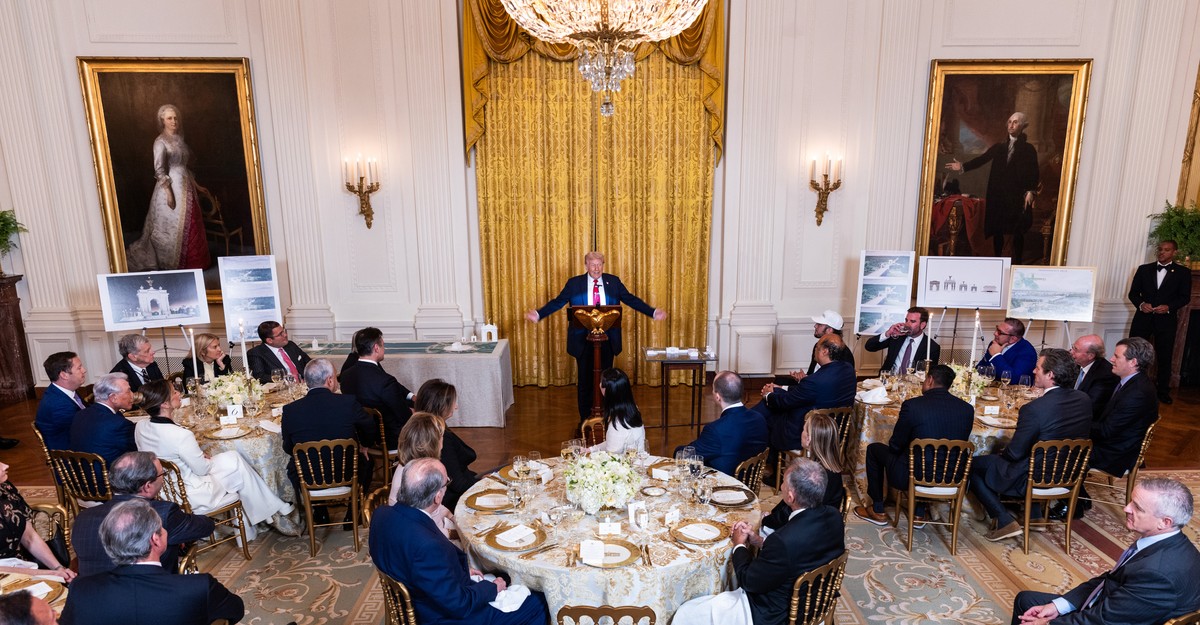
These "levees," as they were called, were not loose occasions. Washington stood by the fireplace in a dining room cleared of its chairs. Dressed in a black velvet suit, hair powdered, hat in hand, he greeted guests with a formal bow. Handshakes, familiar and egalitarian, were prohibited. Conversation was sparse. The president, per Alexander Hamilton's instructions, might talk "cursorily on indifferent subjects," but nothing more.
Texas A&M University last week banned a philosophy professor from teaching about Plato's Symposium because it's too gay, and, while obviously philosophy classes should be allowed to teach about Plato and state lawmakers and administrators shouldn't be interfering in curricula... they are right that the specific texts that they banned are pretty gay. If the legislators' and administrators' goal is to make LGBTQ+ people feel more isolated and alone as a way of getting them to conform and pretend to be cisgender and heterosexual,
A professional philosopher outside the academy walls can act as a popularizer (the goal here is to make philosophy more accessible to the general public), an applied ethicist (the major task is to offer an analysis of various specific moral issues that arise within a society), and a public intellectual (I limit this role to questions that have political connotation). Of course, there are overlaps between these roles and they certainly do not exhaust all possible forms of public engagement of a professional philosopher.
A drawn circle is at least something physical. You can see it, touch it, erase it. The skeptic can still say, "Circles are grounded in physical reality. Justice is different; it's just an idea in your head." So let's talk about the number two. Point to it. Not two apples, not two fingers, not a numeral on a page-that's just a symbol.
The principle of intellectual charity is fundamental to constructive political conversations. This principle states that, in any discussion, we should accept the best version of an opponent's ideas, not a distorted version or a "straw man." Exaggeration and distortion of opposing opinions (always present, to some degree, in political debates) have become the standard form of political argument in contemporary America.
They escaped persecution in the form of violent antisemitism and came to Canada with next to nothing. They built their lives from the ground up and understood, through lived experience, what the normalization of cruelty did to the human spirit, how quickly people can be swayed by the opinions of the day, and how easily one could forfeit the human capacity to stop and truly think about what one is doing.