Design
fromPsychology Today
6 hours agoThe Future of Brain Health Is Architecture
The built environment significantly influences mental health, mood, and performance, with neuroscience guiding design for improved well-being.
When lives are assigned a higher dollar value, stricter pollution standards tend to clear the 'economic efficiency' sniff test, resulting in cleaner air. But that improved air quality comes at the expense of America's industrial industries, which have to invest in pricey systems to reduce the amount of these pollutants they spew down to acceptable levels.
The Greenbelt, an over 800,000-hectare ecologically sensitive zone around the Greater Golden Horseshoe, was created in 2005. It provides environmental protection and specifies where development should not occur.
Meininger, who grew up in Germany but now lives in London, likes making things. So when he saw how much his young sons enjoyed the jungle gym and play forts at the local park, he made an indoor treehouse for them.
Hoppers, like Pixar's pre-Disney films, is a delight. The beavers' world is immersive and richly realized, grounded in science but never dry. The plot zigs and zags between moments of absurdity and emotional heft to stirring effect; I cried multiple times, and not just because of the low-hanging fruit of grandma death.
Eddie Oroyan and his wife faced a devastating loss at LewaTerra Farm after two kona low storms hit Oahu, wiping out nearly all their crops and leaving them with extensive damage. The couple initially felt hopeful after the first storm but were met with even greater destruction from the second storm, which inundated neighborhoods and caused evacuations.
Connected vehicles are becoming software-defined, sensor-rich, and permanently online. This evolution expands both legal exposure across sectors and legal frameworks that were traditionally unfamiliar for the automotive and transportation industry: (i) telecoms licensing and cross-border connectivity, (ii) data protection and data-sharing (e.g. with insurers/ad-tech), (iii) cybersecurity and safe Over-The-Air (OTA) governance, (iv) product liability for automated/Advanced Driver Assistance Systems (ADAS) features, (v) eCall obligations amid 2G/3G mobile network sunsets, (vi) national-security supply-chain controls, and (vii) IP disputes.
"Singapore is in a very unique position because they face a lot of land constraints, so there are few ways for them to generate their own renewable energy. Singapore is pushing for integrated energy systems throughout ASEAN, so that renewable energy produced in other countries can be brought back to Singapore. There's a very distinct, coordinated effort for countries to come together to work on climate change and energy security in a way that I haven't really seen."
The war began the week of my 26th birthday. There was a lightness on that day, something born from what remained of our childhood. Sparks like candy, crackling in our mouths: colorful letters; laughter leaking out through voice notes; hearts adorning our text chats; an abundance of cake. But the days that followed are laid out like burnt matchsticks; once the first one was lit, the flames consumed the rest. The war spared nothing on the calendar; I have had no other birthdays since.
In Indra's Net of pearls and jewels, every gem reflects every other, a shimmering image of interdependence. This ancient Vedic metaphor for connection across the cosmos also illuminates what the environmental philosopher Glenn Albrecht first proposed in 2014as 'theSymbiocene': the era after the Anthropocene, in which human technologies take their cues from living systems and work in partnership rather than through dominance.
Covering Climate Now was formed in 2019 in response to the climate silence that then prevailed in much of the press, especially in the United States. Over the years that followed, hundreds of newsrooms joined our effort, and press coverage of the story began to reflect the scale of the crisis. Newsrooms beefed up their climate reporting teams; they confronted misinformation that sought to play down the problem; they thought creatively about how to find the climate connection on every beat.
There's a myth in our society that real change requires force, strength, and domination. We celebrate athletes, CEOs, and politicians who crush their opponents. But history tells a different story. Lasting social change has often been triggered by humble people whose weapons were passion, principle, and an unwavering commitment to justice and the truth - not the truth we see on TV or read in print media, but rather the truth that we feel deep inside ourselves.
Life doesn't pause for grief or fear. You might be going through something devastating but you're still packing lunches, still driving your kids to baseball practice, still showing up to work. One minute I find myself prepping for a whole home presentation and the next minute I'm checking the news, hoping and praying that no one has been killed on the streets today.
It shows up three times a day, on your plate. The U.S. spends over $30 billion annually on agricultural subsidies. Most support corn and soy, crops that become livestock feed, not food for people. U.S. meat is artificially cheap, which has locked us into a high-emissions food system. It's the highway funding of food: a policy choice that induces demand and reinforces path dependency.
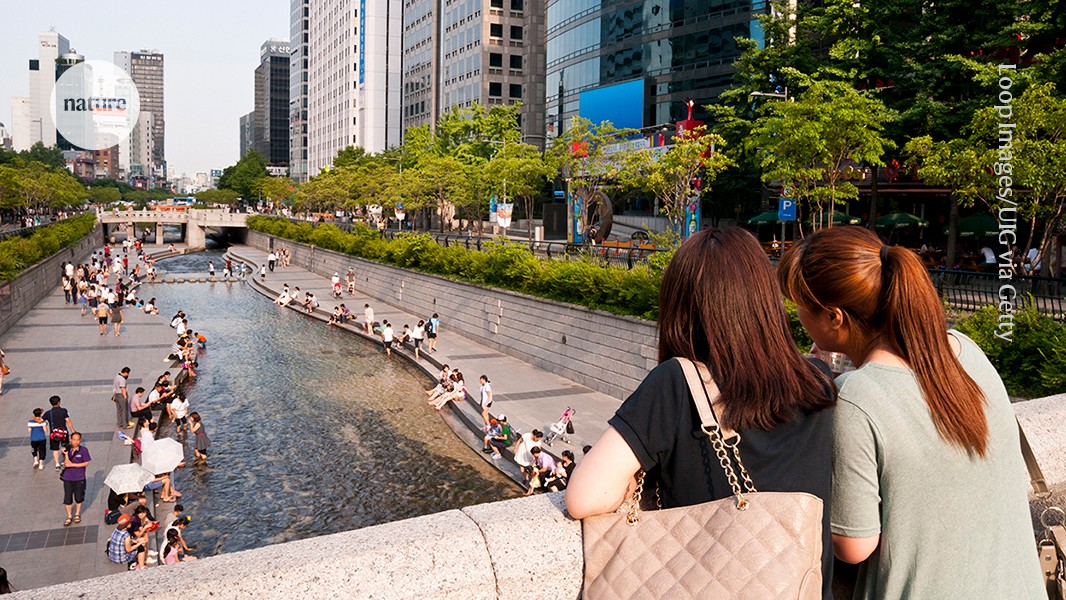
Cities around the world share a common goal: to become healthier and greener, supported by civic infrastructure that restores ecosystems and strengthens public life. The question is how to reach this. Global climate targets, local building codes, and municipal standards increasingly guide designers and planners toward better choices. Still, many cities struggle to translate these frameworks into everyday, street-level comfort and long-term ecological protection.
When Storm Dennis hit the UK in 2020, a wall of dirty, frigid water from a tributary of the Taff threw Paul Thomas against the front of his house in the south Wales village of Ynysybwl. He managed to swim back into his home before the storm surge changed direction, almost carrying him out of the smashed-in front door. I was holding on to downpipes to stop myself being dragged out again.
When the category-5 storm Hurricane Melissa struck Jamaica in October, its path crossed communities that had varying levels of preparedness. Many with maintained coastal protections, upgraded drainage and reliable early-warning systems had power and water restored in days. Others were immobilized for weeks.