#precuneus
#precuneus
[ follow ]
#neuroscience #mental-imagery #memory #consciousness #mental-health #psychology #artificial-intelligence

fromWIRED
6 days agoMeet the Man Making Music With His Brain Implant
Galen Buckwalter, a 69-year-old research psychologist and quadriplegic, participated in a brain implant study to contribute to science that aids those with paralysis. The six chips in his brain decode movement intention, allowing him to operate a computer and feel sensations in his fingers again.
Music production

Philosophy
fromThe Conversation
2 weeks agoHuman vision: what we actually see - and don't see - tells us a lot about consciousness
Significant visual processing occurs unconsciously in the brain, as demonstrated by blindsight and inattentional blindness phenomena where people perceive visual information without conscious awareness.

Data science
fromNational Institute of Mental Health (NIMH)
4 weeks agoBrain Cell Atlas: From Data to Knowledge Base
CUBIE will coordinate the BRAIN Initiative Cell Atlas Network by enabling exploration of brain cell data, supporting research rigor through FAIR principles, and establishing consensus taxonomies and data standards for comprehensive brain cell atlases.
Psychology
fromSilicon Canals
1 week agoHighly intelligent people often don't realize it but psychology says the way they experience boredom is fundamentally different from most people - Silicon Canals
Boredom manifests differently in highly intelligent individuals compared to those needing external stimulation, requiring distinct resolutions.
Artificial intelligence
fromPsychology Today
4 weeks agoAnti-Intelligence: When Language Operates Without a Mind
AI generates language through a fundamentally different structural architecture than human cognition, not through inferior intelligence but through inverted processes detached from lived experience and stakes.
#biological-computing
Science
fromTheregister
3 weeks agoInside datacenter where day starts with cerebrospinal fluid
Cortical Labs operates biological computers powered by living neurons that require daily maintenance with cerebrospinal fluid and precise atmospheric conditions to function and learn faster than classical computers while consuming less energy.
#consciousness


Philosophy
fromBig Think
3 weeks agoConsciousness may be more than the brain's output - it may be an input, too
Consciousness remains scientifically inaccessible through third-person observation, yet a radical theory proposes consciousness can physically influence brain dynamics and leave measurable traces.
Mindfulness
fromSilicon Canals
4 weeks agoPeople who do their best thinking while driving or walking usually display these 7 cognitive traits that reveal how their mind actually works - Silicon Canals
Movement-based thinking activates diffuse cognitive mode, enabling creative problem-solving and unexpected mental connections outside focused work environments.
#self-talk
Psychology
fromSilicon Canals
2 weeks agoResearch suggests that people who talk to themselves out loud while problem-solving aren't eccentric - they're accessing a cognitive loop that processes information 30% more efficiently than internal dialogue, and the habit that most people suppress in public is the exact mechanism their brain would choose if social judgement weren't part of the equation - Silicon Canals
Talking to yourself out loud is an effective cognitive tool that sharpens focus, accelerates problem-solving, and improves performance on complex tasks, contrary to social stigma.
fromPsychology Today
1 month agoThe Architecture of Identity: How the Brain Builds a Self
Attention is the brain's filtering mechanism; what passes through that filter is what gets encoded. What gets encoded becomes memory. And memory is the raw material of identity. So in the architecture of your identity, attention is the doorway.
Miscellaneous
Psychology
fromSilicon Canals
3 weeks agoPsychology says people who remember the exact location of every item in their childhood home - which drawer, which shelf, which cupboard - aren't sentimental, their brain mapped that house the way a body maps a minefield, and the precision that looks like nostalgia is actually surveillance that never turned off - Silicon Canals
Detailed childhood home memories reflect survival-based hypervigilance rather than nostalgia, with brains mapping familiar spaces like tactical terrain to navigate unpredictable or chaotic environments.
fromMail Online
3 weeks agoIncredible map reveals how the brain processes different emotions
They created an artificial 'mental map', with pleasantness along one axis and bodily reactions along the other, and charted how the brain responded while watching clips from films. The results revealed clear groupings in the way that our brains represent emotion - with guilt, anger and disgust in one corner and happiness, satisfaction and pride in the other.
Science
fromPsychology Today
1 month agoImagining From Multiple Perspectives
Skilled fiction-writers can guide the imagination, cuing readers to use their senses so that they fantasize more richly than they could alone (Scarry 1999, 3-9). If it serves a storyteller's artistic aims, a writer can prompt readers to imagine a scene from several perspectives at once. Creative writers can accomplish this goal by blending appeals to readers' visual and somatosensory (bodily) senses.
Books
Science
fromPsychology Today
1 month agoHow the Brain Interprets Faces Into Social Messages
Facial expressions emerge from coordinated activity across multiple brain regions operating on different timescales, from rapid motor signals to slower stable representations, creating socially meaningful and well-coordinated gestures.
fromPsychology Today
2 months agoWhen Thinking Becomes Optional
Minutes into teaching my business school class, I asked what seemed like an innocent question: What is one word that describes how you feel about AI right now? One word. That's it. My students looked up, looked down, looked anywhere to avoid eye contact. Silence. "I promise," I said, "this is a safe space." Something I'd repeat throughout the course-and I meant it. Then the answers came quickly, and the energy in the room shifted as they arrived. You could feel the sheen of performance
Marketing
Law
fromwww.scientificamerican.com
2 months agoVideo evidence and eye witness accounts: The science behind why people see different things
The same police dashcam footage of a 2007 high-speed chase and collision produced sharply different interpretations, culminating in the Supreme Court ruling for the officer.
fromwww.nytimes.com
2 months agoBrain Health Challenge: Try a Brain Teaser
Decades of research show that people who have more years of education, more cognitively demanding jobs or more mentally stimulating hobbies all tend to have a reduced risk of cognitive impairment as they get older. Experts think this is partly thanks to cognitive reserve: Basically, the more brain power you've built up over the years, the more you can stand to lose before you experience impairment.
Public health


Mental health
fromNature
2 months agoDaily briefing: What people with no 'mind's eye' can tell us about consciousness
Vividness of mental imagery, handwriting practices, psychiatric-diagnostic revisions, and emerging brain–computer interfaces shape memory, creativity, education, mental-health classification, and technology development.
fromPsychology Today
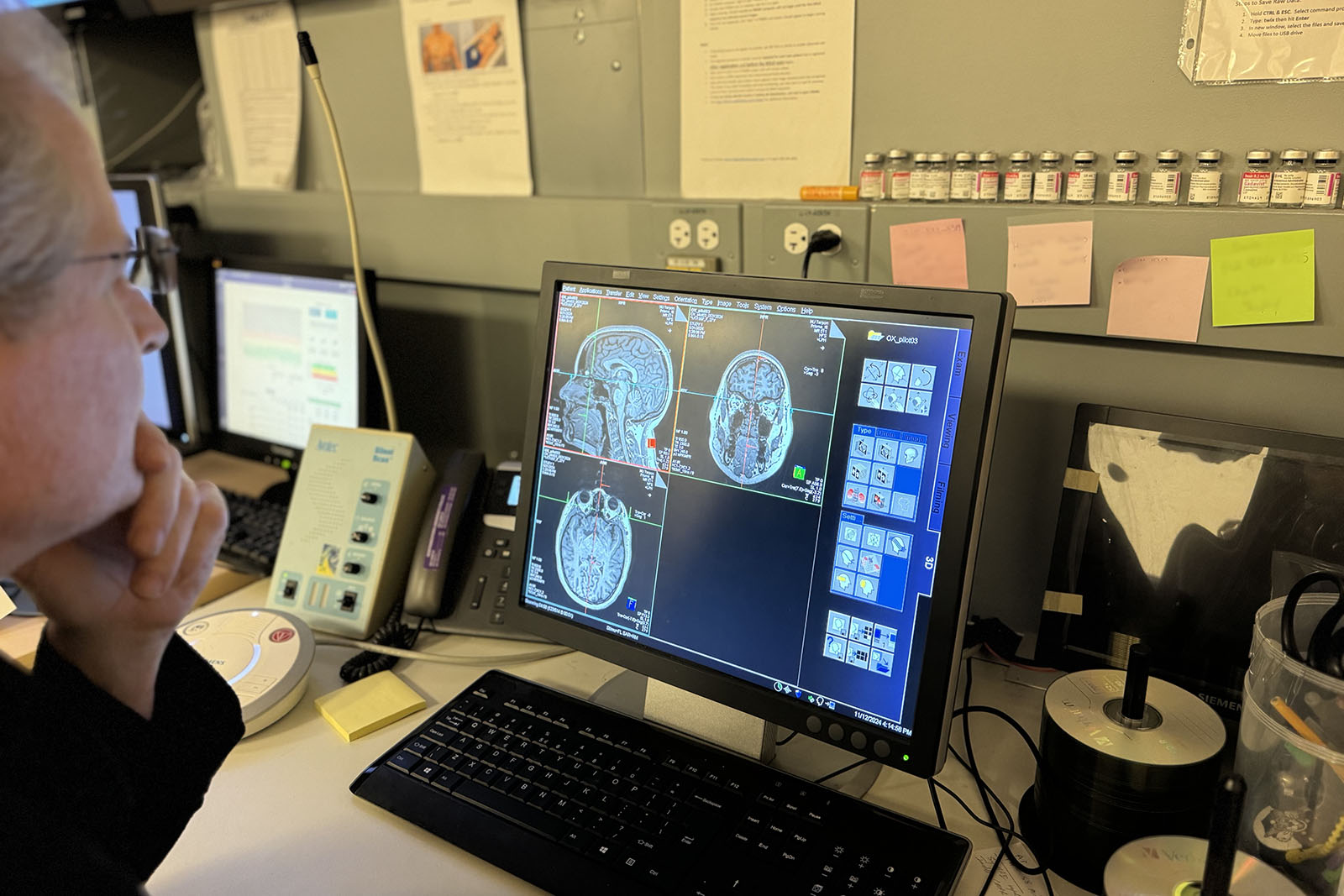
1 month agoAI Spots Brain Disorders in Seconds From Scans
According to University of Michigan neuroscientists, not only can their AI vision language model diagnose neurological disorders from MRI scans with high performance accuracy, but it also has foundation model capabilities, making it a flexible, general-purpose solution that can be tailored for a wide variety of medical imaging. "These results demonstrate that Prima has foundation model properties, and reported performance will continue to improve with additional health system training data and larger compute budgets," wrote the study's authors in the preprint.
Artificial intelligence
fromPsychology Today
1 month ago3 Unique Ways Smart People Think
Studies show that people with high fluid intelligence can process multiple "what if" scenarios concurrently, helping them see ahead, identify concealed dangers, and plan their actions. This mode of thinking requires a lot of working memory because the brain isn't looping idly; it's stress-testing every single possibility that comes to mind. This might be why these people seem to be frequently lost in their thoughts, even when they're alone.
Mental health
Artificial intelligence
fromPsychology Today
2 months agoMental Murmuration: A Metaphor for the Workings of the Brain
Neural processing consists of fluid, distributed patterns of activation across interconnected networks that function collectively like a murmuration, not as a container of discrete informational bits.
fromSilicon Canals
1 month agoWhat neuroscience reveals about people who replay conversations in their head for hours after they happen - Silicon Canals
Neuroscientists have a name for the brain network that fires up when you're not focused on an external task: the default mode network, or DMN. It's the constellation of regions - the medial prefrontal cortex, posterior cingulate cortex, and angular gyrus among them - that hums to life when you daydream, reflect on yourself, or think about other people's mental states.
Psychology
fromSilicon Canals
1 month agoWhat neuroscience reveals about people who lie awake replaying conversations from six hours ago - Silicon Canals
Rumination activates the default mode network (DMN) - the brain's self-referential processing system. This is the neural circuitry that fires when you're thinking about yourself in relation to others: your identity, your social standing, your mistakes. It's the brain asking, over and over, What does this say about me?
Psychology
fromPsychology Today
2 months agoAI-Decoded Brain Signals May Help Paralyzed Regain Movement
Artificial intelligence (AI) machine learning is making a difference in assistive technology to help restore movement for the paralyzed. A new study in the American Institute of Physics journal APL Bioengineering shows how AI has the potential to restore lower-limb functions in those with severe spinal cord injuries (SCIs) by identifying patterns in brain signals captured noninvasively via electroencephalography (EEG).
Artificial intelligence
fromFast Company
1 month agoHow hesitation is a fundamental brain feature, according to neuroscientists
At the Winter Olympics, skiers, bobsledders, speedskaters, and many other athletes all have to master one critical moment: when to start. That split second is paramount during competition because when everyone is strong and skilled, a moment of hesitation can separate gold from silver. A competitor who hesitates too much will be left behind -but moving too early will get them disqualified.
Science

fromPsychology Today
1 month agoAre Frontal Lobe Breakups Real?
There are lots of reasons why relationships fall apart; all kinds of incompatibilities can doom romance. Some are trivial, but occasionally there might be something more profound at the root of an estrangement. Recently, the concept of the "frontal lobe breakup" appeared in popular culture. The idea is that the final stage of development in the executive regions of the brain-the frontal lobes-changes someone's perspective about their relationship. The onset of advanced cognitive skills in one partner creates a gap in maturity too big to bridge.
Psychology
fromFuturism
2 months agoScientists Preparing to Simulate Human Brain on Supercomputer
The team, which is being led by Jülich neurophysics professor Markus Diesmann, will leverage the Joint Undertaking Pioneer for Innovative and Transformative Exascale Research (JUPITER) supercomputer for their simulation. JUPITER is currently the fourth most powerful supercomputer in the world according to the TOP500 list, and features thousands of graphical processing units. The team demonstrated last month that a " spiking neural network " could be scaled up and run on JUPITER, effectively matching the cerebral cortex's 20 billion neurons and 100 trillion connections.
Science
fromPsychology Today
1 month agoHyperphantasia: When Imagination Is as Vivid as Real Life
Close your eyes and picture an apple. Most people see something-a faint, slightly blurry image, less vivid than a real apple. A few, however, will see it as clearly as if it were sitting right in front of them. This ability is called hyperphantasia. Hyperphantasia, literally meaning "beyond imagination," refers to exceptionally vivid mental imagery. It is often described as the opposite of aphantasia, a condition in which people report little or no ability to form mental images.
Psychology
fromPsychology Today
1 month agoDaily Prophets: How Your Brain Predicts the Future
I am a worrier, and have been for most of my life. At some point, someone dear and smart teased me that I worry about the wrong things. The things that hit me, she noted, were never the things I worried about. For a while that left me feeling like an incompetent worrier-until my research caught up. I realized that the things I worry about often don't end up hurting me precisely because worrying helps me diffuse them ahead of time.
Psychology
fromPsychology Today
1 month agoWhy Your Eyes Like What Your Eyes Like
Real estate with ocean views, stunning mountain vistas, and wide-open green spaces sell at premium prices because humans find those settings pleasing [1-5]. Certain color combinations in fashion-such as brown and forest green-blend harmoniously, while others, such as hot pink and orange, clash. And our eyes like certain proportions in visual objects (like buildings and human faces) but not others.
Science
fromwww.theguardian.com
2 months agoI see time as a grid in my mind. I remember the birthdays of friends I haven't seen for 65 years
Did someone with spatial-sequence synaesthesia design the calendar app on mobile phones? Because that's how time and dates look in my brain. If you say a date to me, that day appears in a grid diagram in my head, and it shows if that box is already imprinted with a holiday, event or someone's birthday. Public holidays and special events like Christmas and Easter are already imprinted for the year, and the diagram goes backwards to about 100,000BC
Psychology
Science
fromHarvard Gazette
2 months agoWant to speed brain research? It's all in how you look at it. - Harvard Gazette
SmartEM uses machine learning to guide common single-beam scanning electron microscopes in real time, increasing scanning speed sevenfold and democratizing high-resolution connectomics.
fromFast Company
2 months agoHow to train your brain like your muscles, according to a neurologist
It might come as a surprise to learn that the brain responds to training in much the same way as our muscles, even though most of us never think about it that way. Clear thinking, focus, creativity, and good judgment are built through challenge, when the brain is asked to stretch beyond routine rather than run on autopilot. That slight mental discomfort is often the sign that the brain is actually being trained, a lot like that good workout burn in your muscles.
Science
[ Load more ]