#realtorcom-rankings
#realtorcom-rankings
[ follow ]
#real-estate #housing-market #mortgage-rates #real-estate-trends #market-trends #home-prices #federal-reserve
#mortgage-rates


Real estate
fromBoston Condos For Sale Ford Realty
5 days agoWhat's The Forecast For Mortgage Rates In The Latter Half Of 2026? Boston Condos For Sale Ford Realty
30-year fixed mortgage rates in H2 2026 are expected to range between 5.50% and 6.40%, with varying forecasts from major housing authorities.
Real estate
fromBoston Condos For Sale Ford Realty
5 days agoWhat's The Forecast For Mortgage Rates In The Latter Half Of 2026? Boston Condos For Sale Ford Realty
30-year fixed mortgage rates in H2 2026 are expected to range between 5.50% and 6.40%, with varying forecasts from major housing authorities.
NYC real estate
fromwww.businessinsider.com
1 day agoWe bought a house that's too small so we could afford our dream neighborhood. A $300,000 third-party loan will help us renovate.
The Feinbergs purchased a small home in Wayne, Pennsylvania, and planned to expand it using RenoFi financing based on future value.
fromwww.housingwire.com
3 days agoeXp, Weichert home seller commission lawsuit settlements approved
The Gibson plaintiffs claimed that eXp negotiated the agreement with the Hooper plaintiffs after conducting prolonged, unsuccessful settlement negotiations with Intervenor Plaintiff counsel, conducting a reverse auction in an attempt to gain a sweetheart deal.
Boston real estate
Marketing tech
fromwww.housingwire.com
2 weeks agoWhy AI tools are not changing real estate fees yet
AI in real estate improves agent efficiency but fails to reduce consumer costs because incentive structures remain unchanged, allowing gains to be absorbed internally rather than passed to buyers and sellers.
fromwww.housingwire.com
2 days agoMortgage lenders ramp up homebuilder divisions
Ginsburg stated that treating builder business as a core pillar rather than a side channel reflects a broader industry shift. He believes a healthy balance of builders should be around 15% to 20% of the overall retail book of business.
Real estate
#housing-market


SF real estate
fromFortune
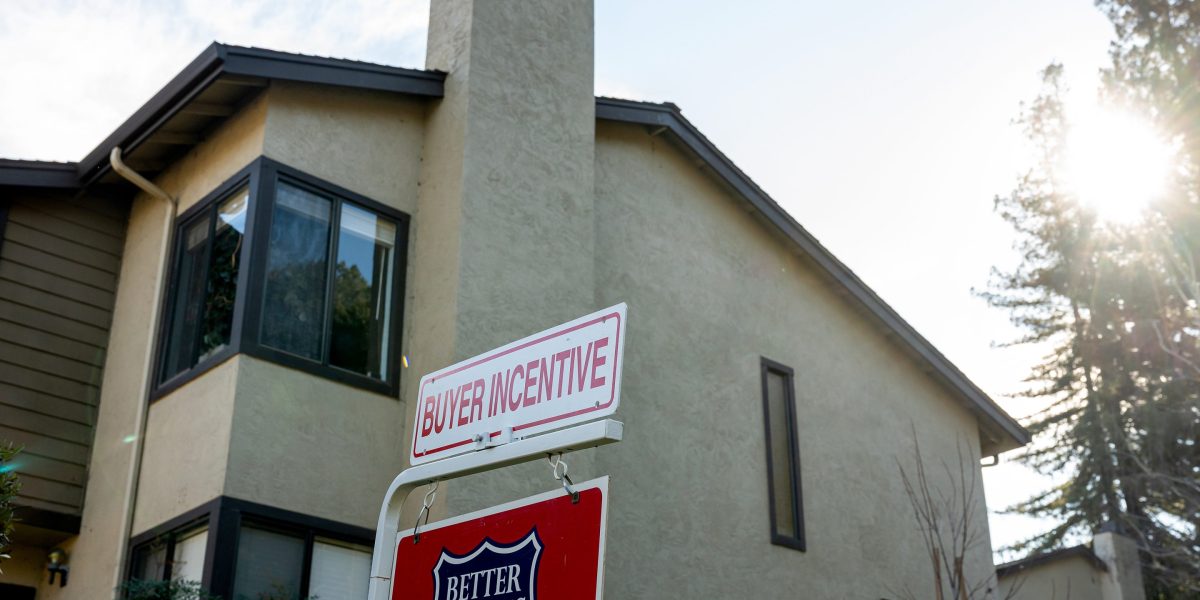
6 days agoThere are now nearly 50% more home sellers than buyers as gap widens to a record 630,000. But it's only a buyer's market if you can afford it | Fortune
Home buyers have gained leverage as housing supply exceeds demand, with a significant gap between sellers and buyers recorded in February.
Marketing tech
fromwww.housingwire.com
2 weeks agoData ownership and AI tools are reshaping real estate tech stacks
Real estate agents must adopt AI to remain competitive, as clients increasingly expect AI-enhanced workflows; those who don't use AI will fall behind elite agents who leverage technology for market advantage.
Boston real estate
fromFast Company
2 weeks agoThe housing market's hottest week is coming-and sellers who miss it could lose out on $26K
Spring 2026 housing market conditions are improving with lower mortgage rates and favorable selling conditions, particularly during mid-April when homes sell faster and at higher prices.
Boston real estate
fromRedfin | Real Estate Tips for Home Buying, Selling & More
3 weeks agoCan You Sell a House With a Mortgage? A Step-By-Step Guide
Most homeowners sell their homes with outstanding mortgages; the buyer's funds automatically pay off the remaining loan balance at closing, with sellers keeping any equity after fees.
#housing-affordability
SF real estate
fromwww.housingwire.com
3 weeks agoHomes.com, Zillow, and the debate behind a hedge fund push
Trump administration prioritizes housing affordability through mortgage cost reduction and institutional investor restrictions, while Homes.com challenges Zillow's monopoly with a consumer-friendly listing model that pressures agent costs downward.

SF real estate
fromwww.housingwire.com
3 weeks agoHomes.com, Zillow, and the debate behind a hedge fund push
Trump administration prioritizes housing affordability through mortgage cost reduction and institutional investor restrictions, while Homes.com challenges Zillow's monopoly with a consumer-friendly listing model that pressures agent costs downward.
SF real estate
fromRedfin | Real Estate Tips for Home Buying, Selling & More
1 month agoIs the Housing Market Going to Crash?
The housing market is undergoing a long-term correction rather than a crash, with stricter lending standards and inventory shortages preventing a credit-driven collapse despite affordability challenges.
fromwww.housingwire.com
3 days agoIntroducing the 2026 HousingWire Rising Stars!
HousingWire's 2026 Rising Stars honor industry leaders age 40 and under who are making an impact across mortgage, real estate and homebuilding. The honorees represent a range of roles and are recognized for driving innovation, supporting their organizations and contributing to broader industry progress.
Real estate

Real estate
fromwww.housingwire.com
5 days agoAI can accelerate real estate transactions But it can't replace the professional work that protects property rights
Artificial intelligence is enhancing efficiency in the title industry, but professional expertise remains essential for ensuring clear property ownership.

fromwww.housingwire.com
2 weeks agoZillow Preview adds pre market listings with brokerage branding
We believe an open market serves consumers the best. Sellers should have the opportunity to reach the broadest pool of potential buyers if they choose to do so, because broad exposure generally benefits the homeowner. However, sellers should also be able to retain the right to decide how their property is marketed.
Real estate
fromwww.housingwire.com
3 weeks agoRealtor.com data challenges Senate ban on big home investors
One of the biggest takeaways is that from a national perspective, the largest investors account for a really small proportion of single-family home purchases and that share has decreased in recent years. So the ban is going to have less of a bite now than it would have had it been enacted a few years ago. It is attacking a trend that is already decreasing as opposed to one that is becoming increasingly part of the market.
Real estate
Real estate
fromwww.housingwire.com
3 weeks agoPrivate listings are polarizing real estate, here is a path forward
Private listings create financial incentives for brokerages to keep homes off the MLS and sell in-house, earning both sides of commission, which must be transparently disclosed to sellers.
Real estate
fromFast Company
4 weeks agoStates with the most-and least-housing market inventory heading into spring 2026
Active listings and months of supply are key indicators of home price momentum, with rising inventory favoring buyers and declining inventory favoring sellers relative to pre-pandemic 2019 levels.
fromInman
2 months agoThe social media mindset driving real estate growth
Our top KW-affiliated agents tell me continually that real estate has always been a relationship business. What's changed is where those relationships are formed, nurtured and reinforced. Today, social media is one of the most powerful relationship platforms for building and sustaining relationships in real estate. But despite constant platform changes, algorithm updates and new tools, the agents and businesses seeing real growth aren't chasing shortcuts. They're building trust through each connection, which leads to scale.
Real estate
fromwww.housingwire.com
1 month agoZillow posts profit in 2025 as mortgage and rentals drive growth
During the fourth quarter of 2025, residential revenue was up 8% annually to $428 million, mortgage revenue rose 39% on a yearly basis to $57 million and the rentals sector recorded a 45% year-over-year increase in revenue. For the full year 2025, the residential sector generated $1.704 billion in revenue, up 7% annually, while the mortgage operation generated $199 million in revenue, up 37% compared to the year prior.
Real estate
[ Load more ]