#revival-attempts
#revival-attempts
[ follow ]


UK politics
fromwww.theguardian.com
3 days agoThe Guardian view on Welsh language learning: cultural shifts can deliver a bright future for Cymraeg | Editorial
Plaid Cymru aims to promote the Welsh language and culture, reflecting a significant shift in societal attitudes towards bilingualism since devolution.
Media industry
fromNonprofit Quarterly | Civic News. Empowering Nonprofits. Advancing Justice.
4 days agoPolitics in an Attention Economy | Nonprofit Quarterly | Civic News. Empowering Nonprofits. Advancing Justice.
Candidates must be cultural figures to succeed in today's American politics, navigating an attention economy shaped by algorithms.
fromWashingtonian - The website that Washington lives by.
4 days agoTrump's Interference With DC Arts Is a Boon to Baltimore
The Baltimore Museum of Art landed her highly anticipated exhibition, 'Amy Sherald: American Sublime,' after the painter pulled her show from the National Portrait Gallery due to concerns over censorship. The exhibit has been a significant hit at the BMA: It was completely sold out by late February.
Washington DC
fromFast Company
6 days ago'Leverage the local': The fashion trend that explains why everyone around you is channeling their inner tourist
Clothing that bears the name of a city near or far has become a closet staple for many consumers in recent years, evolving from impulse purchases to mainstream fashion.
Fashion & style
fromThe Art Newspaper - International art news and events
1 day agoThe Louvre's new director is inheriting a troubled, traumatised museum-can he repair the damage?
The Louvre accumulated considerable delays in the deployment of its security equipment, in favour of an event-driven policy, a judgment Des Cars said was unfair.
Arts
Paris food
fromwww.theguardian.com
1 week agoProgressive Paris has many weapons to fight the far right, but the best? Spaces where you can simply hang out | Alexander Hurst
Paris is successfully creating third places that foster community engagement and accessibility, contrasting with the decline of such spaces elsewhere.
fromArchDaily
3 days agoThe Illusion of Lightness: Designing Civic Voids for Public Life
The original intent of pilotis was to create a sense of lightness that would allow circulation and light to flow beneath a structure, but contemporary requirements render thin columns insufficient for large-scale civic projects.
Renovation

#traffic-safety
Mission District
fromStreetsblog
3 weeks agoWeekend Roundup: Activists Install Posts in S.F., Hopkins Fight Renews in Berkeley - Streetsblog San Francisco
Activists installed temporary traffic calming infrastructure at a deadly San Francisco intersection after a child was killed, demonstrating that safety improvements can be implemented quickly when city officials delay action.
Brooklyn
fromBrooklyn Paper
5 days agoCommunity frustration grows over Metropolitan Recreation Center closure in Williamsburg * Brooklyn Paper
The closure of the Metropolitan Recreation Center pool has significantly impacted the community, especially older swimmers who rely on it for health and socialization.
Relationships
fromPortland Monthly
2 weeks agoFrom the Editor: Building Community Isn't Always Fun. Do It Anyway.
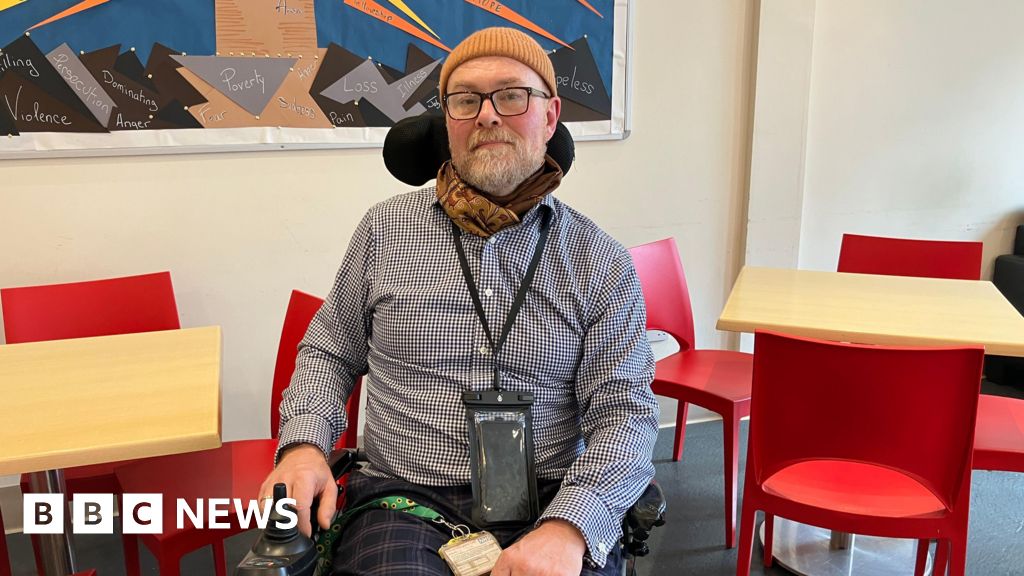
Proximity-based community organizing builds solidarity across differences through sustained engagement and shared material goals, fostering understanding that transcends initial disagreements.

Mindfulness
fromTNW | Opinion
2 weeks agoThe most radical act in an age of outrage is to play
Deliberate manipulation through social media and engineered news cycles creates division and emotional volatility, but reconnecting with simple human activities like play offers resistance to this conditioning.
#historic-preservation

New York City
fromBrooklyn, NY Patch
1 month agoHistoric Brooklyn Homes Preserved Two Months Ahead Of Schedule
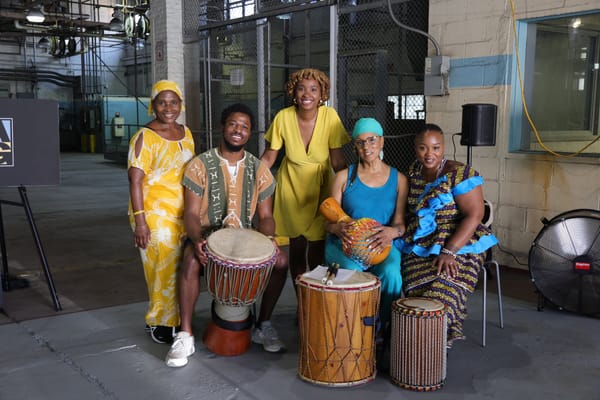
A $4 million restoration of the Hunterfly Road Houses at Weeksville Heritage Center preserved four 19th-century structures representing one of the nation's largest pre-Civil War free Black communities.
New York City
fromBrooklyn, NY Patch
1 month agoHistoric Brooklyn Homes Preserved Two Months Ahead Of Schedule
A $4 million restoration of the Hunterfly Road Houses at Weeksville Heritage Center preserved four 19th-century structures representing one of the nation's largest pre-Civil War free Black communities.
fromwww.bbc.com
1 week agoCampaigners celebrate after new town plans dropped
Campaigner Aysha Hawcutt stated that residents were 'not anti-homes', but believed the Adlington plan was 'the wrong proposal in the wrong place'. She expressed pride in the community's resilience against the development threats.
London politics
fromDefector
3 weeks agoR&B Wants To Make Pop Music Fun Again | Defector
R&B in the 21st century has been in a constant state of flux, tugged between safe traditionalism and blurry attempts at progression. For the last decade-plus that "progression" has seen R&B music become more indebted to trap records and the moody atmospherics of alternative bands like Radiohead, Coldplay, or My Bloody Valentine.
Music
fromArchDaily
4 weeks agoArchiving the Technosphere: How Museum Architecture Mediates Human-Made Systems
The contemporary technology museum has emerged as a performative participant in the systems it seeks to document. The architecture of these institutions has become increasingly fluid and bold, often mirroring the velocity and complexity of the systems it houses. They operate as mediators between the human, the ecological, and the technological realms, transforming from encyclopedic warehouses into active educational engines.
Science
Alternative transportation
fromStreetsblog
1 month agoUrban Truth Collective: Straight Talk About The Joy Of Cities In An Age Of Disinformation - Streetsblog USA
Fifteen-minute cities enable convenient living without car dependency, while decades of car-centric policies have deliberately created sprawl and reduced walkability, homelessness correlates directly with insufficient housing supply, and wider roads increase crashes and traffic rather than reducing congestion.
Brooklyn
fromBrownstoner
2 weeks agoRestoration Work in Prospect Park's The Vale Kicks Off
An eight-acre section of Prospect Park undergoes a $37.5 million restoration project, the largest capital investment in over a decade, transforming a neglected area into an accessible nature-focused retreat by 2027.
fromThe Art Newspaper - International art news and events
1 week agoComment | Museums must be the leaders in a moral revolution
Bregman claims, 'Today the whole of Europe risks turning into one big Venice, a beautiful open-air museum. A great destination for Chinese and American tourists. A place to admire what was once the centre of the world.' This statement encapsulates the concern that Europe is losing its cultural significance.
Arts
Renovation
fromFast Company
2 weeks agoNew York City is giving its iconic Carnegie Libraries a makeover
New York Public Library completed a $176 million renovation of five Carnegie Libraries, establishing climate-sensitive design standards as models for balancing historic preservation with contemporary community needs.
Arts
fromdesignboom | architecture & design magazine
2 weeks agowhat if utopia began with the buildings we already have? theaster gates proposes an answer
Theaster Gates realizes Utopia through active community engagement with abandoned urban spaces, transforming them into shared cultural infrastructure through repair and reuse.
fromArchDaily
1 month agoHeritage Without Permanence: When Architecture Endures by Disappearing
A Gothic cathedral can take centuries to complete. A world exposition pavilion may stand for six months. A ritual structure in Kolkata rises and vanishes within five days. Yet each draws pilgrimage, shapes collective memory, and reorganizes urban life. If heritage has long been defined by what endures, architecture repeatedly shows that cultural authority can also belong to what gathers people.
Design
fromBuzzFeed
2 months agoI Really, Really Needed To See These 23 GOOD Things Happening In America Right Now
They all follow the rule of 'only take one,' and you can rehide other shines you find. The entire city turns into a collective scavenger hunt for roughly a month, and it's common to see packs of humans hunting in the rain and snow, even at night with flashlights. In this small corner of the world, tucked into the armpit of the PNW, someone decided
Online Community Development
Environment
fromThe Art Newspaper - International art news and events
2 months agoComment | In worrying times for politics and the environment, art can still provide hope
Olafur Eliasson confronts the climate emergency through art and action, urging practical engagement over passive hope while remaining committed to idealism.
fromArchDaily
1 month agoShaping Architectural Continuity: 25 Revitalization Projects Across Historic, Industrial, and Natural Sites
Heritage sites constitute complex spatial archives in which architecture, history, and collective memory converge. They encompass a wide spectrum of contexts-from archaeological remains, ancient and historic townscapes, UNESCO-listed landscapes, to early modern civic structures and industrial infrastructures. Yet these environments confront challenges: climate change, urban transformation, disaster, shifting social needs, and the gradual erosion of material fabric. Revitalization and restoration projects respond to these conditions by positioning architectural and spatial practice as an active mediator between preservation and the contemporary topologies.
Renovation
Renovation
fromArchitectural Digest
1 month agoHow the Design Community Has Rallied to Help Los Angeles Rebuild After Last Year's Devastating Fires
The Foothill Catalog Foundation supplies pro bono, preapproved house and ADU designs to accelerate rebuilding for Eaton Fire survivors, partnering with Habitat for Humanity.
fromHyperallergic
2 months agoActivists Fight to Salvage the "Sistine Chapel of New Deal Art"
A group of artists, preservationists, and activists is sounding the alarm against Trump's potential demolition of a prominent federal office building next to the National Mall, and the treasured artworks inside it - including several New Deal-era murals that speak to the value of Social Security in the United States. Alex Lawson, executive director of the advocacy organization Social Security Works, co-authored a petition to save the works with local muralist Absurdly Well.
Arts
[ Load more ]