Medicine
fromPsychology Today
2 days agoBuilding Wisdom With BDNF-and Ketamine
BDNF is crucial for brain health, and can be boosted through healthy habits and ketamine, aiding neuroplasticity and cognitive function.
Social foraging strategies illustrate the balance between competition and cooperation, where individuals either produce resources or exploit the efforts of others, navigating ecological and social constraints.
Dopamine is one of the most extensively studied neurotransmitters, chemicals that convey signals from cell to cell. It's the one with the highest profile outside neuroscience: often known as the 'pleasure chemical', it's depicted as the hit of reward that people get from recreational drugs or scrolling through social media. That's a gross simplification of what dopamine does; on that, researchers agree.
The researchers at Eon Systems have taken several pre-existing components: a fruit fly brain scan, a tool for modelling neurons, a model of some of the fly's muscles and body, and a very simple virtual environment, connected them together and ran it. The team claims that the result displays some of the behavior of the real insect.
Cortical Labs in Melbourne taught a dish of lab-grown neurons to play Pong in 2022. Now it has built what it describes as the world's first code-deployable biological computer, running on living human tissue rather than silicon chips, which is happily playing the 1993 shooter Doom. At first it didn't know how to move, aim or shoot. Then it would shoot two enemies and stop. So it's definitely learning.
Young, two-month-old lab mice housed with older, 18-month-old mice showed really impaired cognition. Researchers exposed young mice raised in a sterile, microbe-free environment to gut bacteria from old mice, causing the younger animals to perform worse on cognitive tests, as if they had prematurely aged, just like the cohoused mice.
They created an artificial 'mental map', with pleasantness along one axis and bodily reactions along the other, and charted how the brain responded while watching clips from films. The results revealed clear groupings in the way that our brains represent emotion - with guilt, anger and disgust in one corner and happiness, satisfaction and pride in the other.
Anyone living with schizophrenia understands the true limitations of current treatment options. Antipsychotics remain the single leading treatment for the disorder, and they are riddled with undesirable side effects. Weight gain, tardive dyskinesia, and excessive drowsiness are a few. Much research is devoted to expanding the range of medication options, and few academics have pursued other avenues. However, there is a possibility that treatment for schizophrenia can be approached through cellular methods if long-term research validates early signs of hope.
Mice with higher levels of parenting exhibit more prosocial allogrooming toward stressed adults. The medial preoptic area (MPOA), a brain area involved in parenting behaviour, bidirectionally regulates allogrooming toward stressed conspecifics. Allogrooming and parenting behaviours recruit a partially overlapping neuronal ensemble in the MPOA, are both controlled by an MPOAtoVTA pathway and are associated with dopamine release in the nucleus accumbens.
The human brain is engineered to ignore most of what it sees and hears, according to the neuroscientists I interviewed for the audio original Viral Voices. If that's the case, how are you supposed to make a memorable impression? The empowering news is that if you understand how the brain works, what it discards, and what it pays attention to, you'll be far more persuasive than you've ever imagined. Persuasive people have influence in their personal and professional lives.
As it turns out, neuroscience might be able to explain why. In a new study whose findings will surprise absolutely no one who's endured a fiery holiday dinner debate, researchers discovered that conservative and liberal brains don't just arrive at fundamentally different conclusions, but take strikingly different paths to get there. It's a fascinating piece of research which just might explain something about the yawning political divides currently tearing society apart.
First, you have to facilitate through the situation, which means realigning your mindset and asking yourself what you need to do to effect change for the next time you see this behaviour. Once this mindset has been established, there is a sequence of steps we must avoid to be able to effect change. These are as follows: 1. Do not allow your reactions to be based on what your child is saying.
I received an email recently that claims Wal-Mart senior management has been calling mandatory meetings for the company's employees in which the employees are told they "cannot" vote for the Obama-Biden ticket "or any other employee-friendly, union-friendly candidates for political office". It's not an urban legend, according to the sources I checked. This makes me so angry I just boil. When it comes to the Constitution, I am a rabid supporter.
Adult content has never been as accessible as it is now, thanks to the internet. Hell, online smut played a major role in the rise of the web itself in the 1990s. With that glut of porn, some have voiced concerns that some people are consuming too much of the stuff or even becoming addicted, which they claim could have consequences like regulating emotions or impaired sexual functioning.
Last November, the UK government announced a bold plan to phase out animal testing in some areas of research. Animal tests for skin irritation are scheduled for elimination this year, and some studies on dogs should be slashed by 2030. The long-term vision is 'a world where the use of animals in science is eliminated in all but exceptional circumstances'.
Neuroscientists have a name for the brain network that fires up when you're not focused on an external task: the default mode network, or DMN. It's the constellation of regions - the medial prefrontal cortex, posterior cingulate cortex, and angular gyrus among them - that hums to life when you daydream, reflect on yourself, or think about other people's mental states.
Exposure to a fungicide induced changes to gene expression in rats that persisted for at least 20 generations. It also increased the chance of offspring developing kidney disease, obesity or experiencing complications when giving birth, according to the longest-running study of 'epigenetic' changes in mammals.
Mini 3D 'organoids' are slowly phasing out animal testing in some areas of research. These laboratory-grown tissue structures can model human biology more accurately than traditional animal models, reducing the need for animal experimentation while providing more relevant data for drug development and disease research.
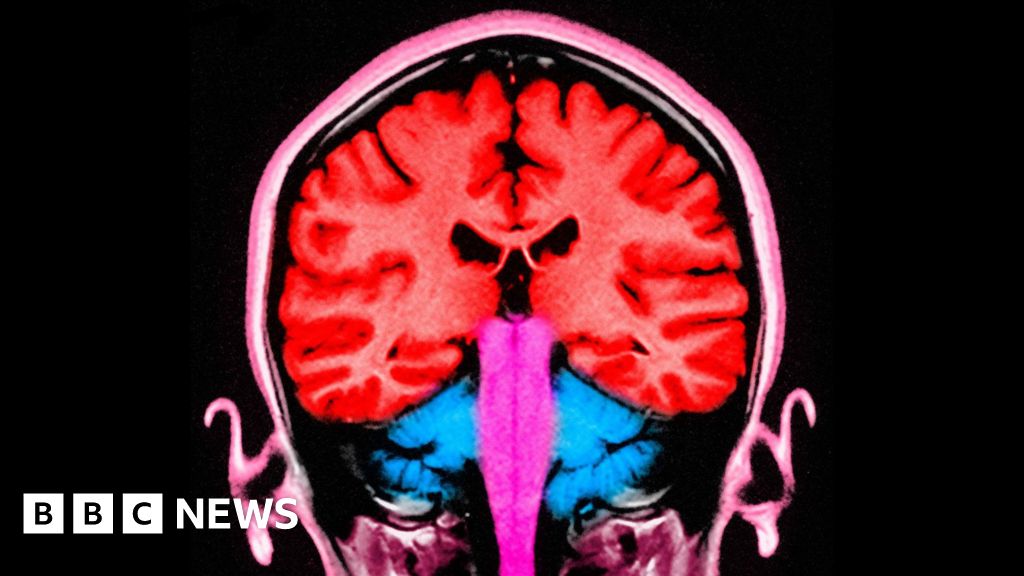
They then used emerging mathematical methods to isolate signals originating from nine brain regions previously implicated in mediating consciousness and examined connections between pairs of these regions. Among them were the parietal cortex, which is at the top of the brain about halfway between the forehead and the back of the skull; the occipital cortex, at the back of the head; and several small, deeper structures, such as one called the thalamus.
Some clinicians have an uncanny quality. A colleague describes herself and others with this instinct as "witchy"-a capacity to know things about patients they haven't said yet, to follow a stray association to a song lyric or a half-remembered cultural reference and arrive, reliably, at something the patient urgently needed to say but couldn't reach on their own. We see with artificial intelligence these intriguing possibilities for discovery, especially as connections that human beings never would see pop out of apparently unrelated data.
At the Winter Olympics, skiers, bobsledders, speedskaters, and many other athletes all have to master one critical moment: when to start. That split second is paramount during competition because when everyone is strong and skilled, a moment of hesitation can separate gold from silver. A competitor who hesitates too much will be left behind -but moving too early will get them disqualified.
Countless millions of nonhuman animals (animals) of all sorts are used in a diverse array of laboratory research. Their treatment varies from being unspeakably inhumanely abused to being treated with kindness, depending on the questions at hand and the values and attitudes of the researchers themselves. The lives of these animals truly are hidden, and most people are incredulous when they learn that laboratory rats and mice still are not considered "animals" under the current federal Animal Welfare Act.
'Have you ever noticed how your day starts?' Khan asks in a YouTube video on his channel, The Brain Project. 'You open your eyes, and your hands already know what to do. Same apps, same path to the kitchen, same routines you never actually chose. 'It feels automatic because, well, it is. Habits aren't a personality trait, they're neural shortcuts your brain builds to save energy.'
I am a worrier, and have been for most of my life. At some point, someone dear and smart teased me that I worry about the wrong things. The things that hit me, she noted, were never the things I worried about. For a while that left me feeling like an incompetent worrier-until my research caught up. I realized that the things I worry about often don't end up hurting me precisely because worrying helps me diffuse them ahead of time.
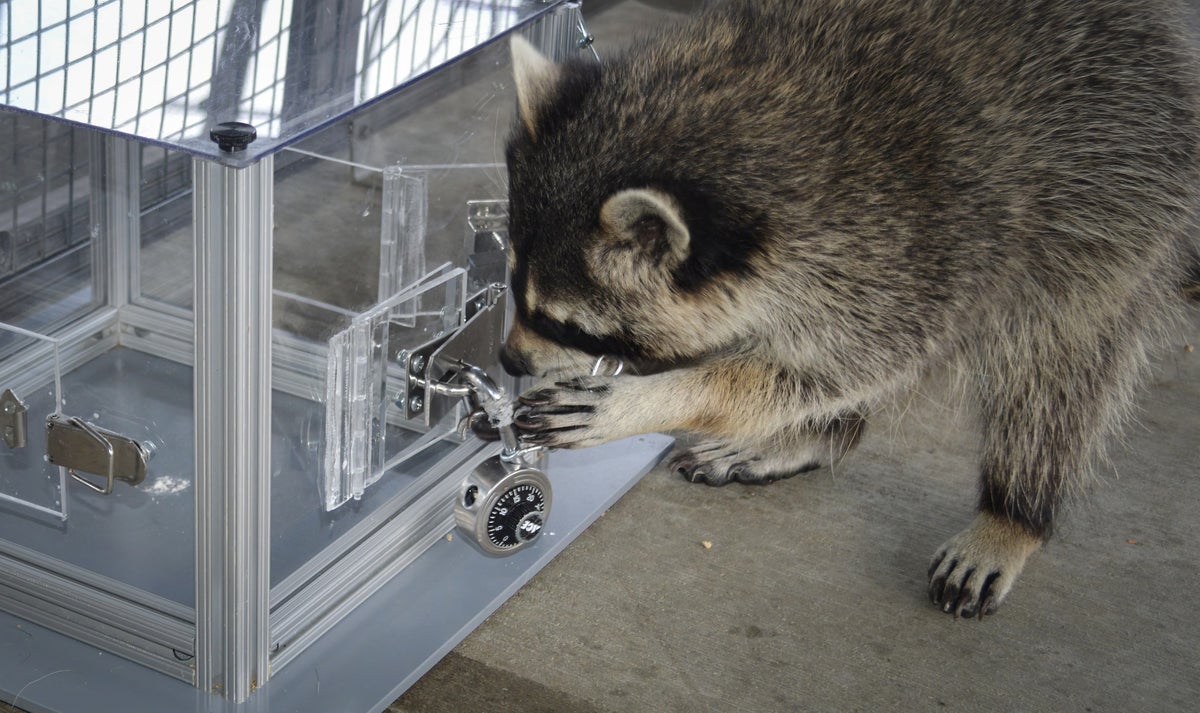
Recently, two unexpected examples by a wild wolf and a domesticated cow named Veronika attracted global attention and once again opened the door for experts and others to weigh in on the question, "Are these really examples of tooling?" Many people are eager to know more about the nitty-gritty details of tooling, so I am thrilled that Dr. Benjamin Beck, an expert in this area, could answer a few questions about this fascinating behavior.
Haavik was surprised to hear this because the scientific data do not suggest an unequivocal link between low levels of the neurotransmitter dopamine and ADHD. But the idea that low dopamine is a direct cause of ADHD is a common misconception, one that's amplified on social media and even in popular books about the condition. The reality, Haavik and other researchers say, is that the causes of ADHD are more diverse and nuanced than a simple deficit in one chemical cue in the brain.
The team, which is being led by Jülich neurophysics professor Markus Diesmann, will leverage the Joint Undertaking Pioneer for Innovative and Transformative Exascale Research (JUPITER) supercomputer for their simulation. JUPITER is currently the fourth most powerful supercomputer in the world according to the TOP500 list, and features thousands of graphical processing units. The team demonstrated last month that a " spiking neural network " could be scaled up and run on JUPITER, effectively matching the cerebral cortex's 20 billion neurons and 100 trillion connections.