#sally-bolton
#sally-bolton
[ follow ]
Relationships
fromScary Mommy
2 weeks agoRomance Duo "Christina Lauren" Talk About Romance Versus Reality & The Current Projects
Christina Lauren co-authors normalize intimate wellness discussions through romance writing and partnerships, emphasizing realistic female experiences in both fiction and real life.
Psychology
fromwww.theguardian.com
3 weeks agoReaders reply: which are more like life, novels or films?
Films and novels employ fundamentally different narrative techniques to convey character psychology, with neither medium inherently more realistic than the other due to their diverse stylistic approaches.
Film
fromenglish.elpais.com
1 month agoShe's the best part of Wuthering Heights': How Alison Oliver won over Hollywood
Irish actress Alison Oliver achieved rapid career success through serendipity, landing major roles immediately after graduating from drama school and becoming a coveted figure in film and fashion within five years.
Books
fromwww.theguardian.com
2 weeks agoMare by Emily Haworth-Booth review profound story of a woman's love for a horse
A woman confronting early menopause, creative burnout, and childlessness finds unexpected solace and purpose through her passionate attachment to a horse she rides and cares for regularly.
Books
fromwww.npr.org
3 weeks agoAuthor Luke Kennard talks about his novel, 'Black Bag'
Luke Kennard's novel 'Black Bag' fictionalizes a 1967 psychology experiment where a silent, bagged actor in a classroom gradually becomes liked by students through repeated exposure, exploring how familiarity transforms perception.
Books
fromwww.theguardian.com
2 weeks agoAlmost Life by Kiran Millwood Hargrave review a will-they-won't-they queer romance
Almost Life chronicles a decades-long romance between two women beginning in 1970s Paris, exploring queer love, missed opportunities, and the consequences of life choices across different social contexts.
Books
fromwww.theguardian.com
2 weeks agoBetter than Wuthering Heights? The Brontes' novels ranked!
Charlotte Brontë's debut novel The Professor was rejected nine times before publication, while her second novel Jane Eyre achieved immediate success, and Anne Brontë's Agnes Grey drew authentically from her governess experience.
Books
fromwww.theguardian.com
3 weeks agoDaisy Johnson: I wasn't a fan of David Szalay, but Flesh is a masterpiece'
Reading shapes identity across life stages, from childhood memories through formative teenage years to adult perspectives, with specific books creating lasting connections and inspiring creative ambitions.
Books
fromwww.theguardian.com
1 month agoSaba Sams: I've no interest in reading Wuthering Heights again'
Jacqueline Wilson's unflinching approach to children's literature, alongside works by authors like Gwendoline Riley and Clarice Lispector, demonstrates that literary courage and emotional complexity resonate more powerfully than conventional safety or virtuousness.
Books
fromwww.theguardian.com
1 month agoGloria Don't Speak by Lucy Apps review tender portrait of a woman with a learning disability
Lucy Apps's debut novel follows Gloria, a 19-year-old with a learning disability navigating east London in 1999, whose friendship with Jack reveals exploitation and vulnerability.
Books
fromwww.theguardian.com
1 month agoBen Markovits: I used to think any book concerned with people falling in love can't be very good'
Reading shaped formative years through detective stories, fantasy epics, and memoirs that provided companionship and escape during frequent moves and family transitions.
fromwww.theguardian.com
1 month agoThe National Year of Reading celebrates the joy' of books. But let's not forget they can also be deeply troubling, too | Charlotte Higgins
Research has linked reading for pleasure in childhood to a host of positive educational and socioeconomic outcomes. But now 14 years after the Department for Education, in a more innocent time, commissioned a chunky report on the matter—reading books for pleasure is an activity in crisis. The culprit usually blamed for this falling-off is the smartphone and its many short-term distractions; the mere presence of a smartphone in the room, recent research suggests, has an impact on our ability to concentrate.
Books
Books
fromThe Atlantic
1 month agoWhen Did Literature Get Less Dirty?
Philip Roth's Zuckerman Unbound functioned as a response to the controversial reception of Portnoy's Complaint, with Roth's protagonist expressing regret over writing sexually explicit material that drew accusations of anti-Semitism and misogyny.
Books
fromwww.theguardian.com
1 month agoThese books are pushing boundaries': winners of 30,000 Inclusive Books for Children awards announced
Six female authors won the 2026 Inclusive Books for Children awards, with winning titles featuring diverse representation in children's literature across multiple age categories.

fromwww.theguardian.com
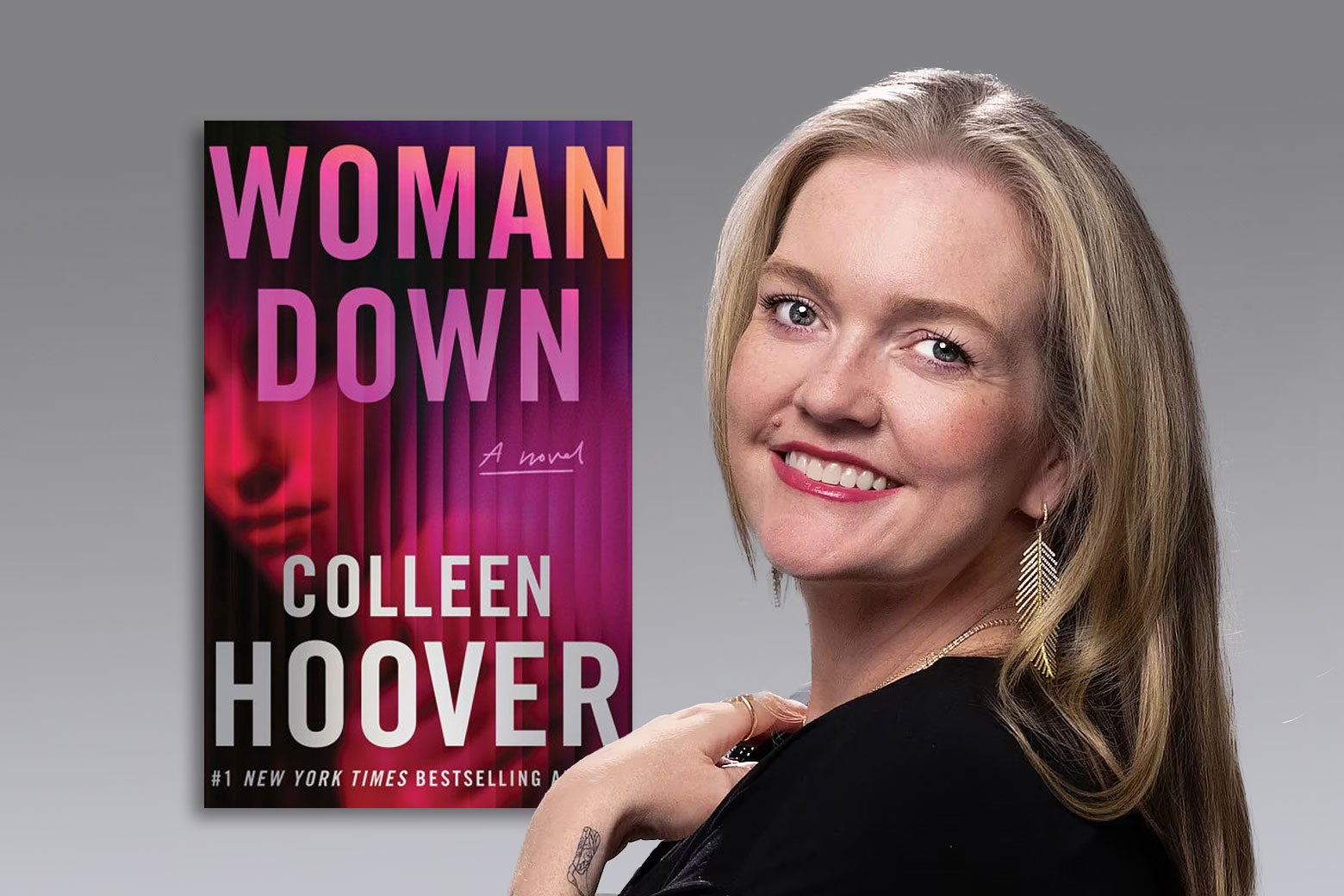
2 months agoMay We Feed the King by Rebecca Perry review a dazzling puzzle-box of a debut
We are initiated into a world in which historically accurate foodstuffs can be ordered online a half oyster shell, the exposed flesh shining as if with the freshest brine, is 31.25 for a single piece and begin to understand one of the most striking things about this novel: its insistence upon detail, its utter specificity, set against a deliberate lack of specificity regarding the larger details that the reader's mind naturally itches to fill in.
Books
fromTODAY.com
1 month agoAmerican Girl's Samantha is All Grown Up In New Novel. Elder Millennials Will Swoon
For those unfamiliar with the beloved heroine, Samantha is one of the first three historical characters introduced by American Girl in 1986. Samantha, Swedish immigrant Kirsten and WWII homefront heroine Molly demonstrated courage, compassion and resilience. Along with an 18-inch doll, each 9-year-old character was featured in a series of easy chapter books; kids could follow each fictional story as well as the historical context surrounding it.
Books
fromwww.theguardian.com
2 months agoLove, desire and community: the new generation of readers bonding over romance novels
In a packed room in Sydney, an excited crowd riffles through stacks of stickers and bookmarks searching for their favourite characters. Another group flicks through racks of clothing, pulling out T-shirts that say romance readers club and probably reading about fairies. A poster on the wall, with tear-off tabs, invites visitors to take what they need: a love triangle, a love confession mid-dragon battle, a morally grey man or a cowboy. Half of the tabs have already been taken.
Books
fromJezebel
1 month agoJezebel's February Book Pick: A Story Collection About Living in the Shadow of the Troubles
Liadan Ní Chuinn was born in Northern Ireland in 1998, the year the Good Friday Agreement ended the Troubles, the decades of violence stemming from England's occupation of Ireland. Other recent fiction about the Troubles-the novels and Trespasses , the TV show Derry Girls (all excellent)-is set firmly in the last century, relegating the violence to history. Ní Chuinn's work does the opposite: Their new book of short stories, Every One Still Her e, is set in contemporary Northern Ireland.
Books

fromThe Atlantic
1 month agoReading Is a Practice, Not a Chore
At least one fundamental human trait persists in the smartphone era: People seem to love a challenge. The internet teems with viral competitions, gamified health apps, and "life-maxxing" exercises of many kinds. Even those who resist the lure of screens-by, for instance, reading books-are frequently doing so with a kind of competitive zeal. A University of Pennsylvania professor has built a strict, rules-based classroom cult around reading.
Books
fromwww.theguardian.com
2 months agoJilly Cooper made everyone feel special and her memorial was the perfect tribute | Zoe Williams
Jilly Cooper's memorial last week started with the dean of Southwark telling a story from her funeral last year: as the congregation made their way to her final resting place, five horses ambled majestically across a field, and came to stand in formation, looking at the grave. They would not be budged and their intention was crystal clear: they were paying their horse-respect (this is not verbatim by the way) to an author who did as much for equine-kind as she did for humans.
Books
fromwww.theguardian.com
2 months agoI could never hope to equal it again': Jeffrey Archer announces next novel will be his last
When I came across the idea for this novel a few years ago, I knew it was bigger in scope than anything I'd done before and I accepted that the research alone would be more demanding than anything I'd tackled in the past. When I finally sat down to write Adam and Eve I also realised, by the end of the first draft, that this was going to be my final novel,
Books
[ Load more ]