#semiconductor-reshoring
#semiconductor-reshoring
[ follow ]
#semiconductors #tariffs #nvidia #ai #stock-market #national-security #oracle #micron-technology #china #ai-demand


fromFast Company
3 days agoChina is moving faster on next-gen tech. The U.S. is trying to keep up
In recent weeks, China approved the world's first commercial brain-computer interface medical device and unveiled a five-ton class electric vertical takeoff and landing aircraft that has already completed a public flight.
Science







#semiconductors
World politics
fromSilicon Canals
1 week agoInside the quiet restructuring of global semiconductor supply chains: how TSMC, Samsung, and Intel's subsidy race is creating three separate technological civilisations - Silicon Canals
Governments are investing heavily in semiconductor production, leading to the creation of three distinct technological ecosystems.


World politics
fromSilicon Canals
1 week agoInside the quiet restructuring of global semiconductor supply chains: how TSMC, Samsung, and Intel's subsidy race is creating three separate technological civilisations - Silicon Canals
Governments are investing heavily in semiconductor production, leading to the creation of three distinct technological ecosystems.

fromTNW | Asia
3 days agoSouth Korea turns to Russian naphtha as chip supply chain faces Middle East crisis
South Korea imports about 45 percent of its naphtha, a critical petrochemical feedstock, with roughly 77 percent of those imports historically arriving from the Middle East. That supply line is now, for all practical purposes, severed.
World news
Intellectual property law
fromIPWatchdog.com | Patents & Intellectual Property Law
1 day agoOther Barks & Bites for Friday, April 3: Trump EO Sets 100% Tariffs on Patent Pharmaceutical Imports; Squires Vacates TikTok IPRs Under Tianma Microelectronics; and Kallay Voices DOJ's Preference for FRAND Obligations
President Trump signed an executive order imposing 100% tariffs on imported patented pharmaceuticals and ingredients from 17 drugmakers.
fromTNW | China
3 days agoChina's Nexchip files for Hong Kong listing as $5 billion chip expansion accelerates
Nexchip Semiconductor is seeking a dual listing alongside its existing Shanghai shares, a move designed to tap international capital for what amounts to an industrial expansion of extraordinary scale.
European startups
from24/7 Wall St.
5 days agoHelium "Tsunami" to Hit Chipmakers -- The Surprising Winner to Profit From the Coming Shortage
Global helium consumption runs about 6 billion cubic feet per year. Qatar supplied a big slice until this month. With one-third of output sidelined, prices have already soared.
Business
#semiconductor-supply-chain
Silicon Valley
fromSilicon Canals
2 weeks agoThe AI boom's hidden weakness: how Iran's conflict exposed a helium bottleneck for chip manufacturing - Silicon Canals
Geopolitical instability in the Middle East threatens helium supply, which is critical for semiconductor manufacturing and AI infrastructure with no viable substitutes.
European startups
fromTheregister
3 weeks agoBeijing warns of more chip supply worries amid Nexperia mess
China's Ministry of Commerce warns of semiconductor supply chain disruption following Nexperia's restriction of Chinese staff access to critical systems, while Indonesia bans social media for children under 16 to combat cyberbullying and addiction.
fromFortune
1 week agoSupermicro-accused of smuggling $2.5 billion in Nvidia chips to China-has been here before, in Iran | Fortune
Yih-Shyan 'Wally' Liaw was charged with conspiring to smuggle about $2.5 billion worth of highly coveted Nvidia GPUs in servers to China, alongside Ruei-Tsang 'Steven' Chang and Ting-Wei 'Willy' Sun.
Intellectual property law
European startups
from24/7 Wall St.
2 weeks agoGovernment Drops Sweeping AI Chip Export Rules: Can Nvidia Start Growing Again?
U.S. government shelved a proposed global AI chip licensing system that threatened to restrict Nvidia's international sales, potentially unlocking fresh growth momentum for the company.
Intellectual property law
fromArs Technica
4 weeks agoTech industry is in tariff hell, even if refunds are automated
Trade groups urge courts to establish a clear tariff refund process as 300,000 US businesses await $175 billion in unlawful tariff collections, with interest accruing at $23 million daily.
from24/7 Wall St.
3 weeks agoRetirees Are Using EWT to Ride Taiwan's Semiconductor Dominance
Taiwan Semiconductor Manufacturing (NYSE:TSM) sits at the center of this fund, representing 22.3% of the portfolio - a concentration that reflects TSMC's irreplaceable role in global chip supply chains. It manufactures chips for Apple, Nvidia, AMD, and virtually every other major technology company, and that dominance shows up in its financials: 45% profit margin and 35% return on equity that few industrial companies anywhere in the world can match.
Business
fromTheregister
5 days agoUS PC shipments to fall 13% as memory costs surge
US PC shipments are set to fall by 13 percent this year thanks to the ongoing memory and storage crisis, with budget PCs hardest hit. Memory and storage costs will see at least a 60 percent increase during Q1 2026, compounding last year's rises of 40 to 70 percent.
Tech industry
European startups
fromTechzine Global
4 weeks ago"AI chips will remain in America unless foreign countries invest in the US"
The US government is implementing strict export controls on AI chips, requiring foreign customers to invest in US AI infrastructure or provide security guarantees, with ongoing monitoring of chip distribution and usage.
#semiconductor-export-controls
European startups
fromTechCrunch
4 weeks agoUS reportedly considering sweeping new chip export controls | TechCrunch
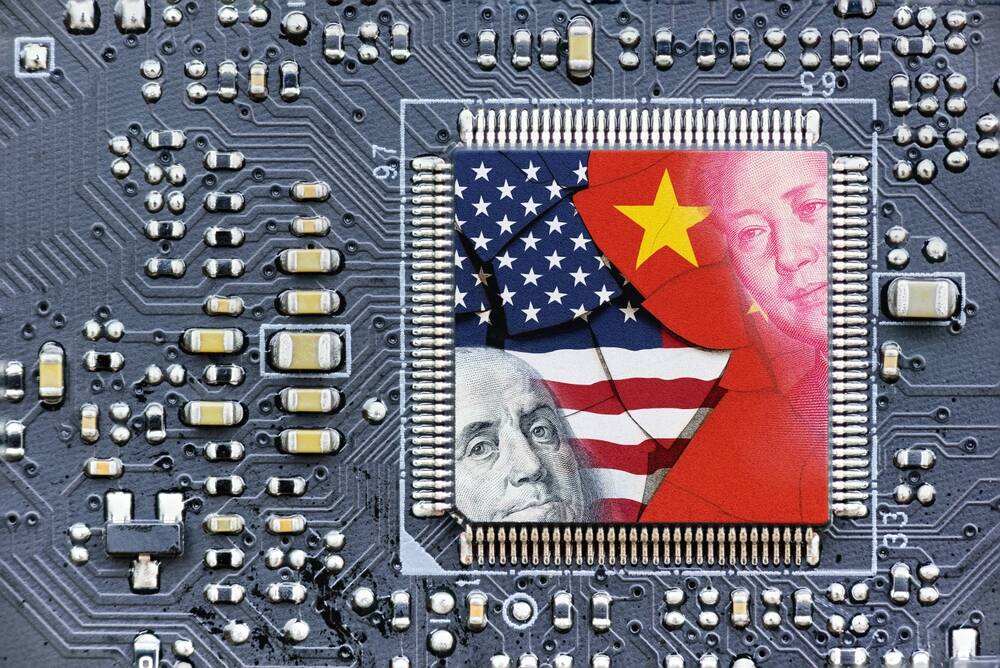
The Trump administration drafted rules requiring U.S. government approval for all AI chip exports, giving the Department of Commerce control over semiconductor sales by companies like AMD and Nvidia.
European startups
fromTechCrunch
4 weeks agoUS reportedly considering sweeping new chip export controls | TechCrunch
The Trump administration drafted rules requiring U.S. government approval for all AI chip exports, giving the Department of Commerce control over semiconductor sales by companies like AMD and Nvidia.
European startups
fromTechzine Global
4 weeks agoCalls for a 'Chinese ASML' are growing louder, but it is still a long way off
Chinese chip executives advocate for developing domestic EUV lithography technology as a central priority, proposing a national integrator model to reduce dependence on ASML amid export restrictions.
fromComputerworld
2 months agoApple Silicon: As demand grows, is TSMC driving a harder bargain?
The gold rush across the high-end processor market might help Apple's processor manufacturing partner, TSMC, drive harder bargains than in the past. That's because Apple's huge appetite for processors is being met by fast-growing demand for chips for servers. As a result, the cost of the chips used inside Macs, iPads, and iPhones will likely increase, putting even more inflationary pressure on Cupertino's bottom line.
Apple
fromThe Nation
2 months agoHow Taiwan Became the Chipmaker for the World
When Donald Trump nominated Elbridge Colby as the undersecretary of defense for policy, the news stirred headlines in Taiwan. Colby, who has since been confirmed, had repeatedly stated on social media that if China ever invaded Taiwan, the US military should destroy TSMC, the world's most important chip manufacturer, to prevent it from falling into Chinese hands. The provocative suggestion has been echoed by Democratic Representative Seth Moulton,
World news
fromTechzine Global
2 months agoUS introduces AI chip tariffs and skims revenue from Nvidia and AMD
The US government has introduced new import tariffs on advanced AI chips from Nvidia and AMD, with the aim of channelling part of the proceeds from sales to China directly into the US treasury. According to the Financial Times, the measure is part of President Donald Trump's broader trade and industrial policy, which explicitly intertwines economic transactions and national security.
US politics
from24/7 Wall St.
2 months agoAfter Taiwan Semi's Earnings Blowout, These 3 Chip Stocks Are Positioned to Dominate
Taiwan Semiconductor Manufacturing Company crushed Q4 earnings, reporting record profits that blew past Wall Street's expectations. Revenue hit $33.73 billion against a $1.03 trillion consensus, while EPS came in at $19.50 versus $17.89 expected. TSMC raised Q1 2026 guidance to $34.6-$35.8 billion with gross margins expanding to 63-65%, up from 62.3% last quarter. The market's response was immediate: semiconductor stocks rallied across the board in premarket trading, with ASML crossing $500 billion in market cap.
Tech industry
[ Load more ]