#shipping--returns
#shipping--returns
[ follow ]





fromwww.businessinsider.com
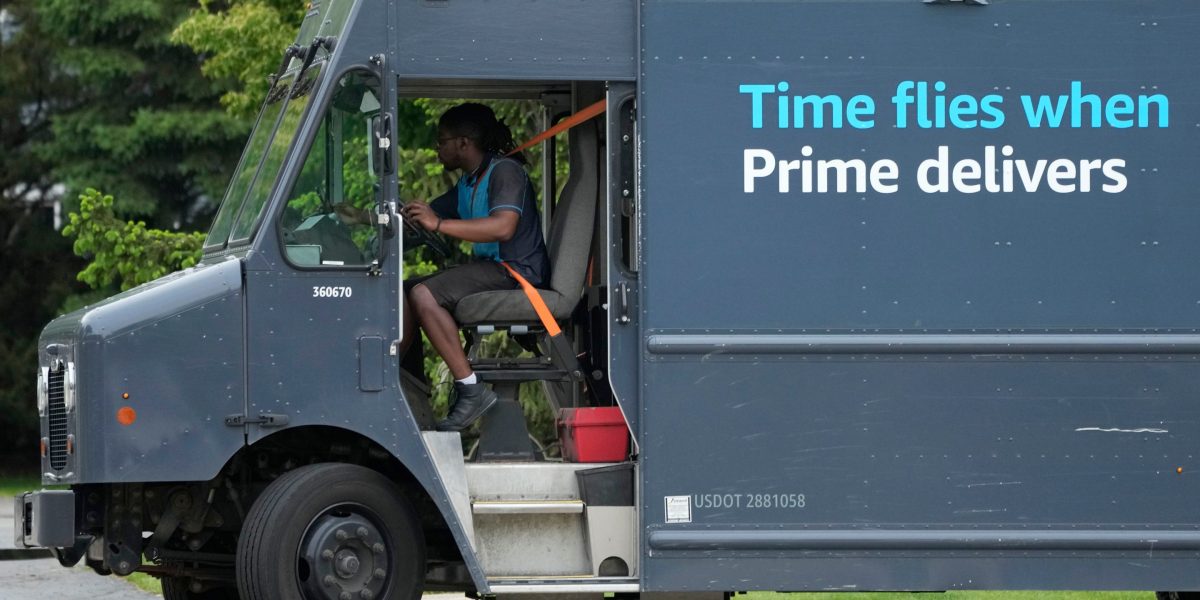
1 week agoFedEx and UPS charged fees for collecting tariffs. Now, customers want that money back.
The lawsuits argue that the shipping companies never should have charged the fees in the first place, and that the shippers, not the government, owe the customers.
Intellectual property law
fromAxios
2 weeks agoUSPS warning raises stakes for mail-order prescriptions, higher postage prices
The mail will stop if the agency can't meet its obligations. That includes critical deliveries like prescription drug packages. Postmaster General David Steiner warned lawmakers this week that USPS could run out of cash in less than 12 months without congressional action.
Media industry
#supply-chain-security
Business intelligence
fromLondon Business News | Londonlovesbusiness.com
2 weeks agoSecurity Seals 101: How businesses protect inventory from tampering in modern supply chains - London Business News | Londonlovesbusiness.com
Security seals provide tamper evidence throughout supply chains by visibly indicating whether packages have been opened or compromised during transit and storage.
Information security
fromSecuritymagazine
2 weeks agoThreat Actors Target the Entire Retail Supply Chain
Threat actors exploit shared supply chain vulnerabilities between wholesalers and retailers, with over 70% of retailers and 60% of wholesalers having exposed credentials, enabling widespread initial access.
#amazon-usps-contract-dispute
Washington DC
fromEntrepreneur
2 weeks agoAmazon Plans to Slash USPS Shipments by Two-Thirds. Here's What That Means for the Postal Service.
Amazon plans to reduce USPS package shipments by two-thirds by fall, threatening the financially struggling postal service that delivered over one billion Amazon packages last year.
London startup
fromLondon Business News | Londonlovesbusiness.com
3 weeks agoHow UK manufacturers can build supply chain resilience in uncertain times - London Business News | Londonlovesbusiness.com
Supply chain resilience requires real-time visibility and diversified suppliers across multiple geographic locations to quickly recover from disruptions.
Marketing tech
fromwww.emarketer.com
3 weeks agoamazon - Reports, Statistics & Marketing Trends
Fire TV integrates ads across screens using CTV reach and retail data, while AI emerges as a defining force in retail tech, with stablecoins moving into mainstream payments infrastructure and chatbots driving conversion rate increases.
Business intelligence
fromBusiness Matters
3 weeks agoBuilding a Successful Online Marketplace - Key Technology Decisions That Matter
Strategic technology decisions in marketplace development determine scalability, user experience, and regulatory compliance, with payment infrastructure, trust mechanisms, and seller verification being critical foundational elements.
fromBusiness Insider
2 weeks agoPaid IEEPA tariffs on overseas purchases? Here is what shipping companies are saying about refunds
After Trump ended the de minimis exemption last year, purchasing an item straight from an international vendor, regardless of the item's value, meant incurring International Emergency Economic Powers Act tariffs. Now, thanks to a ruling by the Supreme Court that overturned Trump's IEEPA tariffs, and a ruling by the Court of International Trade ruled that all tariffs paid under IEEPA must be returned, buyers may be able to collect a refund.
European startups
#tariff-refunds
US Elections
fromwww.npr.org
4 weeks agoNo lawsuits required: U.S. Customs is working on a system to refund tariffs
U.S. Customs is developing a streamlined refund system for unconstitutional tariffs, expecting completion within 45 days, avoiding individual lawsuits for the $166 billion owed to over 330,000 businesses.

European startups
fromFortune
3 weeks agoAmericans are demanding refunds from the $180 billion in tariffs they paid for, and they're suing companies like Costco to make it happen | Fortune
Americans are suing retailers like Costco to recover costs from tariff-inflated prices after a Supreme Court ruling enabled refund claims on approximately $180 billion in import taxes.
European startups
fromTechRepublic
3 weeks agoUS CBP Says Its Systems Aren't Ready for Massive Tariff Refunds - TechRepublic
US Customs and Border Protection lacks digital infrastructure to process 53 million tariff refund claims worth $166 billion, requiring 4.4 million labor hours with existing systems.
US Elections
fromwww.npr.org
4 weeks agoNo lawsuits required: U.S. Customs is working on a system to refund tariffs
U.S. Customs is developing a streamlined refund system for unconstitutional tariffs, expecting completion within 45 days, avoiding individual lawsuits for the $166 billion owed to over 330,000 businesses.
European startups
fromFortune
3 weeks agoAmericans are demanding refunds from the $180 billion in tariffs they paid for, and they're suing companies like Costco to make it happen | Fortune
Americans are suing retailers like Costco to recover costs from tariff-inflated prices after a Supreme Court ruling enabled refund claims on approximately $180 billion in import taxes.
European startups
fromTechRepublic
3 weeks agoUS CBP Says Its Systems Aren't Ready for Massive Tariff Refunds - TechRepublic
US Customs and Border Protection lacks digital infrastructure to process 53 million tariff refund claims worth $166 billion, requiring 4.4 million labor hours with existing systems.
#amazon-delivery
E-Commerce
fromEngadget
2 weeks agoAmazon launches one- and three-hour delivery options in the US
Amazon launched one-hour and three-hour delivery options across 2,000+ locations, covering 90,000 products including essentials and discretionary items, with costs ranging from $5-$20 depending on membership and speed.
fromTechCrunch
2 weeks agoAmazon adds 1-hour and 3-hour delivery options in the US | TechCrunch
Our customers are busier than ever and are looking for new ways to save time while keeping their households running. We saw an opportunity to use our unique operational expertise and delivery network to help make customers' lives a little easier while unlocking even more value for Prime members.
E-Commerce
fromPractical Ecommerce
2 weeks agoLaunch Your Own Private-Label Brand
Sourced directly from a manufacturer, private-label brands remove one or more layers of intermediaries from the supply chain, usually distributors or other brands. A nearly identical private brand can earn more margin, even at a low price.
E-Commerce
E-Commerce
fromBusiness Matters
3 weeks agoThe Hidden Costs of DIY Shipping: When to Switch to an Ecommerce Shipping Platform
DIY shipping becomes a business bottleneck as order volume grows, consuming excessive time and increasing errors while established shipping platforms automate processes and enable scalability.
E-Commerce
from24/7 Wall St.
3 weeks agoLook! Up In the Sky! It's Amazon's Flywheel in Action
Amazon's drone delivery service Prime Air exemplifies how the company's e-commerce, AWS cloud, and AI divisions create a self-reinforcing flywheel that generates data, optimizes operations, and drives competitive advantage.
fromFast Company
1 month agoCan I get a tariff refund from DHL, UPS, or FedEx after the Supreme Court struck down Trump's tariffs?
In a 6-3 ruling, the court wrote that Trump's actions were unprecedented, noting that Trump's attempt to use his "power to unilaterally impose unbounded tariffs and change them at will" overstepped the law, and that his administration's "view would represent a transformative expansion of the President's authority over tariff policy."
US politics
E-Commerce
fromTechCrunch
3 weeks agoAmazon expands a program that lets customers shop from other retailers' sites | TechCrunch
Amazon expands Shop Direct program to direct customers to third-party merchant websites through search results and AI assistant when products aren't available on Amazon's platform.
Deliverability
fromSitePoint Forums | Web Development & Design Community
2 months agoWhich Is the Best Sea Freight Forwarder for Time-Sensitive Cargo?
Choose sea freight forwarders that prioritize fast transit, priority handling, reliable networks, smooth customs clearance, real-time tracking, secure handling, and proven urgent-delivery experience.
Business
from24/7 Wall St.
2 months agoThe Warehouse Automation Seller Just Turned Profitable While the Retail Giant Builds Its Own
Investors face choosing Symbotic's newly profitable automation-as-a-service with volatile trading and insider selling or Amazon's scale-driven in-house robotics investment.
E-Commerce
fromBusiness Matters
4 weeks agoSupplier Verification: A Practical Guide for Smarter Global Sourcing
Supplier verification is a strategic necessity in global trade, requiring thorough assessment of legal status, production capability, quality systems, financial stability, and regulatory compliance before establishing business relationships.
fromEntrepreneur
4 weeks agoIs Amazon Automation a Profitable Passive Income Model?
Amazon automation isn't a magic button. It's a business model, and like any business model, outcomes vary based on execution. The short answer is yes, it can be profitable. The honest answer is that it depends entirely on how it's done and who is running it.
E-Commerce
fromComputerWeekly.com
1 month agoDelivery comms, intelligent fulfilment, and AI's growing influence | Computer Weekly
Nine in ten retailers globally are planning to raise their spending on artificial intelligence (AI) to optimise their e-commerce operations over the next 12 to 24 months, with online delivery execution a key area of focus. A total of 38% of European retailers identify speed, tracking and proactive communication around the delivery process as areas where AI can deliver the greatest impact.
E-Commerce
fromwww.independent.co.uk
1 month agoDoes free shipping actually exist? Marketing ploys experts want to warn you about
You're scrolling through an online retailer, like Amazon, Shein or eBay, and spot a shirt on sale for $40. You add it to your cart, but at checkout, a $10 shipping fee suddenly appears. Frustrated, you close the tab. But what if that same shirt was priced at $50 with free shipping? The likelihood that you would have bought it without a second thought is much higher.
E-Commerce
fromThe Conversation
1 month agoDoes 'free' shipping really exist? An expert shares the marketing tricks you need to know
When a transaction involves a cost, we instinctively weigh the downside. But when something is entirely free, we experience a positive emotion and perceive the offer as more valuable than it is mathematically. Retailers no doubt realise that offering free delivery is one of the most effective ways to stop a consumer from abandoning a digital shopping cart.
E-Commerce
fromForbes
1 month agoFrom Click To Doorstep: Why Delivery Experience Is The Last Brand Impression
That's a problem. Without a doubt, a great website and top-level marketing will help generate new sales, but it's the delivery experience that warrants future ones. This is because today's consumer not only has options for where they'll buy but also a high set of expectations. What's more, they remember the way a product arrives at their doorstep more than how it was sold.
E-Commerce
E-Commerce
fromBusiness Insider
1 month agoI've been selling on Amazon for a year. After storage fees bled me dry, I'm pivoting my e-comm strategy away from it.
Aged-inventory surcharges on Amazon can rapidly deplete a small business's cash, turning a $10,000 launch into near insolvency without mastering Amazon selling and inventory management.

fromFast Company
2 months agoThis startup helps enterprising resellers prevent nearly a million pounds of returns from ending up in landfills
Americans are likely to have spent a record $1 trillion-plus this holiday shopping season alone, and about $5.5 trillion in retail sales in all of 2025, according to estimates by the National Retail Federation. That includes many unhappy returns for retailers: And when it comes back to them, a lot of the $850 billion in returned merchandise is often cheaper to discard than to inspect, sort, and resell-adding millions of tons to landfills every year.
E-Commerce

fromEntrepreneur
1 month agoAmazon Prime Members Avoid 64 Store Trips Per Year
Remember grocery store runs? Amazon says those are going extinct. The company revealed that Prime members saved an average of 64 trips to physical stores last year by ordering basics online instead. That's a major shift. Groceries and household essentials now account for half of all fast deliveries to U.S. Prime members, compared to earlier years when fast delivery skewed toward purchases like electronics and clothing. Amazon has spent the past year integrating perishable groceries and prescription medications into its same-day delivery network.
E-Commerce
E-Commerce
fromSitePoint Forums | Web Development & Design Community
2 months agoHow to Choose Ecommerce Marketplace for your Online Business
Choosing between single-vendor and multi-vendor marketplaces balances control over operations and brand versus faster growth and greater product variety with added complexity.
fromSocial Media Explorer
2 months ago10 Last Mile Technology Trends Transforming Urban Logistics in 2025 - Social Media Explorer
Urban logistics is entering a new era where practical technology drives meaningful results. Today, more than 55% of people live in cities, and urbanization is expected to rise to 68% by 2050, placing intense pressure on delivery networks to keep up with growing demand. U.S. e-commerce is projected to reach $1.1 trillion in sales by 2026, heightening expectations for faster and more reliable last-mile service.
E-Commerce
[ Load more ]