#tour-personnel
#tour-personnel
[ follow ]
#remote-work #hospitality #sustainable-tourism #business-travel #loyalty-programs #social-media-strategy

:max_bytes(150000):strip_icc()/TAL-business-woman-traveling-BSNSTRAVSPOTLIGHT0326-b7d2f3b153274fa4a12323e7fff73f04.jpg)
:max_bytes(150000):strip_icc()/TAL-lead-image-ROOMSERVICE0326-85fb9dadefe54704be85e80652bd6645.jpg)
:max_bytes(150000):strip_icc()/TAL-buisness-woman-barcelona-BUSINESSTRAVPLSUR0326-61e4d376ced34f9c848f7184cc247868.jpg)

Europe news
fromLondon Business News | Londonlovesbusiness.com
3 weeks agoOn the Beach warns Middle East war is hitting holiday bookings - London Business News | Londonlovesbusiness.com
The Beach Group warns of significant booking declines to Mediterranean destinations due to Middle East conflict concerns, causing over 10% share price drop and suspended profit guidance.
.jpg)
.jpg)
Business
fromTravel + Leisure
4 weeks agoThese 10 Rules Will Save You Time and Energy When Booking Business Travel-Plus Get You Some Serious Perks
Direct flights, strategic layovers, early arrivals, and centrally-located hotels minimize travel disruptions and maximize work productivity on business trips.
UK politics
fromwww.bbc.com
1 month ago'I've given up on working in hospitality. The 15,000 pay isn't worth the stress'
Young adults in their 20s and 30s face financial instability from unpredictable work hours, rising housing costs, and limited savings, while economic growth could improve job opportunities and wages.
fromIslands
1 month agoThe Social Media Secret For More Affordable Flights - Islands
Digital-savvy airlines use their socials to advertise special offers as a way of strengthening relationships with both new and repeat customers. This can be a win-win for both the customers and the airlines. Travelers get access to limited-time fares, and airlines can boost revenue by filling seats during slower travel periods, such as Caribbean routes during hurricane season.
Social media marketing
fromwww.theguardian.com
2 weeks agoReaders reply: Travel broadens the mind what other sayings are patently false, or not always true?
Travel broadens the mind thing has been knocking around since long before time immemorial, but I'm pretty sure for Seneca, among others, travel meant pottering about with great effort, getting to know other peoples, their ways of speech, habits, and foibles.
Travel
fromForbes
1 month agoThe Best Tourism Campaign Of The Year Isn't A Campaign At All
Rather than chasing diminishing returns through additional advertising, the agency advocated for an entertainment product: a film that could function as a vehicle for repositioning perception while operating as a single investment with long-tail value, capable of shaping how audiences feel about a place over time and across markets.
Marketing
Remote teams
fromWanderlust Storytellers - An Inspirational Family Travel Blog
1 month agoGet Paid to Travel: 29 Amazing Jobs That Fund Your Adventures Around the World
Many careers can enable global travel by leveraging existing skills, shifting mindset to fund travel, and pursuing roles that explicitly require mobility.
fromFood & Beverage Magazine
2 months agoTen Predictions for the Hospitality Industry in 2026 and Beyond: Insights from Cayuga Hospitality Consultants' Annual Conference 2025 - Food & Beverage Magazine
Artificial intelligence is no longer futuristic-it's functional. Hotels are already utilizing AI to integrate siloed systems, such as PMS, accounting, CRM, and forecasting platforms, to drive faster and smarter decisions. Tools like Placer.ai and PredictHQ help identify ideal customers through demographic, behavioral, and geolocation data. As automation expands, the next opportunity lies in strategic human oversight: consultants and managers will interpret AI outputs, guiding capital investments and operational priorities rather than being replaced by algorithms.
Artificial intelligence
fromwww.bbc.com
1 month agoHow hotels could help solve your summer childcare crunch
As summer school breaks stretch longer and childcare becomes harder to secure, some families are turning to an unexpected solution: hotels offering full-day, structured kids' camps that allow parents to travel, work and keep routines intact.
Parenting
fromFortune
1 month agoTrump is making foreign tourism great again. How much will he hurt the World Cup? | Fortune
Policy stances from the Trump administration on everything from immigration to tariffs, along with currency swings and stricter border controls, have seemingly proved a turnoff to travelers from other countries, especially Canadians - the single largest source of foreign tourists for the United States. Canadian travel to the U.S. fell by close to 30% in 2025. But it is not just visitors from Canada who are choosing to avoid the United States.
US politics
fromInsideHook
2 months agoIs There a Paradox at the Heart of Some Boutique Hotels?
That is one of several conclusions you're likely to draw after reading an article by Sheila Yasmin Marikar recently published in Air Mail. Marikar takes the reader into the world of small boutique hotels, the sort of establishment that attracts travelers looking for properties with an independent streak and a unique approach to doing business. The challenge here, though, is figuring out where that line exists, as some iconoclastic companies have acquired massive corporate parents over the years.
Real estate
fromFast Company
2 months agoI'm a tech CEO. Here's why my employees are required to work a restaurant shift
When I tell fellow tech executives that every employee at sunday, from our engineers to our finance team, must complete a restaurant shift before they can fully onboard, I usually get confused looks. "You mean like, shadow someone?" they ask. No. I mean they tie on an apron, take orders, run food, and yes, deal with the 15-minute wait for the check that our product was literally built to eliminate.
Tech industry


fromMail Online
2 months agoTikTok is now the most powerful travel agent, according to expert
'Travel inspiration used to be aspirational. Today, it's practical. 'People aren't just seeing where to go on TikTok, they're seeing exactly how to get there, what it costs and how smooth the journey really is. 'That visibility builds confidence, particularly for solo travellers and first-time long-haul trips. 'When someone watches a real person navigate an airport or a destination successfully, the mindset shift is simple: if they can do it, so can I.'
World news
Business
fromIndependent
1 month ago'Dealing directly with hotels can be more cost-effective than third-party booking sites' - money experts reveal how they pay less for their holidays
Avoid credit cards and spread holiday costs across the year to reduce post-holiday debt and enable annual travel through planned saving.
fromwww.theguardian.com
1 month agoIt's been life-changing': young Britons on why they left the UK to work abroad
As young people bear the brunt of a downturn in the jobs market, figures show a significant number are leaving the UK. Although statisticians caution against comparing annual figures after a recent change in methodology and stress younger people are traditionally more drawn to emigration, a net 111,000 people aged 16 to 34 emigrated from the UK in the year to March 2025, according to the Office for National Statistics.
UK politics
fromUSA TODAY
1 month agoWhy cheap off-season travel is harder to find in 2026
The off-season practically vanished in many parts of the world. Remote work, social media frenzy, and ruthless dynamic pricing have turned fall and spring into peak-season clones. Even winter is no refuge anymore. The idea of an off-season is 100% disappearing.
Travel
Business
fromLondon Business News | Londonlovesbusiness.com
2 months agoWhy global mobility is winning the talent war - London Business News | Londonlovesbusiness.com
International mobility is a central competitive advantage, enabling firms to attract, develop, and retain talent through rapid, credible cross-border movement.
Travel
fromTravel + Leisure
1 month agoIs It Better to Book Directly With Hotels and Airlines? We Asked the Experts
Booking direct versus through third-party platforms depends on your specific trip needs and payment method, with direct bookings offering better control and customer support while prices remain largely equivalent across platforms.
Travel
fromBusiness Matters
1 month agoTowering over the competition: which companies are driving 2026's tourism hotspots?
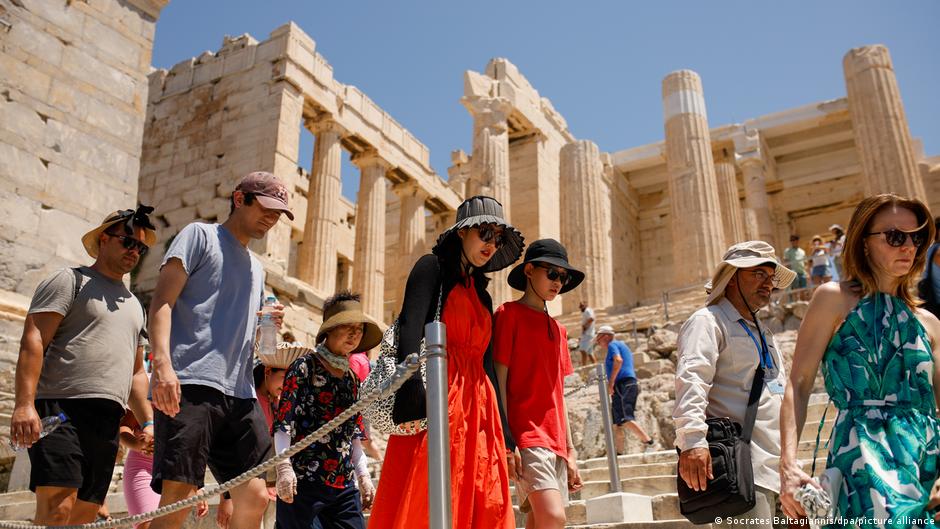
Transformative hospitality and construction projects are driving a 2026 global tourism resurgence, reshaping destinations through eco-luxury, infrastructure expansion, and cultural preservation.

:max_bytes(150000):strip_icc()/TAL-lead-image-TRAVELJOBS0126-b1bb179bbcc346fda60f821071057808.jpg)
Travel
fromTravel + Leisure
2 months agoThese Are the Biggest Travel Trends for 2026, According to 14 Industry Leaders-and the Destinations Everyone's Talking About
Travelers in 2026 prioritize intentional, memorable experiences—major events, cultural moments, and personalized comfort—over accumulating trips.
fromConde Nast Traveler
2 months ago26 Reasons Our Editors Are Excited to Travel in 2026
We're spoiled for choice when it comes to reasons to travel in 2026. Whether you plan to take a trip inspired by a favored period drama; want the best views of the solar eclipse on August 12; or hope to be the first to embark on a luxury train journey across Saudi Arabia, here are 26 things to be excited about as you plan this year's travels.
Travel
[ Load more ]