#underground-cities
#underground-cities
[ follow ]
#architecture #urbanism #urban-planning #urban-mining #circular-economy #new-york-city #infrastructure #heritage
Graphic design
fromdesignboom | architecture & design magazine
1 week agoinside archigram's radical, sixties-era vision for cities that evolve as fast as we do
Archigram created a radical vision of architecture focused on flexibility, mobility, and imagination, influencing design without ever constructing physical buildings.
Film
fromwww.theguardian.com
2 weeks agoFear is good': my scary subterranean journey into Underland, the film of Robert Macfarlane's dazzling book
Filmmaker Robert Petit explores underground spaces through his documentary Underland, discovering that subterranean environments offer people freedom and existential transformation away from surface world constraints.
NYC food
fromAol
3 weeks agoThe 5 Best Car-Free Day Trips From New York City, According To Research
New York offers numerous accessible day trips by train to nearby destinations in the Hudson Valley, Connecticut, New Jersey, and Nassau County, catering to diverse traveler preferences for relaxation, culture, dining, and outdoor activities.
Design
fromYanko Design - Modern Industrial Design News
2 weeks ago5 Best Surreal Bookstores That Make You Forget You're Inside a Building - Yanko Design
Exceptional bookstores transcend retail by using architectural design inspired by nature and astronomy to transform reading spaces into immersive environments where books become spatial protagonists rather than products.
fromSFGATE
3 weeks agoThis ornate maze underneath North Beach is one of SF's most impressive venues
The whole reason we're here is we know something is impossible, but we also know it's inevitable. He pulled off a trick where a member of the audience mixed up a Rubik's Cube, then Blake presented a second cube with identically arranged colors, demonstrating the paradox of magic where the impossible becomes inevitable through skillful illusion.
San Francisco

fromSustainable Bus
3 weeks agoThe first of 121 new CAF Urbos trams arrives in Rome for ATAC
The first of the 121 Urbos models that CAF will deliver to ATAC has reached the Italian capital and will transform the city's rail-based public transport. The total investment amounts to more than €450 million. Numbered in the 9300 series and measuring 33.5 meters in length, the new vehicle will be able to carry up to 215 passengers, including 68 seated and two passengers with reduced mobility.
Alternative transportation
fromJeffersongraham
1 month agoA Guide to Exploring New York's Amazing Underground Museum
While most people think of the New York subway as a way to get somewhere, I happen to think of it as one of the greatest art museums in the world - and it only costs $3 to get in. As long as you don't go through the turnstiles, you can go from station to station all day long marveling at the wall art.
NYC music
London
fromianVisits
2 weeks agoTfL launches a new map of London Underground artworks
Transport for London released a new Art Map highlighting permanent public art commissions on the Underground, featuring works by artists like Alexandre da Cunha, Chantal Joffe, and Lucy McKenzie, though availability at stations remains limited.
Food & drink
fromTasting Table
1 month agoThe Risk Anthony Bourdain Says To Take In Order To Discover Culinary Magic While Traveling - Tasting Table
Anthony Bourdain approached travel and food with openness to all experiences, believing that accepting bad meals was necessary to discover magical culinary moments and meaningful human connections.
London
fromianVisits
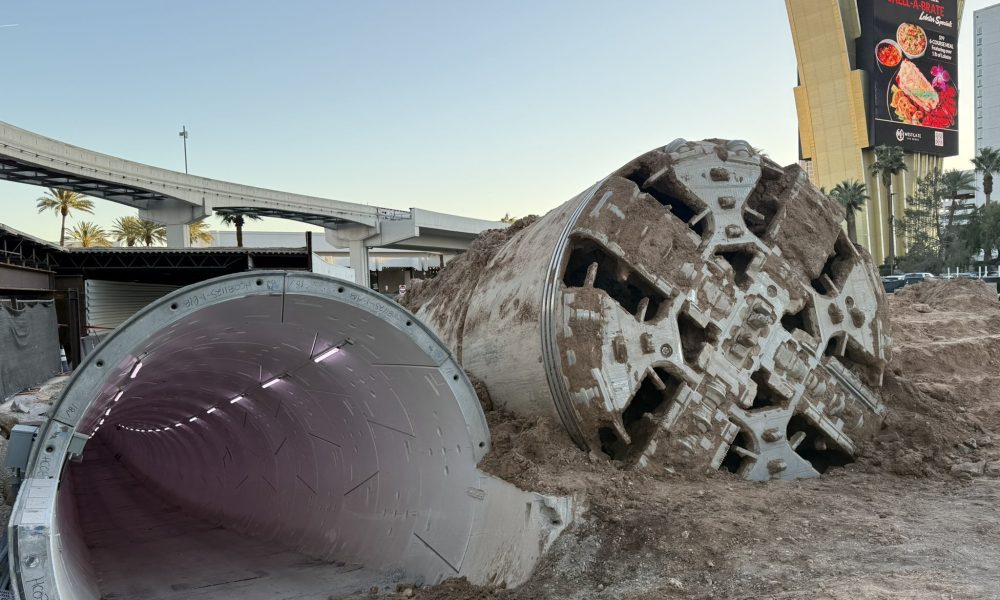
3 weeks agoGiant TBM starts digging tube-train sized tunnel beneath the Thames
A 270-tonne tunnel boring machine has begun excavating a 2.2-kilometre electricity cable tunnel beneath the River Thames in east London, replacing infrastructure from 1969 and expected to complete by 2029.
Paris food
fromwww.theguardian.com
1 month agoZoning in on Menilmontant, Paris: bohemian, arty and off the tourist trail'
Menilmontant is an authentic, working-class Parisian neighbourhood with integrated North African culture, affordable multi-ethnic dining, and genuine local community despite recent international recognition.
Renovation
fromdesignboom | architecture & design magazine
3 weeks agothis 'underground house of the future' revisits ancient chinese cave dwellings
A University of Hong Kong team redesigned traditional underground 'dikengyuan' courtyard houses on China's Loess Plateau using modern construction methods and 3D printing to address climate challenges while preserving agricultural land and cultural living practices.
fromForbes
1 month agoTransit-Oriented Housing On Track For Continued Growth
Once a nice-to-have niche urban design concept, TOD has become an essential part of many urban neighborhoods. It has helped address the shortage of housing by enabling the development of higher-density residential communities near transit stations. It has helped revitalize countless once-deteriorating or static urban enclaves near transit hubs by activating sidewalks near the developments. And it has spurred walking and transit use, enabling residents of TODs to reduce or eliminate automobile dependency.
Real estate
Miscellaneous
fromArchDaily
1 month ago7 Unbuilt Masterplans Reimagining Urban Futures Through Ecology and Collective Space
Unbuilt urban masterplans explore adaptive spatial frameworks that recalibrate mobility, ecology, and collective life through climate-responsive design and public space integration across diverse global contexts.
Renovation
fromwww.bbc.com
4 weeks agoThe house hidden in the garden of a Catford terrace
Architects Will and Sogand Howard built a modern home in a neighbor's garden in London, demonstrating how small urban plots can address housing shortages through creative land use and direct outreach to homeowners.
Arts
fromArchDaily
1 month agoLondon's Brutalist Heritage and Australia's New City: This Week's Review
Architecture increasingly emphasizes social responsibility, adaptive cultural projects, heritage protection, and large-scale urban planning aligning infrastructure, resilience, and long-term civic agendas.
London
fromianVisits
1 month agoMind the Art: Tube stations transformed into atmospheric paintings
Jock McFadyen's paintings of London Underground stations paired with ambient soundscapes create an immersive exhibition exploring urban infrastructure and industrial landscapes at the Guildhall Art Gallery.
Renovation
fromFast Company
4 weeks agoThe quarry that built modern Beijing gets a surprising second life
A former Beijing quarry that supplied materials for the city's rapid growth has been transformed into a 265-acre ecological park that repurposes its massive excavation pits as functional and scenic landscape features.
fromArchDaily
2 months agoUnearthing the Ground: Architecture and the Politics of the Subterranean
Beneath the visible surface of cities lies an invisible architecture. Subways, tunnels, water systems, data cables, and bunkers form a dense network that sustains urban life while remaining largely unseen. The ground beneath our feet is not a void but a complex territory that holds the infrastructures, memories, and anxieties of our age. In recent years, as land becomes scarce and climate pressures intensify, architects and urbanists have turned their gaze downward, rediscovering the subterranean as both a physical and conceptual frontier.
Design
fromBig Think
2 months ago7,000-year-old underwater wall raises questions about ancient engineering - and lost-city legends
Nine meters (30 feet) beneath the waves, they found it: a vast, man-made stone wall, averaging 20 meters (66 feet) wide and two meters (6.6 feet) tall. The structure consists of some 60 massive granite monoliths, set directly onto the bedrock in pairs at regular intervals. Smaller slabs and packing stones fill in the gaps, locking the whole into a single, deliberate construction. With an estimated total mass of around 3,300 tons, this is the largest underwater structure ever discovered in France.
France news
fromUntapped New York
1 year agoHow Museum Artifacts in NYC Inspired a Novel About a Medieval Witch - Untapped New York
While working on a graduate school paper on the mystical powers of coral, gemologist Anna Rasche ventured deep into the archives of the Cooper Hewitt Smithsonian Design Museum's library. Coral is the most powerful material to ward off the evil eye-a belief Italians have held since ancient times. Romans often gifted newborns coral amulets to prevent sickness and bad luck.
Books

US news
fromStreetsblog
2 months agoTalking Headways Podcast: The Lost Subways of North America - Streetsblog USA
Philadelphia once relied on an extensive, company-built streetcar network that remained largely unimproved into subway-surface lines, influenced by consolidation under a transit monopoly and shifting urban prominence.
fromdesignboom | architecture & design magazine
2 months agoconcrete canopies and porous brick walls form central market redevelopment in congo
THINK TANK completes the redevelopment of Kinshasa's historic Zando Central Market in Congo, into a climate-responsive civic infrastructure designed to accommodate 20,000 vendors, nearly six times its original capacity. Once conceived for just 3,500 traders, the 1970s-era market had become dangerously overcrowded, unsanitary, and structurally exhausted. Located in the heart of the Congolese capital, the new 80,500-square-meter complex replaces the former building with a covered yet porous commercial environment that integrates retail, logistics, cold storage, food courts,
Remodel
Food & drink
fromTasting Table
2 months agoNew York City's Hidden-Gem Restaurants Can Often Be Found Behind These Unique Doors - Tasting Table
Freight entrances in New York City conceal weather-protected, low-cost, exclusive dining spots offering outstanding, adventurous food for diners willing to seek hidden eateries.
fromwww.theguardian.com
2 months agoThe moment I knew: huddled under a spooky bridge by the Canal de l'Ourcq, we were like two little penguins
The first time Jake and I crossed paths was at a circus festival in Bathurst. It was 2010 and I was in my last year of high school. Aspiring circus troupes from across the country had gathered to showcase their acts. It felt like all eyes were on Jake's group from Adelaide, they were incredibly talented. I definitely remember him I even took one of his workshops but didn't think much more of it.
Arts
fromianVisits
1 month agoLondon's Alleys: Ship Tavern Passage, City of London, EC3
The alley likely came into existence when the first Leadenhall Market, as a market for herbs, opened, with a long passage leading from the market to Gracechurch Street. The alley used to be longer and straighter, but the eastern half was cut off when a building was constructed on the site. That building was demolished in 2000, and archaeologists researched it for Roman remains in 2002.
London
Design
fromArchDaily
2 months ago"Built Environment: An Alternative Guide to Japan" Exhibition in Montreal Examines Resilient Japanese Architecture
An exhibition at UQAM showcases 80 projects across Japan emphasizing architecture, civil engineering, and landscape resilience to natural disasters and climate change.
fromYanko Design - Modern Industrial Design News
1 month agoWhen the Forest Sings Back: Human Perches in Quebec - Yanko Design
Picture yourself standing on a small platform in the middle of a Quebec forest, balancing on what feels like an oversized bird perch. The moment your weight settles, something magical happens. A bird call rings out, blending seamlessly into an ethereal soundtrack that seems to rise from the forest itself. Welcome to Human Perches, the latest installation from Montreal design studio Daily tous les jours that's making us rethink how we experience nature.
Design
Design
fromwww.theguardian.com
1 month agoBack gardens in the sky! The riotous, post-apocalyptic buildings of eco-brutalist' Renee Gailhoustet
Renee Gailhoustet designed plant-covered, socially minded housing with cascading terraces and adaptable layouts that provide residents green private spaces and urban cooling benefits.
fromArchitectural Digest
2 months agoDesigning When Your City Is Under Siege
Life doesn't pause for grief or fear. You might be going through something devastating but you're still packing lunches, still driving your kids to baseball practice, still showing up to work. One minute I find myself prepping for a whole home presentation and the next minute I'm checking the news, hoping and praying that no one has been killed on the streets today.
Design
fromianVisits
1 month agoLondon's Alleys: Martin Lane, City of London, EC4
For most of its life, the alley's main feature was the church of St Martin Orgar, possibly named after Ordgarus, a Dane who donated the church to the canons of St Paul's. Sadly, most of the church was destroyed during the Great Fire of London. The badly damaged remains were restored and used by French Protestants right up to 1820.
London
Design
fromArchDaily
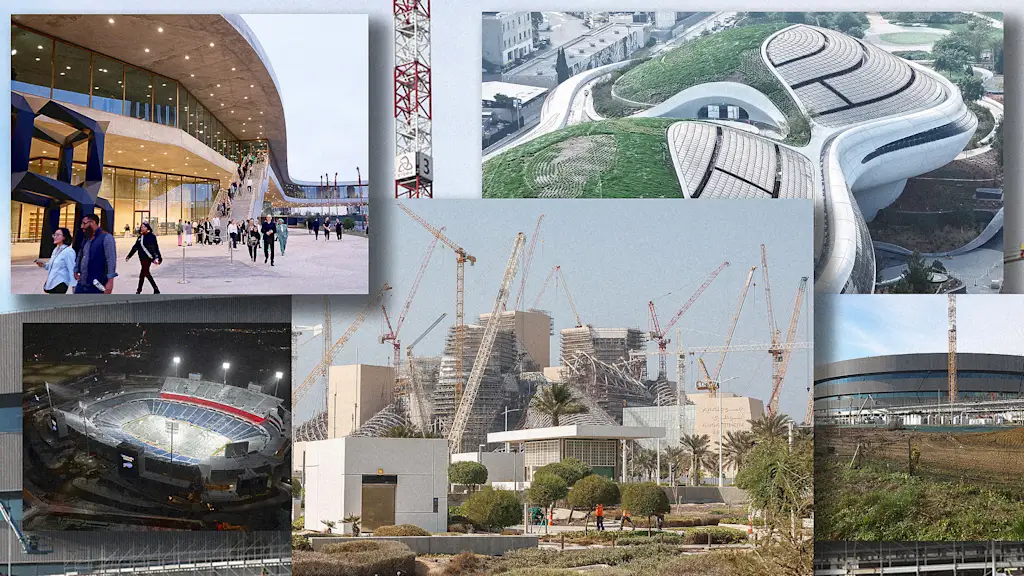
1 month agoHeritage Transformations, New Capital Cities, and Residential Innovations: This Week's Review
Adaptive reuse, landscape integration, and conservation strategies extend the life and cultural relevance of built environments amid material, infrastructural, and geopolitical challenges.
[ Load more ]