UX design
fromMedium
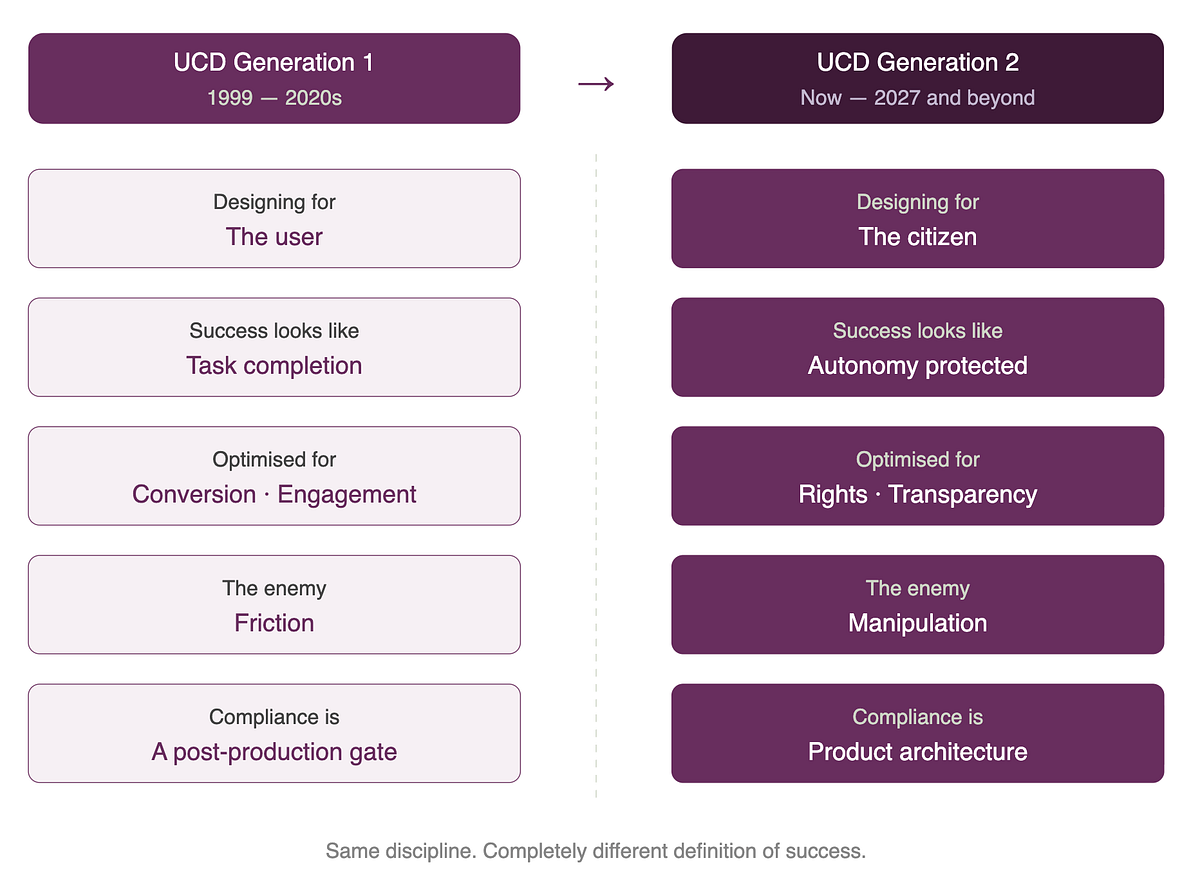
6 hours agoDesigning for the invisible customer
The act of choosing in design is increasingly outsourced to digital gatekeepers, redefining the role of design and aesthetics.
Santa Cruz de Tenerife is one of the most idyllic cities in the Canary Islands. At its heart stands the jewel - the Auditorio. It's a place where talent from both worlds, New and Old, comes together. A theatre, opera, dance, and music heaven.
If you ask Claude to generate a web page for you, there is a high chance you will get a very generic output. The page serves a functional purpose, but it's not very appealing. You can see that this design clearly serves the functional purpose, but doesn't look very appealing.
Google credits security researcher Shaheen Fazim with reporting the exploit to Google. The dude's LinkedIn says he's a professional bug hunter, and I'd say he deserves the highest possible bug bounty for finding something that a government agency is saying "in CSS in Google Chrome before 145.0.7632.75 allowed a remote attacker to execute arbitrary code inside a sandbox via a crafted HTML page."
Here's the sad truth about sports score apps: Most of them aren't all that interested in actually telling you the score. After all, where's the money in providing straightforward information like that? The modern sports score app has to do more. It must bombard you with banner ads and betting odds, implore you to create an account and opt into notifications, sell you some tickets, and show some videos to keep engagement up. The scores themselves are an afterthought.
Design tokens are all your design decisions, that define a design system's aesthetic properties, everything from colors and font sizes to spacing units and border radii. They are the modern evolution of hard-coded values. They are stored in a central, platform-agnostic repository, establishing a single source of truth for your entire digital product suite. This central management allows teams to consume the exact same design values across all platforms (web, native apps, documentation).
Performance is a critical factor in user engagement, where even minor delays in loading can deter users. A clean and simple user interface also contributes significantly to user retention.
Ana proposed the following: Is this enough in 2026? As an occasional purveyor of the visually-hidden class myself, the question wriggled its way into my brain. I felt compelled to investigate the whole ordeal. Spoiler: I do not have a satisfactory yes-or-no answer, but I do have a wall of text!
Everything you need to know in development & design this week, rounded up for you (Week 4, 2026). You'll find the most essential things right now: JavaScript & CSS libraries, useful code snippets, crucial web dev news & resources, curated AI tools, free design assets, and plenty of other good stuff we found! Highlights: 2026 Tech Stack Refresh! Dive into updated "Top 10" lists for Off-canvas menus, responsive dropdowns, fullscreen navs, and more to get your projects ready for the year ahead.
Welcome to The CSS Selection 2026! In this article we're having a look at how CSS is used at scale on over 100,000 websites. We'll look at what things are common on most websites and discover interesting outliers. This is the first edition of what I hope to be many, so this is meant as a baseline for future editions, setting up the first numbers to compare with in coming years.
In Andor, I got chills when Mon Mothma warns the senate of a chilling truth: When we let noise, conformity, or fear dominate, we lose sight of what matters. We risk allowing the loudest voices, often the safest, the most predictable, to drown out individuality, identity, and truth. To me, this line... This line echoes a growing tension I feel in content design.