#welmelti-preserve
#welmelti-preserve
[ follow ]
#conservation #wildlife-conservation #mountain-lion #environmental-conservation #habitat-restoration


fromHigh Country News
4 days agoForest Service overhaul sows confusion, concern - High Country News
"Nobody is asking for this. None of the farm groups want this. No one in conservation wants this. Nobody." Robert Bonnie, former Forest Service undersecretary, highlights widespread opposition to the reorganization.
Washington DC
fromFast Company
4 days agoBig Bear's internet famous bald eagles have entertained millions. Now they need millions to save their home
Jackie, the world-famous Big Bear bald eagle, has been melting hearts and educating the public about her species since 2015, thanks to a web camera run by the California nonprofit Friends of Big Bear Valley (FOBBV).
Fundraising
London politics
fromwww.independent.co.uk
2 weeks agoMarket town pledges to save butterflies from shocking decline in UK first
Gillingham becomes the first UK local authority to commit to a nationwide challenge reversing butterfly population decline through habitat protection, pesticide elimination, and light pollution reduction.
Agriculture
fromdesignboom | architecture & design magazine
1 week agourban rewilding in practice: restoring london's heathland for humans, sheep, and ecology
Sheep grazing is proposed to regenerate urban heathland ecology, creating a continuous ecological corridor that supports both human and non-human systems.

fromMail Online
5 days agoBritain has just 20 years to save its wildlife, experts warn
'Our results show that the next 20 years are critical,' lead author Dr Rob Cooke told the Daily Mail. 'By around 2050, we reach a point where the choices we make on emissions and land use will largely determine whether Britain moves towards a much more degraded or a much more nature‑positive future.'
Environment
Non-profit organizations
fromwww.theguardian.com
2 weeks agoWe cannot replace USAID, but we can do big things': conservation plots a future without American money
Liberia's eco-guard program, funded by USAID, faces collapse after the Trump administration dismantled the agency, threatening forest conservation and wildlife protection in one of Africa's most biodiverse regions.
fromwww.cbc.ca
3 weeks agoOntario to consolidate 36 conservation authorities into 9 | CBC News
Ontario will consolidate its 36 conservation authorities into nine across the province. Environment Minister Todd McCarthy says there will be no job losses as a result. He says the province listened to feedback after several town halls and 14,000 comments on its plan, which initially proposed having seven conservation authorities.
Canada news
fromwww.theguardian.com
1 month agoIt creates a sense of belonging': Brazil bets on hiking trails for conservation
The idea that hiking trails are a tool for conservation is based on a simple premise: people protect what they know. That requires making conservation areas accessible. There's no point telling people you only protect what you know, if you don't give them the tools to know. The trail is this tool. People who hike, people who camp, these people often become defenders of the environment.
Travel
fromHigh Country News
1 month agoCoyotes and cougars and rats, oh my! - High Country News
An unnamed tourist saw it and told Aidan Moore, who works for Alcatraz City Cruises. Moore told SFGATE that he was initially skeptical, but the guest's iPhone footage left little room for doubt. The video shows, not a sea lion or an otter, but an actual Canis latrans, doggedly dogpaddling, then clambering out of the water, noticeably shaky and struggling to settle tired paws on the craggy rocks.
California
Non-profit organizations
fromKqed
4 weeks agoThe Eaton Fire Destroyed Altadena's Lush Greenery. These Volunteers Are Growing It Back | KQED
Community-led reforestation efforts and partnerships are restoring Altadena's green spaces after the devastating 2025 Eaton Fire destroyed homes and native vegetation.
fromFast Company
1 week agoBeach cleanups can save the lives of marine animals. This calculator tells you exactly how many
If you enter the amounts of different types of plastic that you clean up into the Wildlife Impact Calculator, it will tell you how many animal lives would have been at risk, had those items made their way into the ocean and been ingested.
Environment
fromwww.theguardian.com
2 weeks agoSmall changes in how we garden can make a big difference to birds | Letter
Around a third of UK gardeners use pesticides, and our studies found that house sparrow numbers, for example, were nearly 40% lower in gardens where the pesticide metaldehyde was used. By reducing pesticide use, you can actively encourage birds back into your outdoor spaces, as they rely on invertebrates such as slugs and snails as natural prey.
Pets
fromYanko Design - Modern Industrial Design News
1 month agoWhen Zoo Design Tells the Story of Life Itself - Yanko Design
The House of Elements, set to become the crown jewel of Orientarium Zoo in Łódź, Poland, takes the classical elements (earth, ice, water, fire, and air) and transforms them into a 6,000-square-meter narrative experience. Rather than designing a building where you walk from exhibit to exhibit, VMA created a continuous downward-then-upward journey that mirrors the evolution of life itself. Designer: VMA Design Studio for Orientarium Zoo
Design
fromwww.scientificamerican.com
2 months agoHow zoos are preparing animals for this weekend's massive winter storm
In Texas, the Houston Zoo has prepared its buildings and barns with heaters designed to withstand extreme conditions, the zoo said in a blog post on Friday. Animals will have access to extra hay and bedding, and food was stocked in advance. Across the Zoo, sensitive plants are being protected with coverings, and generators are positioned to provide backup power if needed, the blog post said.
US news
fromHigh Country News
1 month agoIt's time to rethink how we care for our public lands and waters - High Country News
Wildlife populations are in decline. Recreation sites are crowded and often underfunded. Wildfires are larger, more destructive and harder to control. Climate change is reshaping natural systems, from ocean fisheries to mountain snowpacks, faster than institutions can respond. At the same time, communities are being asked to host new energy projects, transmission lines and mineral development - often without clear processes, adequate resources or trust that decisions are being made in the public interest.
Environment
fromwww.theguardian.com
1 month agoHow a Welsh village saved its forest and its future
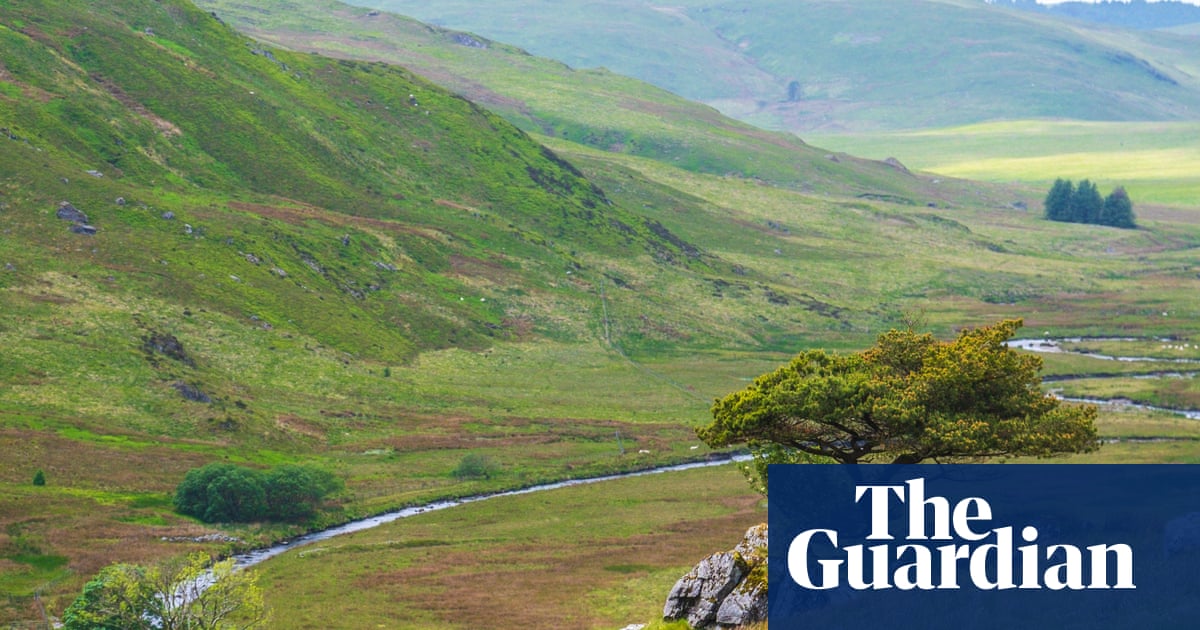
It was a Saturday in February 2020 when the flood came. It had been a wet winter, so wet it seemed that before the month was out, the brown trout of the River Taff might be washed clean out into Cardiff Bay before the fishing season had even begun. But this is Wales. People are used to a spot of rain.
Environment


fromwww.dw.com
2 months agoThe business of saving nature
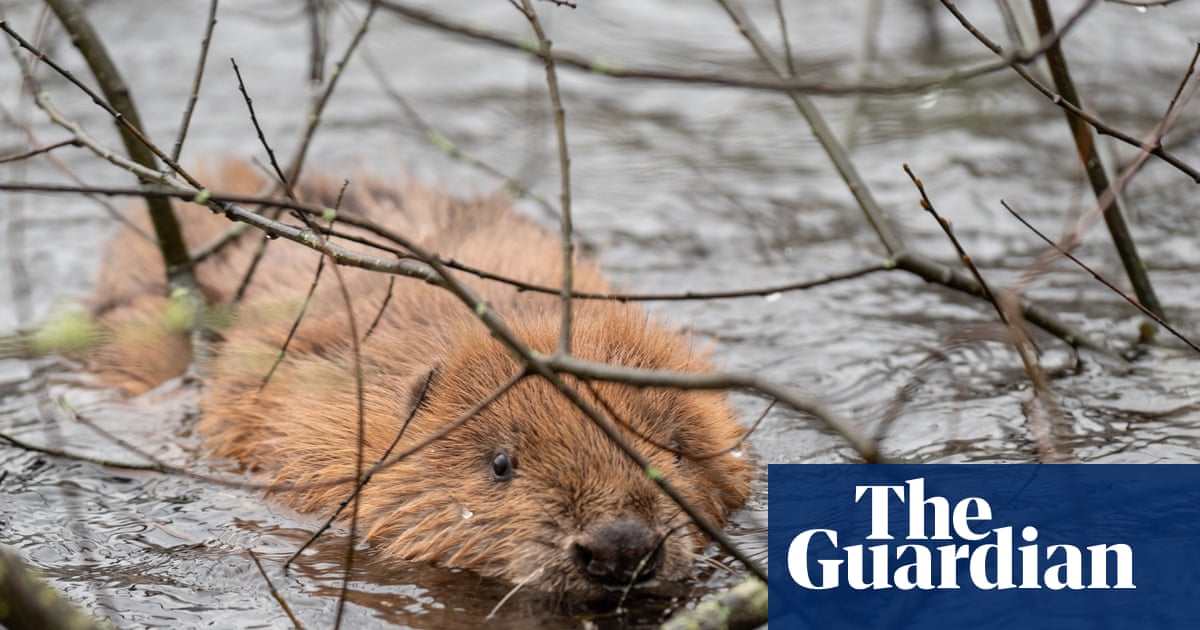
The world spends 30 times more money destroying nature than protecting it. That's according to a new report from the United Nations Environment Programme (UNEP) that exposes a massive gulf between so-called "harmful investments" and financing that promotes nature preservation. The global environment agency's latest "State of Finance for Nature" (SNF) report is calling to phase out the US$7.3 trillion (6.2 trillion) in global investments that damage nature including into high-emissions energy infrastructure and manufacturing, for example.
Environment
fromHigh Country News
2 months agoThe nation's trails are disappearing - High Country News
Many of them were built for purposes that no longer exist - cattle drives, mining prospecting, early U.S. Forest Service fire patrols - while others were packed by the footprints of the Chumash people well before the colonization of North America. Sections of trail cling to steep slopes that seem to barely resist gravity, shedding soil and stone with each winter storm.
Environment
fromwww.mercurynews.com
2 months agoFrom death trap to lifeline: Coyote Valley's plan for wildlife crossings
From Highway 101 to Monterey Road, traffic in Silicon Valley has become deadly for wildlife trying to move between the Santa Cruz Mountains and the Diablo Range. Now, a major project is underway to connect preserved open spaces in the South Bay and reduce dangerous crashes for drivers. Monterey Road is a death trap, said Fraser Shilling, a researcher at UC Davis who studies how wildlife interacts with roads.
Environment
fromwww.theguardian.com
2 months agoRare butterflies bounce back after landowners in Wales cut back on flailing hedges
Conservationists have now persuaded landowners to cut hedges in a more gentle rotation, with sections left uncut for up to three years, to enable more eggs to survive over winter. The caterpillars emerge with the foliage in spring and hatch into adult butterflies in July. The brown hairstreak is difficult to spot as a butterfly but every winter volunteers assess its populations by counting its minuscule cream-coloured eggs, which with careful searching are visible on the bare branches of blackthorn.
Environment
fromIndependent
2 months ago'It's not about ticking off the Big Five' - Booking a safari this year? Here's how to make sure it's ethical
Demand for safari holidays is growing, so how can you do it without harming animals, people or the landscape? Last summer, images were shared of a scene in Tanzania's Serengeti National Park - a large group of jeeps and dozens of tourists standing outside taking pictures of 'The Great Migration' and blocking wildebeests' traditional crossing point. Jeep traffic jams have also been widely reported in other parks, including Sri Lanka's Yala, known for its high density of leopards.
Environment
fromThe Mercury News
2 months agoContra Costa's ecosystem being restored, one indigenous plant at a time
Waterways across Contra Costa County are increasingly threatened by invasive plant species that engulf canals and drains, decreasing biodiversity and reducing safe habitats for wildlife. In an effort to address and restore the environment, the Contra Costa County Flood Control and Water Conservation District is working to reverse that trend. The district hosted its recent 12th annual Giving Natives a Chance event at the Clayton Valley Drain near Concord's Hillcrest Community Park, inviting volunteers from across the county to plant native species around waterways and drains.
Environment
[ Load more ]