#artificial-intelligence-employment
#artificial-intelligence-employment
[ follow ]
#ai #job-market #artificial-intelligence #automation #ai-impact #technology #job-displacement #productivity
#ai

Online learning
fromeLearning Industry
12 hours agoLeveraging AI And Automation To Streamline CTE Content Creation And Localization
AI-powered automation enhances CTE content creation, enabling rapid curriculum development and alignment with industry standards while reducing operational strain.
Marketing tech
fromHR Brew
2 days agoAI is changing how people look for jobs, forcing recruiters to keep up
AI is transforming SEO and recruitment strategies, requiring adaptation to new search behaviors and tools.
Remote teams
fromwww.businessinsider.com
43 minutes agoI'm a Chinese CEO who jumped on the OpenClaw hype and built AI employees. We had to create a human-only Slack channel to escape them.
AI employees can handle repetitive tasks, improving workplace efficiency and allowing humans to focus on creative work.
#generative-ai
Women in technology
fromFast Company
3 days agoAI isn't just reshaping productivity and threatening to kill jobs. It's changing how we lead, communicate, and treat each other. It's also creating a new gender gap
Generative AI is reshaping communication, trust, and cultural interactions beyond productivity and efficiency concerns.
#ai-impact
Higher education
fromEntrepreneur
2 days agoA Growing Number of College Students Are Switching Majors - Here's What's Behind It
One in six college students changed their major due to AI's perceived impact on the job market, with many considering a switch.
Artificial intelligence
fromZDNET
3 days agoNew MIT jobs report: Why AI's work impact will roll in like a rising tide, not a crashing wave
AI's impact on jobs may take longer than expected, allowing workers more time to adapt.

#artificial-intelligence


Artificial intelligence
fromBusiness Insider
3 days agoHow AI could destroy - or save - humanity, according to former AI insiders
Artificial intelligence has the potential to transform various sectors but also poses risks like inequality, job loss, and increased power for governments and tech companies.
#gig-economy
Remote teams
fromSilicon Canals
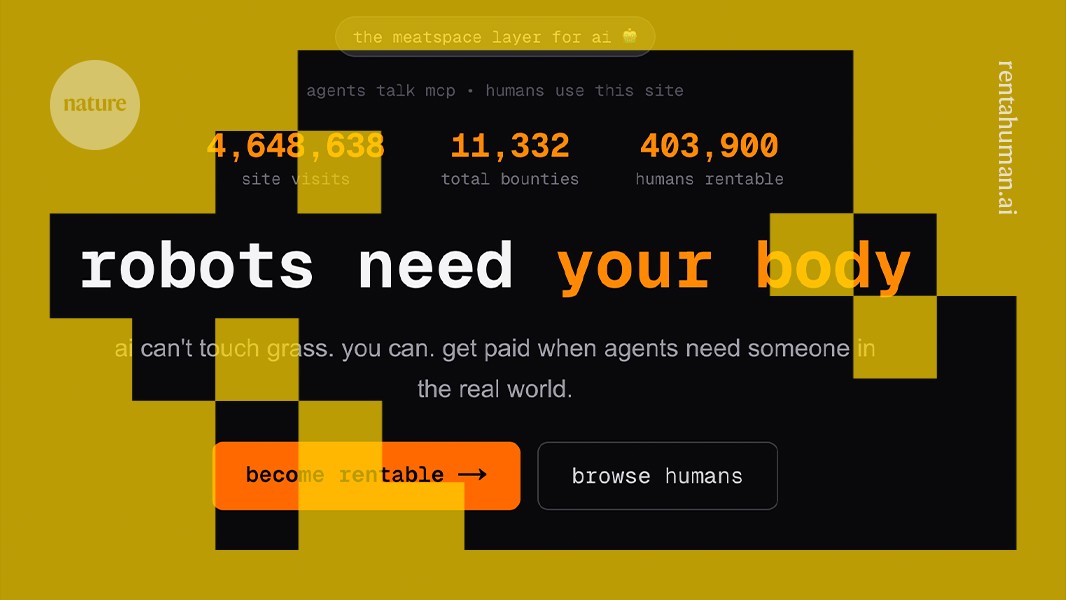
3 days agoGig workers in 50+ countries are filming themselves doing chores to train humanoid robots for $15 an hour - Silicon Canals
A new gig economy is emerging where workers film household tasks to train humanoid robots, highlighting economic disparities in compensation versus value extracted.
Remote teams
fromSilicon Canals
3 days agoGig workers in 50+ countries are filming themselves doing chores to train humanoid robots for $15 an hour - Silicon Canals
A new gig economy is emerging where workers film household tasks to train humanoid robots, highlighting economic disparities in compensation versus value extracted.
fromSilicon Canals
5 hours agoJapan is deploying robots not to replace workers but because there's no one left to hire - Silicon Canals
Japan's push into AI-powered robotics is driven less by competitive ambition than by demographic arithmetic. The country's population declined for a 14th consecutive year in 2024, with working-age citizens comprising just 59.6% of the total population.
Artificial intelligence
fromZDNET
3 weeks agoAI job paradox: Occupations seeing greatest losses also see greatest gains - here's why
What we're seeing is a reorganization of work, not a simple expansion or contraction of headcount. AI is taking over repetitive, manual tasks inside these roles. At the same time, it's creating entirely new responsibilities around AI integration, governance, data engineering, security, and performance oversight.
Tech industry
#ai-job-displacement
Artificial intelligence
fromFuturism
2 weeks agoOpenAI Cofounder Deletes Controversial Analysis of Which Jobs Are Getting Steam Engined by AI
Andrej Karpathy created an AI-based tool rating job vulnerability to AI automation on a 0-10 scale using Bureau of Labor Statistics data, but withdrew it after widespread misinterpretation of its implications.
Artificial intelligence
fromFuturism
3 weeks agoAnthropic Announces Jobs Most at Risk From AI
AI will disrupt job markets unevenly, with computer programmers, customer service representatives, and data entry workers facing the highest displacement risk, while physical-presence jobs remain largely protected.
Artificial intelligence
fromFuturism
1 month agoThe AI Jobs Apocalypse Is Starting to Feel Real
Tech and financial leaders increasingly cite AI as justification for mass layoffs, with over 54,000 job losses attributed to AI in recent announcements, though the full extent of AI-driven job displacement remains uncertain.
Artificial intelligence
fromFast Company
1 month agoStop calling it inevitable: The AI job crisis is being built, not born
AI industry leaders acknowledge significant job displacement risks while simultaneously developing technologies that will cause this disruption, creating a contradiction between their public concerns and their business actions.
fromBusiness Insider
2 months agoThe AI boom is really a race to own the future of human labor, a safety pioneer says
The soaring valuations of AI companies aren't just a bet on better software. They're a wager on who will control human labor in the future, according to Roman Yampolskiy, a University of Louisville computer science professor who was one of the first academics to warn about AI's risks. As artificial intelligence moves from tools to increasingly autonomous agents, Yampolskiy said markets are pricing in a radical shift: machines providing "free labor" at scale.
Artificial intelligence
fromAxios
2 months agoBehind the Curtain: The job replacement AI machine
This significant exposure has raised concerns around widespread and permanent job loss, sparking fears of a 'job apocalypse' or 'humans going the way of horses.' Anthropic revealed this week that one of its AI tools, Claude Code, built a new product, Cowork, which allows others to use AI for workplace tasks normally done by humans - creating presentations, summarizing meetings, consolidating research. You read that right: AI built AI that will displace human work with AI. Use that for a glimpse of what's coming.
Artificial intelligence
[ Load more ]