#market-discounts
#market-discounts
[ follow ]
#consumer-behavior #e-commerce #walmart #retail #costco #gas-prices #amazon #pricing-strategy #grocery-shopping
fromArchitectural Digest
3 days agoI'm Done Sourcing So Much Online. Here's Why
The convenience of sourcing online is fraught with more pitfalls than most of us want to admit. Try finding adequate photos of a vintage piece's condition-close-ups of the fabric, video of damaged areas, any images of a piece's rear or underside!
UX design

fromGameSpot
2 days agoWhy A Switch 2 Price Increase May Be "Inevitable"
"Unfortunately, I think eventually the hardware price is going to have to go up. I think that there are things that they can and seem to be doing to try and mitigate that, but I also look at this move on software as--if I'm reading it correctly--a way to make a hardware price increase a little bit more palatable."
Games



fromwww.businessinsider.com
3 days agoPop Mart's stock is plummeting after it revealed that most of its sales come from Labubu
Pop Mart's reliance on 'The Monsters' IP has raised concerns, as it accounted for 40% of revenue in 2025 but dropped to 23% in 2024, indicating potential volatility.
Intellectual property law
fromDigiday
2 weeks agoRetailers turn to digital rebates as alcohol sales slump
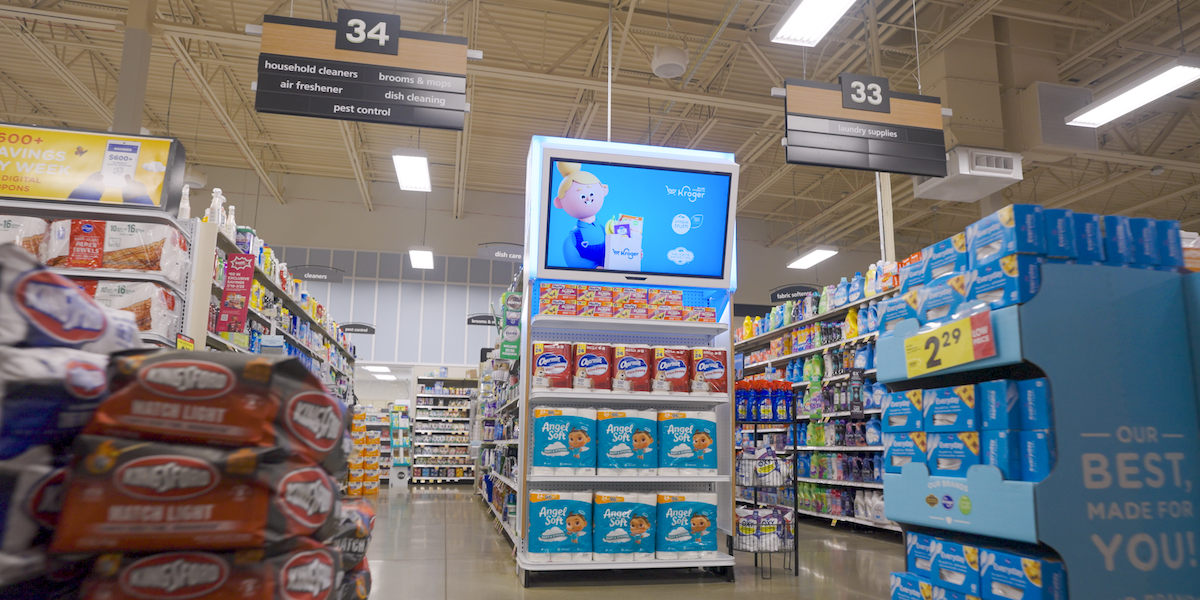
Within roughly the past six months alone, Swiftly expanded its alcohol rebate programs from about 11,000 stores to more than 33,000 stores in 44 states. Swiftly had built an alcohol cashback product in 2023 but scaled it through the acquisition of alcohol promotions platform BYBE in 2024.
Wine
Business intelligence
from24/7 Wall St.
3 weeks agoGrocery Outlet and Scholastic Face New Analyst Scrutiny on Consumer Trends
Wall Street shows divergent sentiment on consumer stocks: Grocery Outlet faces structural headwinds with analyst downgrades, while Scholastic is downgraded due to positive news already priced into the market.
fromFortune
5 days agoNordstrom's $6.25 billion deal to go private is paying off-and don't expect an IPO anytime soon | Fortune
"When you're a public company, your scorecard is your stock price, and that has a lot to do with the results you generate. If the investment community doesn't think very highly of department stores, which they don't, your multiple goes down."
Business

fromFortune
4 days agoGen Z shoppers are actually more deliberate than baby boomers and agonize over their cart for days | Fortune
"Everything in today's e-commerce environment is being driven by increased intensity of the research phase and true generational divides during the current macroeconomic environment," said Jaysen Gillespie, VP of product marketing and analytics at RTB House.
E-Commerce
Marketing tech
fromwww.independent.co.uk
3 weeks agoIlluminating blind spots in store strategy execution
Consumer goods brands require real-time retail intelligence and visibility of in-store execution to compete effectively, as legacy tools fail to provide actionable data needed for optimal product placement, pricing, and promotion management.
E-Commerce
fromRetail Brew
2 weeks agoHow retailers can leverage their private label marketing advantage over national brands
Private label sales reached $283 billion with growth outpacing national brands, requiring distinct marketing strategies focused on point-of-sale engagement rather than external storytelling.
fromFast Company
2 months agoHow discounting hurts long-term loyalty and profits
Discounting has been part of retail's toolkit for decades, and it can be effective, especially during high-stakes shopping seasons. But as promotions become more frequent across the industry, companies are taking a closer look at the downside: Short-term sales gains don't always come with long-term loyalty or durable margins, and customers remember how a brand made them feel far more than what they saved at checkout.
Marketing
E-Commerce
fromRetail Brew
3 weeks agoConsumers say they're financially worse off and it's changing how they shop
One in four Americans report worsening financial situations, driving widespread cost-cutting across groceries, personal care, dining, travel, and discretionary spending, with consumers increasingly favoring budget retailers and value-focused options.
E-Commerce
fromTasting Table
3 weeks ago7 Grocery Chain Price Adjustment Policies Every Customer Should Be Aware Of - Tasting Table
Many grocery stores offer price adjustment policies allowing customers to receive refunds when item prices drop shortly after purchase, requiring receipts and exact product matches.
fromMarTech
2 months agoHow inflation reshapes shopping habits and trust in private labels | MarTech
As prices climb, shoppers aren't just spending less-they're spending differently. Nearly half are buying smaller quantities or trading down to lower-cost options, such as canned fruit instead of fresh, according to Capgemini's report, "What matters to today's consumers 2026." It's not about cutting things out entirely-it's about making budgets stretch. Low- and middle-income households are especially deal-focused right now: more coupons, more frequent but smaller trips, and fewer meals out.
Marketing tech
fromModern Retail
1 month agoMarketplace Briefing: Online merchants aren't lowering prices despite Supreme Court ruling
We're still increasing pricing based on the most up-to-date tariff announcements from India and the U.S., because it's not going back down to zero. It's still elevated. The cost of our goods has also shot up, because gold has almost doubled since last year.
E-Commerce
fromThe Conversation
1 month agoDoes 'free' shipping really exist? An expert shares the marketing tricks you need to know
When a transaction involves a cost, we instinctively weigh the downside. But when something is entirely free, we experience a positive emotion and perceive the offer as more valuable than it is mathematically. Retailers no doubt realise that offering free delivery is one of the most effective ways to stop a consumer from abandoning a digital shopping cart.
E-Commerce
fromwww.independent.co.uk
1 month agoDoes free shipping actually exist? Marketing ploys experts want to warn you about
You're scrolling through an online retailer, like Amazon, Shein or eBay, and spot a shirt on sale for $40. You add it to your cart, but at checkout, a $10 shipping fee suddenly appears. Frustrated, you close the tab. But what if that same shirt was priced at $50 with free shipping? The likelihood that you would have bought it without a second thought is much higher.
E-Commerce
fromBusiness Matters
2 months agoHow to Determine the Markup Percentage for a Retail Business
Markup is how much you add to your cost to get your selling price. If something costs $10 and you sell it for $15 , you added $5. That's a 50 percent markup on your cost. Where people get confused is that markup isn't the same as margin, even though the terms get used interchangeably all the time. Margin measures profit as a percentage of the selling price, and markup measures it based on your costs. Same dollar, different percentages.
E-Commerce
[ Load more ]