#media-scandals
#media-scandals
[ follow ]
#social-media #journalism #misinformation #fact-checking #meta #first-amendment #press-freedom #advertising
Social media marketing
fromwww.theguardian.com
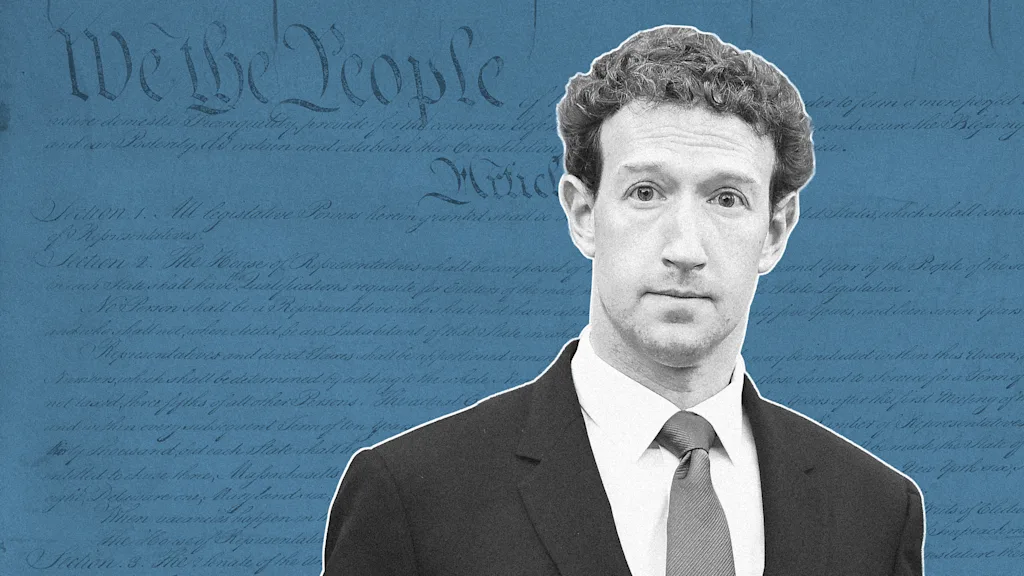
4 hours agoIt started with a tip-off': how a Guardian investigation exposed child sex trafficking on Facebook and Instagram
Child sexual abuse trafficking surged during the pandemic, with platforms like Facebook and Instagram being exploited for these crimes.






#social-media

Law
fromBloomberglaw
6 days agoSocial Media Jury Verdicts Ignite Internet Free Speech Debates
A coalition opposes recent jury verdicts holding social media companies liable for youth addiction, fearing implications for free speech and privacy rights.
fromMuse by Clios | Discover the latest creative marketing and advertising news. Muse by Clio is the premier news site covering creativity in advertising and beyond.
5 days agoLaw
2 Rough Social Media Rulings Could Actually Improve the Platforms | Muse by Clios
Recent jury verdicts against Meta and YouTube signal a shift in accountability for social media platforms regarding child safety and mental health.
Law
fromMuse by Clios | Discover the latest creative marketing and advertising news. Muse by Clio is the premier news site covering creativity in advertising and beyond.
5 days ago2 Rough Social Media Rulings Could Actually Improve the Platforms | Muse by Clios
Recent jury verdicts against Meta and YouTube signal a shift in accountability for social media platforms regarding child safety and mental health.

Washington DC
fromwww.mediaite.com
5 days agoJudge Dismisses Lawsuit From Ex-Fox News Journo Who Said He Was Fired for Calling Out False' Jan 6 Reports
A judge dismissed Jason Donner's lawsuit against Fox News for alleged retaliation over his refusal to report false information regarding the 2020 election.


fromwww.mediaite.com
1 day agoSteve Kroft Spills Dirt On 30-Year CBS Gig: 'I Hated It'
I can remember when I was tapped to go to 60 minutes I thought this was fantastic and I expected a lot of people would just come up and say, that's really great, I'm really happy for you, whatever the thing right is and then you realize after a while that not everybody was happy that I got this job. There were other people that wanted it. And so then you've all of a sudden made a bunch of enemies. And that's, it's just, you know, it's a snake pit.
Media industry
fromwww.theguardian.com
5 days agoEx-Alex Jones employee reflects on job at Infowars: It was nonsense. It was lies'
Owens described how Infowars aimed to create a cinematic experience, stating, 'We would go out there, we would shoot videos like we were in the weeds, we were showing what was really going on. But it was nonsense. It was lies.'
Media industry
fromFast Company
1 month agoMisinformation is scaling. We need to get better at countering it
Most days, an email lands in my inbox with the promise to amplify my growth-my newsletter subscribers, the reach of my podcasts, the number of client leads, etc. I've gotten used to random people pitching me on their services, and some of the messages expertly prey on my insecurities as a business owner ("you're leaving so much on the table," et al.). I never answer any of them, but I sometimes wonder which ones might actually be legit.
Artificial intelligence
Media industry
fromwww.mediaite.com
2 months agoDeeply Concerning': Top WaPo Editor Rips Extraordinary, Aggressive' Search of Reporter's Home
FBI agents searched Washington Post reporter Hannah Natanson's home and seized electronic devices while investigating a contractor accused of retaining classified materials.
fromwww.mediaite.com
1 month agoThe Washington Post Disaster is an Indictment of Both Publishers and Society
The shocking diminishment of The Washington Post, which has just announced it is cutting a third of its staff, is not just another story of a great paper succumbing to algorithms, social media, and the march to idiocracy. In their zeal to be seen as fair and evenhanded, journalists tend to accept the common criticism that they failed to adapt that, basically, they didn't produce enough viral TikTok videos. There's some truth to that, but the main problem lies elsewhere.
Media industry
[ Load more ]