Artificial intelligence
fromDigiday
3 hours agoAI talk at retail events shifts to proving real results, defining a true strategy
AI has evolved from experimentation to a focus on proven strategies and increased productivity in retail.
The new tracker features a simplified progress bar that shows just four stages of pizza creation. The new design was rolled out to all platforms, and there's also new Lock Screen widgets for iOS that bring the pizza chain's most famous tech feature to the Liquid Glass age.
The convenience of sourcing online is fraught with more pitfalls than most of us want to admit. Try finding adequate photos of a vintage piece's condition-close-ups of the fabric, video of damaged areas, any images of a piece's rear or underside!
Retail point-of-sale systems today offer a wide range of options for peripherals and hardware. Their technical specifications play a major role in selection, and big retailers often choose multiple vendors to reduce a single point of failure. This gives them an advantage to negotiate price or support as well. Technically, these peripherals also require updating with new models and may have new feature sets. This necessitates the redevelopment of point-of-sale applications, increasing development costs.
As you were browsing something about your browser made us think you were a bot. There are a few reasons this might happen: You've disabled JavaScript in your web browser. You're a power user moving through this website with super-human speed. You've disabled cookies in your web browser. A third-party browser plugin, such as Ghostery or NoScript, is preventing JavaScript from running. Additional information is available in this support article.
The reason is a lack of user research to understand how people think and act when shopping, and how they navigate their way through the experience to get it done. It's the user experience concept of a mental model, if you want to get fancy, or the application of a system matching the real-world heuristic they teach you about in college.
Do you remember when 2007 was dubbed "The year of mobile"? That was when Apple launched the iPhone and firmly established mobile as the secondary channel for online engagement, after the desktop. The company's approach was so revolutionary that, in today's world, the mobile experience has become the primary experience for brand and customer interaction. More people search for products and services on their phones than on any other platform.
I used to think I was overthinking it until I interviewed a longtime cashier who told me something fascinating: "I can tell you everything about a person just by watching them unload their cart for thirty seconds." That conversation sent me down a research rabbit hole about what our everyday behaviors reveal about us. Turns out, psychologists have been studying these micro-behaviors for years, and the way we organize our groceries at checkout is surprisingly revealing.
Claude - or "Claudius," as its vending persona was known, but we'll stick to the former for the sake of clarity - had pretty much free reign to accomplish its goal. It was allowed to research products, set prices, and even contact outside distributors, with a team of humans at the AI safety firm Andon Labs handling the physical tasks like restocking. Meanwhile, it also fielded requests from employees in a Slack channel, who asked for everything from chocolate drinks to the street drug methamphetamine to broadswords.
According to the company, the Bevri POS is designed to complete the 1003 loan application, collect and validate income and asset documentation, run Desktop Underwriter and Loan Product Advisor findings for Fannie Mae and Freddie Mac, and generate underwriting outcomes earlier in the process. The system also aims to reduce repetitive data entry through autonomous task execution. The company also said the platform continuously evaluates next steps in a loan file, resolving gaps and surfacing insights for loan officers.
Perusing the grocery aisle in the Westside Market on 23rd Street in Manhattan, you might not even notice the screens. They look just like paper price labels and, alongside a bar code, use a handwriting-style font we've come to associate with a certain merchant folksiness. They're not particularly bright or showy. The only clues that they're not ordinary sticky shelf labels are a barely distinguishable light bulb and, on some, a small QR code.
That's a problem. Without a doubt, a great website and top-level marketing will help generate new sales, but it's the delivery experience that warrants future ones. This is because today's consumer not only has options for where they'll buy but also a high set of expectations. What's more, they remember the way a product arrives at their doorstep more than how it was sold.
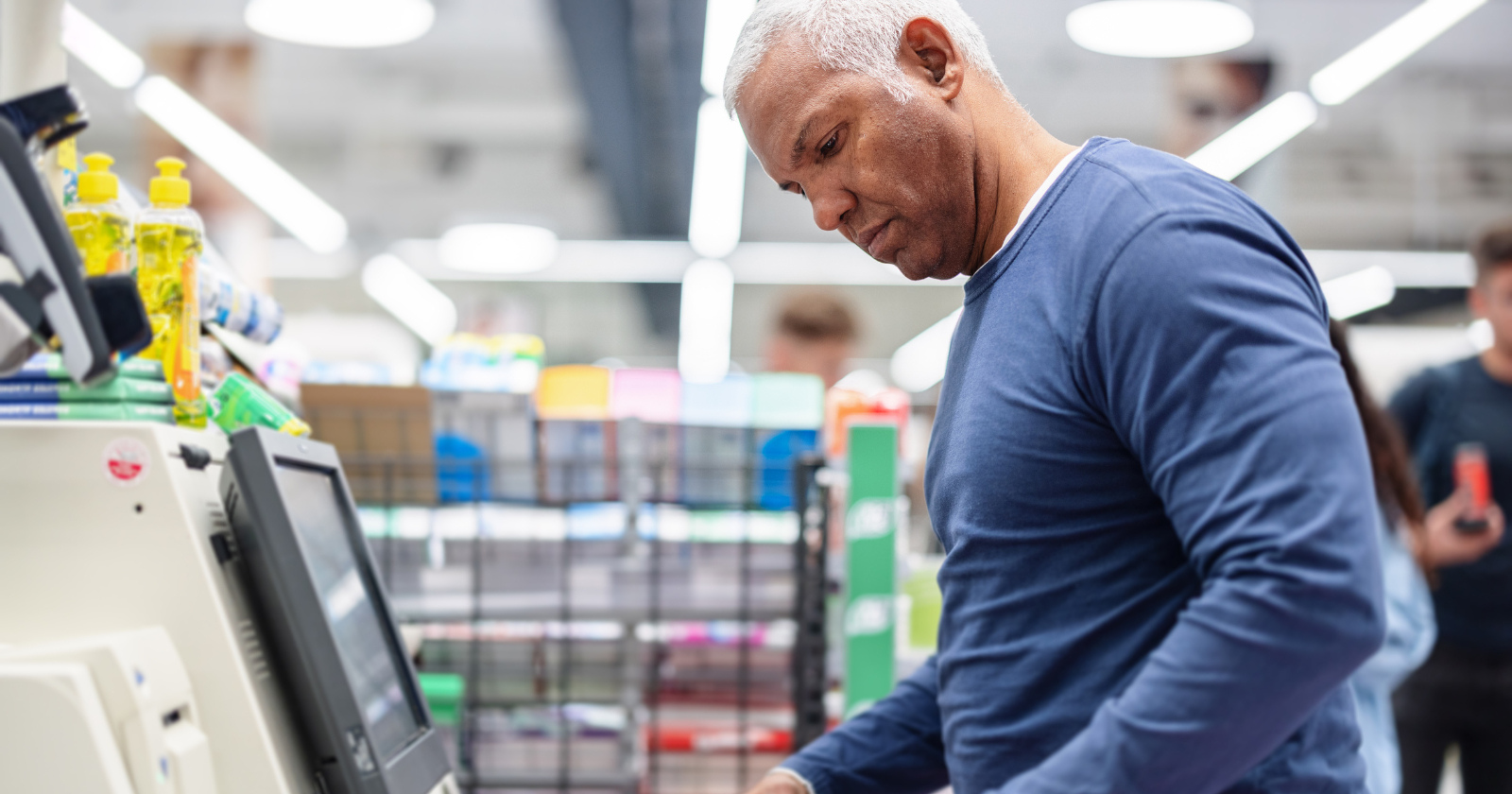
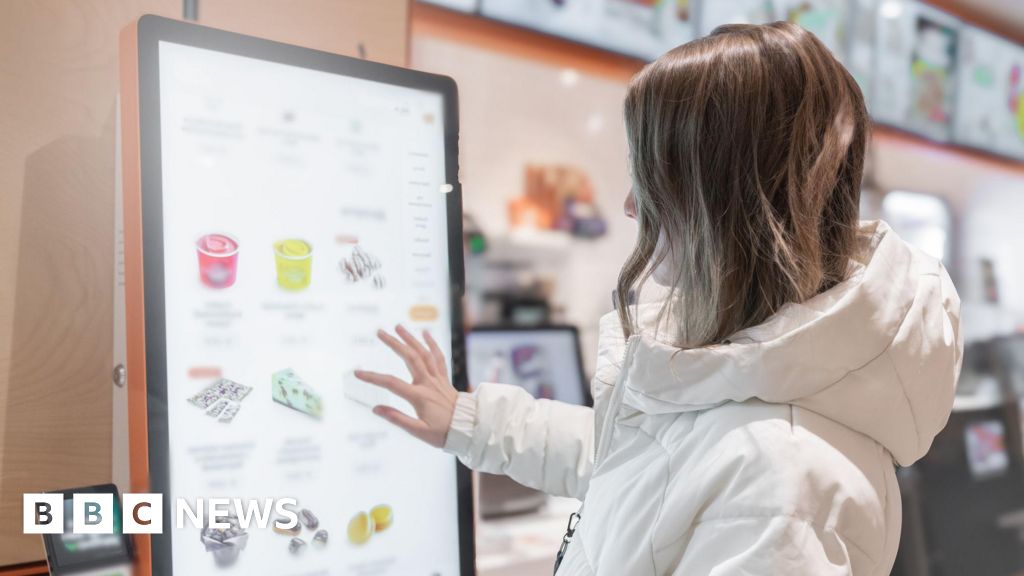
Folks have griped on Reddit that their locations do not offer self-checkout options (though many report that their locations haven't undergone any recent remodels). Others have shared frustration with Publix's existing self-checkout system, which they claim only offers a small bagging area, and when they move their full bags off the scale, it flags the employee - effectively wasting both the customer's and the employee's time.
Retail is no longer just about buying and selling products; it is about the experience. In a world where online shopping offers instant gratification, physical stores face the challenge of providing something the internet cannot: a personal, tactile, and efficient service. The checkout counter has traditionally been a point of friction, with long queues, slow card machines, and impersonal interactions. However, the modern Electronic Point of Sale (EPOS) system has completely reshaped this dynamic.
If checkout happens inside AI conversations, retailers risk losing direct customer relationships - while platforms like Microsoft gain leverage. Driving the news: Microsoft unveiled new agentic AI tools for retailers at the NRF 2026 retail conference, including Copilot Checkout, which lets shoppers complete purchases inside Copilot without being redirected to a retailer's website. The checkout feature is live in the U.S. with Shopify, PayPal, Stripe and Etsy integrations.
Statistics from the 2025 holiday shopping season clearly show that AI is playing a huge role in how people shop. But new research from retail payment platform Adyen found that many consumers are ready for AI to become their personal shopper. Just over half-51%-said they're open to letting AI take over the entire shopping process, including making final purchases. Millennials are the most willing to let agents do their shopping, with nearly three in five saying they are ready for such a shift.