Relationships
fromPsychology Today
2 hours agoI Don't Want to Be Fixed, I Just Want to Be Heard
Couples often fight over whose reality is valid, but what they truly desire is to be heard without judgment or correction.

But we are all as an unclean thing, and all our righteousness are as filthy rags; and we all do fade as a leaf; and our iniquities, like the wind, have taken us away. It was bracing language for an 8-year-old. Not only was I unclean, but even my best attempt at goodness was filthy.
The shoulds are a type of cognitive distortion (unhelpful thinking habit) that can lead to judgment. You may judge others, for example, 'They shouldn't act that way,' and yourself. In this post, we will focus on the shoulds you direct at yourself, though the strategies may be helpful for all cognitive distortions.
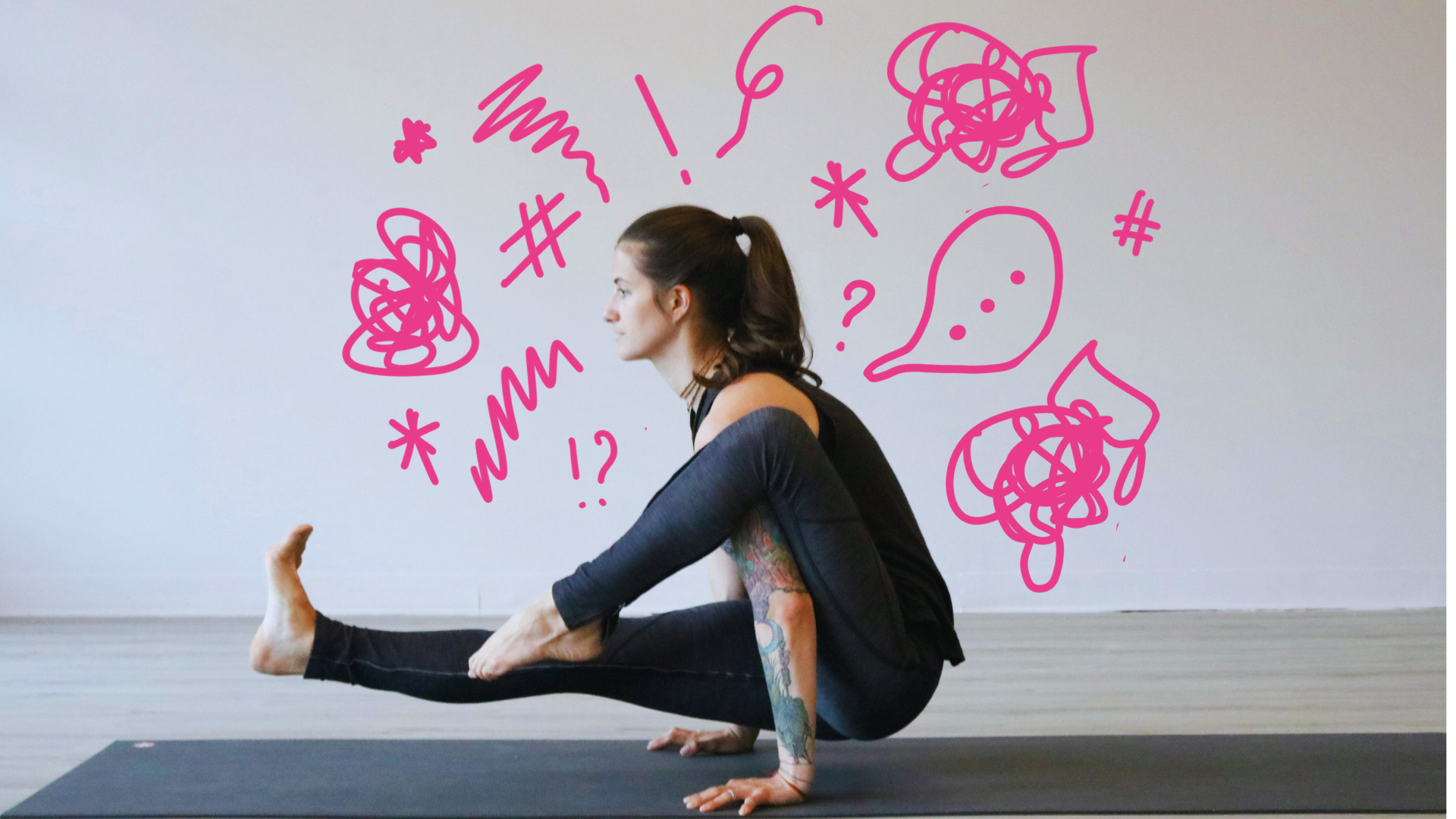
At the heart of yoga philosophy is the belief that stillness is not simply the absence of movement, but a profound engagement with our inner landscape. Practices such as asana (postures), pranayama (breath control), and meditation serve as gateways to this stillness, allowing us to cultivate awareness amidst chaos. Through these disciplines, we learn to quiet the mind's incessant chatter and tune into our true essence.
Human psychology is characterized by a paradoxical structure: The same species that wages war, destabilizes ecosystems, and creates collective threats also develops moral systems, empathic abilities, cultural innovations, and an increasing desire for internal harmony. In my previous post, I explored the possibility to transcend our paradoxical nature through learning. This contribution focuses on learning to see through the nature of our vulnerability.
I didn't have words for it back then, but the feeling was clear: if I stood out, something was wrong with me. And if something was wrong with me, I wasn't good enough. I remember standing there, already tense, afraid that the other kids would think I looked stupid. Afraid they wouldn't want to play with me. Afraid that being different, even in something small, would mean I didn't belong.
We live in an era saturated with information. In a matter of minutes, we can find answers to both simple questions ("What's a good birthday gift for a 9-year-old boy?") and complex ones ("What's the optimal diet for a 40-year-old woman trying to build muscle?"). While some decisions are in fact deeply nuanced, most of the struggles that undermine our well-being are not caused by a lack of knowledge.
The word umwelt comes from biology, coined by ethologists studying animals in their natural habitats. It refers to the world as an organism can perceive it, based entirely on its sensory equipment. A bat's umwelt is built from echo. A dog's from scent. A tick's world is dominated by a single chemical cue that tells it when to drop from a branch onto a passing mammal.
Switching off negativity may take a process that involves neuroplasticity. According to Puderbaugh and Emmady ( Journal of Behavioral Science, 2023), "Neuroplasticity, also known as neural plasticity or brain plasticity, is a process that involves adaptive structural and functional changes to the brain." Simply put, it is "the ability of the nervous system to change its activity in response to intrinsic or extrinsic stimuli by reorganizing its structure, functions, or connections."
Virtues such as compassion, patience, and self-control may be beneficial not only for others but also for oneself, according to new research my team and I published in the Journal of Personality in December 2025. Philosophers from Aristotle to al-Fārābī, a 10th-century scholar in what is now Iraq, have argued that virtue is vital for well-being. Yet others, such as Thomas Hobbes and Friedrich Nietzsche, have argued the opposite: Virtue offers no benefit to oneself and is good only for others.
Popular definitions of yoga often include terms such as balance, harmony, health, and peace. While these qualities are certainly desirable, and must be created before one can enter the state of fixity, or yoga, they are not included in the definition Patanjali offers us in his Yoga Sutras, the classic second-century B.C. exposition generally accepted as the bible of yoga.
Some years ago, I was working at my desk and realized that I had misplaced a bill that was due. While I anxiously searched for it, my then 4-year-old daughter came into the room and asked for my attention. I said that I was busy looking for something important and to come back later. In a few minutes she returned and asked quietly, "Have you found yourself yet, Mommy?" I was humbled by her question.
Twice a month, I go to my eye doctor for injections that slow the loss of my vision. The waiting room is always filled with quiet tension-fearful eyes, deep breaths, people trying not to crumble. I sit and breathe, waiting for my name to be called. And every time, without fail, there is a woman-maybe in her late fifties or early sixties-who enters already furious. Before she even sits down, she's fighting with the receptionist.